Category: Intrafaith

  • The INTRAfaith Landscape: A New Reformation


    imagesAbout every five hundred years the Church feels compelled to hold a giant rummage sale. -Bishop Mark Dyer

    Like it or not, change is happening within American Christianity. New ways of being church are springing up all around. Unlike the “worship wars” of previous decades, which pitted traditional and contemporary proponents against one another, the movement today is not so easy to classify. Terms such as emergent, post-denominational, post-modern and progressive attempt to describe the Christian scene and the movements going on within it. Each of these categorizations contains within itself a wide variety of interpretations of what it really means.

    All of these are taking part in a “giant rummage sale,” as Bishop Dyer so brilliantly describes it. However, it’s clear that we’re not all in agreement about what to keep and what to give away. Perhaps it would be more accurate to say that we’re in the process of getting ready for the rummage sale. If you’ve ever held a yard, garage or rummage sale, you know the work that goes into putting it together. The first thing you have to do is look over all of your stuff with a critical eye. As you look at each cherished possession, you ask: Do I want to keep this? Is it still useful? Does it still fit? Does it still work? If the answer is ‘yes,’ the decision is easy; it’s a keeper. And if ‘no,’ to the sale it goes.

    It gets a bit more complicated when you have an item that is tarnished, worn or outdated but you think there just might be some life left in it. You have to ask yourself if maybe, if it were cleaned up, restored or reworked, it could still be of value to you. A dusty old heirloom might just turn out to be a new treasure.

    So it is in present-day Christianity. We’re looking with critical eyes at social issues, liturgical forms, biblical interpretations, theological teachings and the use of language. However not all churches necessarily deal with all of these, nor would they all agree. For example, a few years ago I attended, along with some members of my current congregation, a conference on the emerging church. First United considers itself to be a progressive congregation, committed to the use of inclusive language for humanity and expansive language for God. At our rummage sale, we had examined patriarchal language and decided that it had to go. So we were quite surprised by the lack of inclusive language used at the conference and by the fairly orthodox theology. We realized that we are all making different value judgment about our treasures. This is the reformation that is happening all around us. Old ideas are being reexamined, transformed or rejected; new ones are emerging.

    Why is all this change happening now? Taking her cue from Bishop Dyer, the late Phyllis Tickle posited that we are in this current “giant rummage sale” simply because it’s time for one. In The Great Emergence: How Christianity Is Changing and Why, she outlined the upheaval that has occurred every five hundred years since the time of Jesus. The Protestant Reformation began in the 16th century. The 11th century saw the Great Schism, which split the Eastern and Western Churches. In the 6th century, the Roman Empire collapsed and Europe entered the Dark Ages. All of these upheavals included both societal shifts and theological issues, just like we are experiencing now in the 21st century.

    What I find most helpful about Tickle’s theory is that what we’re going through is normal. That means we can go about being creative and hopeful, rather than hidebound and anxious. This is good news because the church has been anxiety-driven for quite a while. Our outreach efforts have been fueled by the decline in membership in Christian congregations. Pundits have been writing ad nauseam about the reasons for this. The latest trend is expounding on the characteristics of the Millennial generation and how the church can reach out and reel them in. Some of these same “experts” also tell us how to appeal to those who are “spiritually independent” (a more positive way of saying “spiritual but not religious” or “none”) all around us.

    Don’t misunderstand me: I’m all in favor of doing outreach to those searching for a way to explore their spirituality and to those with no church home. However, as a veteran of the church growth movement of the 1990s, I know the pitfalls of easy characterizations and easy solutions. The experts told us then that we had to adapt to the needs of Generation X and that if we would just follow their instructions to the letter, our churches would grow. I learned an important lesson from those days: there are no one-size-fits-all answers to the questions of doing ministry in different settings. Another thing that I learned from the traditional/ contemporary worship wars is that for many the rummage sale included only musical styles, not language and theology.

    For instance, the popular contemporary Christian song “Forever”includes the lyrics
    Give thanks to the Lord
    Our God and King
    His love endures forever
    For He is good, He is above all things
    His love endures forever

    This one hits the trifecta: exclusively male pronouns, hierarchical imagery for God (“Lord,” “King”) and an outdated view of a three-tiered universe (“above all things”).

    Not that this is limited to recent contemporary music. One song, written in 1966, brought the interfaith/intrafaith issue home to me. One of my favorite songs used to be “I
    Am the Bread of Life.”That is until I sat with Kitty at a funeral. I knew Kitty from a women’s interfaith group, so when I saw her at a funeral at a neighboring Episcopal church, I sat next to her. As the priest read the familiar passage from John’s gospel, I heard it through the ears of my friend who is Jewish: “I am the Way, the Truth and the Life; no one comes to the Father but by me.” I was God-smacked. I had preached on that same text many times, but hearing it this time was such a powerful epiphany that I didn’t
    want to go up to receive Holy Communion. It felt rude, exclusionary, and offensive. The next time we sang the song I almost choked. I could not sing these lyrics:
    Unless you eat of the flesh of the Son of Man

    And drink of his blood, you shall not have life within you.

    That revelation widened for me a quest that had previously been one of interfaith exploration. I had been happily content to meet people who followed other paths, but I had not been confronted with the intrafaith question. But once it  entered into my consciousness, I had no choice. I had to look with a critical eye at my belief in Jesus as the only way to salvation and make a decision about whether to keep it, give it away or transform it into something new. And if I wanted to transform it into something new, how could I do that with faithfulness and integrity?

    Issues may change. Culture may change. The task of the church is to live out “ecclesia semper reformanda est” (“the church is always to be reformed”).In reaching out to Millenials, spiritual independents, the “church alumni society,” we must take up the challenge in our own time. The inclusion of interfaith and intrafaith is an essential part of living out this challenge.

    The reformation process is not only about the above-mentioned groups. Many members of congregations want to know how to navigate this “rummage sale” process. If we’re going to be part of this new reformation and we’re serious about relating to people of all ages in our congregations and to the spiritually independents, then the interfaith/intrafaith conversation must be part of our ministry.



  • What’s the Difference Between INTERfaith and INTRAfaith?

    This question keeps coming up. So here’s the best way I can explain it.

    First, the prefix matters. “INTER” means “between,” “among,” “in the midst of,” “mutually,” “reciprocally,” “together.”INTERfaith is different religions being together.

    “INTRA” means  “within, inside, on the inside.” INTRAfaith is one religion examining just itself in light of its INTERfaith experience.

    Here’s how John Dunne puts it. In his book, The Way of All the Earth, he describes the 2-way process of interfaith engagement:

    “What seems to be occurring is a phenomenon we might call ‘passing over,’ passing from one culture to another, from one way of life to another, from one religion to another.
    Passing over is a shifting of standpoint, a going over to the standpoint of another culture, another way of life, another religion.” (interfaith)

    “It is followed by an equal and opposite process we might call ‘coming back,’ coming back with new insight to one’s own culture, one’s own way of life, one’s own religion.”adventure of our time.”  (intrafaith.)

    Professor Judith Berling at the Graduate Theological Union also uses this kind of language in Understanding Other Worlds: A Guide for Interreligious Education.
    She describes the two poles of the interreligious learning process:

    1) understanding another religion faithfully (interfaith)

    2) reappropriating Christian tradition in light of new understandings and relationships.(intrafaith)

    I love how Dunne ends his explanation: “Passing over and coming back, it seems, is the spiritual adventure of our time.”

    I agree! And I hope others do too and will join in the conversation.


    Dunne, John, The Way of All the Earth. New York: Macmillan, 1972.
    Berling, Judith, Understanding Other Worlds: A Guide for Interreligious Education. Maryknoll, NY: Orbis Books, 2004.

  • A Question of Identity

    imagesWay back in the 1980s, when I was doing my year of internship in a large Lutheran church, I had the opportunity to observe my supervisor conduct a rehearsal for a Jewish-Christian wedding. When the wedding party arrived, someone reminded my supervisor that he had agreed to remove the Paschal candle from the front of the church.

    I was appalled. I remember thinking, “But this is a Christian church; this is who we are. We shouldn’t deny that!” I never mentioned it to my supervisor and missed an opportunity to discuss the issue. At the time, I was forming my own pastoral identity, steeped in “correct” theological beliefs and church practices, so I may not have been open to a more expansive view at that time.

    Decades later, however, I look back and see the question of identity as a crucial one with which the church of today must wrestle. It’s part of both the interfaith and intrafaith landscapes. And it is an ongoing process! Even now, when officiating at a wedding at the chapel at the Interfaith Center at the Presidio, I flinch a little when we pull the drapes over the cross in the front of the church. It’s like telling Jesus to turn his back for a little while.

    Identity is important. How can I make my way in the world if I don’t know who I am? If I’m confused or if I allow myself to be swayed by someone with a stronger sense of self, I risk losing myself completely. Boundaries are a big part of identity. Part of an infant’s growth process is discovering where she ends and her mother and others begin. We’ve learned that poor boundaries lead to all kinds of dysfunction in individuals, families and organizations. So it is no wonder we become alarmed when we feel that our identity as Christians has been eroded. We feel threatened, under attack from all directions – secularism, science, a new generation that does not find the same meaning in the institutions in which we were raised.

    And then there’s the reality of religious diversity. Just look at the panicked responses to “the war on Christmas.” My Facebook page this past season was filled with challenges to dare to say “Merry Christmas” instead of “Happy Holidays.”

    This anxiety isn’t unique to Christianity. Sylvia Boorstein, who is Jewish, reflects on the popularity of Buddhism:
    “. . . I think the alarm people express about Buddhism has more to do with instinctive fears about tribal survival than philosophical error. . . Doing an action that another group does . . . arouses concern. I think it’s the natural, self-protective, genetic response of tribes.” [1]

    Our Christian tribe is anxious. We lament the decline in membership in our churches and try to figure out how to attract new people. We worry about how to pay for the expenses of the staff, buildings and programs we’ve come to expect as necessary parts of being “church.” We live in survival mode and when we can no longer afford these perceived necessities, we count ourselves as failures.

    For many in the Church, interfaith encounter seems superfluous or downright threatening. However, I believe that our tribe will be in trouble, not because of all the other tribes out there, but because we will not have figured out who we are in the midst of them. In family systems terms: we must be self-differentiated while remaining connected. Just as this is the way to health in personal relationships and families, so it is with the Church.


    [1] Boorstein Sylvia. That’s Funny, You Don’t Look Buddhist: On Being a Faithful Jew and a Passionate Buddhist. San Francisco: HarperSanFrancisco, 1997, 135-6.


  • Hidden Inheritance: A Lutheran Pastor’s Discovery of Her Jewish Roots

    51f-80kdFpL._AA160_I just finished reading Lutheran pastor Heidi Neumark’s book, Hidden Inheritance: Family Secrets, Memory, and Faith. And I was deeply affected by on it several different levels. Her story begins when, out of the blue, she learns that her grandparents had been Jewish. Not only that, they’d been sent to the Theresienstadt concentration camp by the Nazis, where her grandfather died. The revelation was even more confounding because her father had been (she thought) a life-long Lutheran: baptized, confirmed, and very active in his congregation. Pr. Neumark, raised in this setting, went on to seminary and has served as a Lutheran pastor for 30 years. 

    The book is powerful, just on the merits of a heart-wrenching story of the Shoah (her preferred designation) and its aftermath. It also stirred things up for me personally, a Lutheran pastor with a name that had been changed generations ago from the “Jewish” spelling. I’ve never been able to get any good answers about this, just speculations, and any relatives who might have known more are now gone. Could there be a Jewish great-grandmother or great-grandfather on my family tree? Quite possibly. As difficult a journey that Neumark had to undertake, I envy her a bit in the discoveries and self-discoveries she experienced.

    The third level of interest is the intrafaith questions Neumark raises. Her first chapter is entitled “Crossing Over,” and I smile because I learned my intrafaith methodology from John S. Dunne’s The Way of All the Earth:
    What seems to be occurring is a phenomenon we might call ‘passing over,’ passing from one culture to another, from one way of life to another, from one religion to another. Passing over is a shifting of standpoint, a going over to the standpoint of another culture, another way of life, another religion. It is followed by an equal and opposite process we might call ‘coming back,’ coming back with new insight to one’s own culture, one’s own way of life, one’s own religion. Passing over and coming back, it seems, is the spiritual adventure of our time.

    Neumark certainly has had a crossing/ passing over and coming back experience, but I would call it a far deeper experience than a spiritual adventure. More like a spiritual earthquake.

    Take the sacrament of Holy Communion. While visiting ancestral villages in Germany, she learned that in 1510, Neumark Jews were expelled under the charge of desecrating the host. She laments,”How is it possible that I, descendant of these Jewish outcasts, stand at the altar every Sunday, saying prayers of blessing over bread and wine and repeating the words, “The body of Christ given for you” “The blood of Christ shed for you” as I place the host in the hands of my congregants? I’ve done it for 30 years now without thinking of those slaughtered Jews, my namesake Jews, who died over a perversion of this very sacrament. Now, I cannot do it without their painful presence beside me.”

    And on the sacrament of Baptism. “As a pastor who has perfumed hundreds baptisms, rejoicing at every single one, I find myself in a very unexpected and undesirable place. My grandparents drowned their Judaism so their children might rise as newly created Germans, pure as any Aryan. Baptism can even be seen as an assent to Nazi propaganda; being a Jew is no good. What can we say when . . . baptism itself is a demonic act that defies God? How can I unreservedly find my identity at the font?”

    At one point, she asks, “With this legacy, how can I be a Lutheran pastor?”

    Pastor Neumark does not leave us in the depths of this despair. She allows us to listen in as she works through this painful “coming back” to Christianity. But when she says, “I’m getting stuck here and I wish the Church would pause to get stuck with me,” I want to say that I wish we would, too.

    Recovering and honoring the Jewish roots of our Christianity is long overdue. For Lutherans, acknowledging and understanding the dark side of our history, is a necessity that should never be glossed over. We should view our scriptures and rituals taking these into account.

     I feel privileged to have read Pastor Neumark’s story. But I also believe that it isn’t necessary for all of us to have similar life-changing revelations in order to bring our “coming back” insights, questions, struggles, and learnings into our churches.

    This is how I find I can be a Lutheran pastor. And I’m glad that Heidi Neumark is one, too!

  • Wheaton College: an Intra-faith Controversy

    If you haven’t been following the news from Wheaton College, an evangelical college in Wheaton, Illinois, the story is this:
    In December, Larycia Hawkins, a tenured associate professor of political science at Wheaton since 2007, decided to show solidarity with Muslims by wearing a hijab and stating that Muslims and Christians “worship the same God.”

    The college almost immediately placed her on paid administrative leave. They said that this would give them time to explore questions regarding the theological implications of her recent public statements.  On January 5, they issued a Notice of Recommendation to Initiate Termination-for-Cause Proceedings.

    Since then, there’s been a firestorm of protest against Wheaton’s action. Numerous petitions calling for the reinstatement of Dr. Hawkins (including moveon.org and change.org) have been circulating. Christian clergy of various denominations and leaders from other religious traditions have rallied in support.

    Which is all well and good.

    However, what we have here is a classic example of our need for an intrafaith conversation.  For some Christians, the statement that Muslims and Christians “worship the same God” poses no theological problems. For others, it’s an impossible statement to make. Members of each group consider themselves to be faithful Christians. Although I don’t know any of them, I seriously doubt that the administrators of Wheaton College are bigots. Dr. Hawkins herself has written on her Facebook page, “Friends, Embodied Solidarity is not demonizing others in defense of me” and asks for “prayers and actions that emanate love, grace, peace, and if necessary, forgiveness.”

    We are confronted with the question raised by Marjorie Suchoki in Divinity and Diversity: “How do Christians deal with this phenomenon (religious pluralism)? Our Christian past has traditionally taught us that there is only one way to God, and that is through Christ. But we are uneasy. Our neighborliness teaches us that these others are good and decent people, good neighbors, or loved family members! Surely God is with them as well as with us. Our hearts reach out, but our intellectual understanding draws back. We have been given little theological foundation for affirming these others – and consequently we wonder if our feelings of acceptance are perhaps against the will of God, who has uniquely revealed to us just what is required for salvation.”1

    There are a number of ways to answer the question. Within our congregations, we’ll find exclusivists, inclusivists, and pluralists of various stripes – all faithful Christians. How will we help them to listen to one another, respect one another, and come to some agreements of how we will love and work together? 

    As Kristin Johnston Largen of the Lutheran Theological Seminary at Gettysburg has written: “. . .issues of Christology cannot be avoided in an interreligious conversation that professes to take Christian faith claims seriously.”2

    We should be taking the theological position of Wheaton College seriously. We should be taking the theological positions of Dr. Hawkins and her supporters seriously. Petitions won’t solve the underlying problem. Only our intrafaith work will do that.


    [1] Suchocki, Marjorie, Divinity & Diversity: A Christian Affirmation of Religious Pluralism, 9.

    [2] Largen, Kristin Johnston, Finding God Among Our Neighbors, Neighbors: An Interfaith Systematic Theology, Fortress Press, 2013, 137.


  • Baptism in the INTRAfaith Conversation

    baptism_JesusThis Sunday , which commemorates the Baptism of Jesus, is a leap forward in time. Seems like we just celebrated his birth, and now here’s the adult Jesus down at the Jordan River getting baptized. They grow up so fast!
    What this Sunday does for progressive Christians, however , is raise a lot of questions about what baptism is. It also raises questions for those of us who have come to regard other religious traditions as equally valid. It was much simpler in the days before our interfaith engagements caused us to question how we Christians propagate an (often unintentional) exclusivism and triumphalism. Our theology of baptism should be a central topic in the intrafaith conversation.

    I am indebted to Pastor Dawn Hutchings, a colleague from the Lutheran Church in Canada. Her recent blog post, A Progressive Christian Wades into the Waters of Baptism, is a fine piece of writing on this theological task. I re-post it here as a conversation starter.

    A Progressive Christian Wades into the Waters of Baptism

    Then the next step is to broaden the topic into the interfaith arena.

    I encourage you to look over your baptism liturgies, hymns and prayers. But read them through the eyes of a person of another belief system.

    What are the issues, questions, and concerns that arise for you? How has your theology of baptism changed/ evolved through your interfaith encounters?

    How might you adapt these changes in the congregation?

    What is baptism to you?

    images

  • Epiphany Magi(c)

    Epiphany is a really good time to introduce both interfaith and intrafaith themes to a congregation.

    The story of the magi in Matthew’s gospel is a perfect example of “passing over and coming back,” the concept introduced in John Dunne’s book, The Way of All the Earth:
    “What seems to be occurring is a phenomenon we might call ‘passing over,’ passing from one culture to another, from one way of life to another, from one religion to another. Passing over is a shifting of standpoint, a going over to the standpoint of another culture, another way of life, another religion.

    “It is followed by an equal and opposite process we might call ‘coming back,’ coming back with new insight to one’s own culture, one’s own way of life, one’s own religion. . .

    “Passing over and coming back, it seems, is the spiritual adventure of our time.”

    The Magi, who I like to believe Matthew would have envisioned as Zoroastrian priests, passed over into Judaism in order to honor a sacred moment in that religion. A non-canonical text from the sixth century, The Arabic Infancy Gospel of the Savior, tells the story this way:

    “And it came to pass, when the Lord Jesus was born at Bethlehem of Judaea, in the time of King Herod, behold, magi came from the east to Jerusalem, as Zeraduscht* had predicted; and there were with them gifts, gold, and frankincense, and myrrh. And they adored Him, and presented to Him their gifts. Then the Lady Mary took one of the swaddling-bands, and, on account of the smallness of her means, gave it to them; and they received it from her with the greatest marks of honour. And in the same hour there appeared to them an angel in the form of that star which had before guided them on their journey; and they went away, following the guidance of its light, until they arrived in their own country.”
    *Zeraduscht is a form of Zarathushtra, the founding Prophet of Zoroastrianism

    In Matthew, the Magi passed over and then crossed back to their own home and their own religion. I imagine a version of the story, in which these Zoroastrian holy ones brought back learnings and insights about Judaism that became part of their own practice.

    But I also imagine an intrafaith discussion on the way home. “I agree with this.” “But what about that?” “How does that fit in with what Zoroaster teaches?” These Magi might help us to follow the star of Wisdom be our into our own intrafaith journeys.

    This Epiphany, how might you and/or your congregation pass over into, learn about, and experience a different tradition?

    How might you and/or your congregation cross back into Christianity and delve into the insights and questions that arose from that encounter?

    Blessed Epiphany, O Wise Ones. Journey well!

  • Christmas in the Qur’an

    Some years ago, a seminary student told me that, according to some of her professors, the interfaith Christology question is going to be the “next big issue” confronting the church. Theologian  Kristin Johnston Largen, from the Lutheran Theological Seminary at Gettysburg, has picked up the banner. In her book Finding God Among Our Neighbors, Neighbors: An Interfaith Systematic Theology, she writes:
    “. . .issues of Christology cannot be avoided in an interreligious conversation that professes to take Christian faith claims seriously.”

    It’s already happening in our Christian/ Muslim book study. As we began reading Islam’s Jesus by Zeki Saritoprak, we Christians soon realized that there’s a whole lot about Jesus in the Qur’an, particularly about his birth. Check out the story of the Annunciation:

    “And mention in the Book, Maryam, when she withdrew from her family to a place facing east. She placed a screen from them; then We sent to her our angel (Jibrael, or Gabriel), and he appeared before her in the form of a man in full human form. She said: 
’I seek refuge with The Most Beneficent God from you, if you do fear Him.’ The angel said: 
’I am only a Messenger from your Lord, to announce to you the gift of a righteous son.’ She said: ‘How can I have a son, when no man has touched me, nor am I unchaste?’ The angel said: ‘So it will be, your Lord said: ‘That is easy for Me: And to appoint him as a sign to mankind and a mercy from Us ‘, and it is a matter already decreed.’”—Qur’an 19:16-21

    As we listened to our Muslim friends tell of their devotion to both Mary and Jesus, we were challenged to rethink our own understandings of who and what Jesus was and is. Surprisingly to us, Jesus is called the Messiah (al-Maseeh) at least nine times in the Qur’an. But, we had to ask, what does ‘messiah’ mean? We already knew that there are differences between the  Jewish and Christian messianic job descriptions. And so it is with Islam. The Qur’an indeed identifies Jesus as the Messiah, a messenger who will bring justice, prosperity and peace. But it does not agree that the Messiah is the son of God.


    Indeed, they are unbelievers who say, ‘God is the Messiah, the son of Mary.’ (5:72)
    The Messiah, son of Mary, was no other than a messenger; messengers before him had indeed passed away. (5:75)

    Now, for orthodox Christians, the answer is clear-cut. Jesus is “the only-begotten Son of

    God, begotten of the Father before all worlds, God of God, Light of Light, very God of very

    God, begotten, not made, being of one substance with the Father; by whom all things

    were made.”


    But many Christians are reexamining the Jesus of the Nicene Creed. Coming from both our expanding knowledge of the cosmos and of other Christologies from other places and people, we’re no longer satisfied with outdated “substance” language.

    We’re also not satisfied with dualistic separations between human and divine, heaven and earth, and matter and spirit. As we think more about the interconnectedness of everyone and everything, the question of who and what Jesus was and is comes into play. 

    Personally, I find great meaning in distinguishing between the Jesus of history and the cosmic Christ. I value both. And find that this Christology can be very interfaith-friendly. 

    We’ve only begun to delve into these ways of talking about Jesus with our Muslim book study friends. I’m pretty sure that the Christians in the group are all on the ‘progressive’ end of the spectrum. How we will explain some of these non-orthodox ideas and how they will receive them remains to be seen. 

    The importance of this study, in my opinion, is not only the interfaith dialogue we’re having between Muslims and Christians, but also the intrafaith one we’re having among ourselves as we work through our own answer to Jesus’ question: “Who do you say I am?”


  • The Intra-faith Conversation: In Memory of Elsie

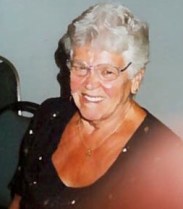
    Elsie LearyI’m launching this new blog as a way to begin an intrafaith conversation (yes, I said intrafaith, spellcheck).  For over 10 years now, I have been convinced of the necessity of taking seriously the questions that arise from our interfaith encounters.

    One of the defining moments that launched me on this  quest was a conversation with Elsie, a member of the congregation I was serving at the time.

    In the days after 9/11, our adult forum wanted to study the world’s religions and they decided on Hinduism as their first venture into an interfaith encounter. In light of the fact that we would be looking at another tradition solely through our own lenses, I asked the group if they would be open to inviting a Hindu guest to one of our sessions, someone who was willing to share her story as well as answer any questions. Their answer was an enthusiastic “yes” and I invited a Hindu woman who was active in interfaith activities to come to our next meeting. The visit went well. The Christian participants were welcoming and respectful. They asked insightful questions.

    However, after the session one of the participants, Elsie, asked if she could stay and talk about something that was bothering her. She began by saying how much she was enjoying the study. She had appreciated meeting our guest and hearing her personal story. But she had a big concern. If she accepted the Hindu path as equal to Christianity, she said, “I’m worried that I’m betraying Jesus.”

    Elsie had presented me with both a pastoral and a theological quandry. And so my venture into the intrafaith conversation began. It led to enrolling in the Pacific School of Religion in Berkeley (part of the Graduate Theological Union) and getting a Doctor of Ministry degree in 2005. While my thesis is entitled Crossing Over and Coming Back: What Does It Mean to Be a Christian in an Interfaith World, I have always referred to my work as The Elsie Project. Elsie died in 2007 and when my book on this subject is published, it will be dedicated to her. I will always be grateful to her.

    And so, I hope this might be a beginning to an ongoing discussion. To get us started, a few words about the difference between interfaith and intrafaith. The most concise explication I’ve found comes from GTU professor Judith Berling’s book Understanding Other Worlds: A Guide for Interreligious Education. While geared towards the academic setting, it’s also valuable for our purposes.

    She describes the two poles of the interreligious learning process as:
    1) understanding another religion faithfully (this is interfaith), and
    2) reappropriating Christian tradition in light of new understandings and relationships (this is intrafaith).

    John Dunne, in The Way of All the Earth, goes even deeper: “What seems to be occurring is a phenomenon we might call ‘passing over,’ passing from one culture to another, from one way of life to another, from one religion to another. Passing over is a shifting of standpoint, a going over to the standpoint of another culture, another way of life, another religion. (interfaith)

    “It is followed by an equal and opposite process we might call ‘coming back,’ coming back with new insight to one’s own culture, one’s own way of life, one’s own religion.” (intrafaith)

    I am in complete agreement with Dunne’s assessment: “Passing over and coming back . . . is the spiritual adventure of our time.”

    I hope that many of you will follow this blog and join in the adventure.