Category: Intrafaith

  • Taking The Conversation To Other Religions

    nain_lg1Several months ago, the newsletter of the North American Interfaith Network (NAIN) put out a call for workshop proposals for this summer’s annual conference. I have attended only one NAIN gathering, in 2008 when it was held here in San Francisco.
    I was on the planning team that year, and attended as a participant, not a presenter. NAINConnect-2016-3-1024x626

    But this year, it just so happens that I have a new book that deals with matters both interfaith and intrafaith. And the conference will be in  Guadalajara! So I thought, “Why not?”

    Well, my proposal was accepted – and now my challenge has begun.

    When I first started working on my doctoral project – “What does it mean to be a Christian in an interfaith world?” – many in the interfaith community suggested that I broaden my scope to include all religions. And indeed, I agreed that there are intrafaith issues within all traditions (even atheists don’t always agree with one another!) But I’m a Christian, and I felt that I could speak only to the issues that arise within my own tradition when we engage in interfaith relationships. I still feel that way, even though I’ve talked with friends from other religions about their particular challenges.

    But now, since I made the proposal (what was I thinking?!), it’s time to broaden the scope in a way that has integrity both for me in my own tradition and for those of other traditions who will attend my workshop. The really great thing is that the session will be an hour and 45 minutes and the expectation is that workshops will be activity focused and participatory. In other words, it can be a real workshop, not the usual quick presentation with no time for interaction.

    So, while I don’t have the workshop fleshed out yet, I know that it will be flexible enough  so that no matter what the makeup is of the group that shows up, we’ll work together on finding commonalities, differences, and shared wisdom.

    And – I am more than happy to hear from those who want to let me know about the intrafaith issues they’ve observed or experienced. In other words: HELP!!!

    Join the INTERfaith INTRAfaith Conversation!she likes it copy she likes it copy.jpg

  • Interfaith Worship in a Christian Church


    I received a Raku pottery “dream jar” last Sunday as a gift from First United  in honor of my 11 years of ministry there. The instructions that came with it are to “write down your dearest dreams and place them in the earthen vessel.”

    In a very real sense, I already have my dream job. I’ve been able to explore my own questions of theology and Christology among people who also want to explore those questions. Together we have created worship services that reflect our understanding of what it means to be a Christian in a multi-religious world

    For the anniversary celebration on Sunday (which included recognition for our music director of 21 years, Orion Pitts), the congregation wanted to have a special worship service. They specifically wanted to invite all the guest speakers from other religious traditions we’ve had over the past fews years, as well as our members, friends, family and colleagues.

    Orion and I assumed that we’d have our usual Sunday service, with the appointed readings for the day, etc., but that at some point someone would get up at some point and say nice things about us. It turned out, though, that the invitation that went out said that it would be an “interfaith service.”

    That put me in a quandary. While our regular service is always interfaith-friendly, it’s still very much Christian. So should we redesign the whole thing to be completely interfaith, asking guests to participate in readings and/or rituals from their own traditions? Or should we just do what we normally do and explain that non-Christians were welcome to join in as much as they felt comfortable? And what to do about Holy Communion?she likes it.jpg

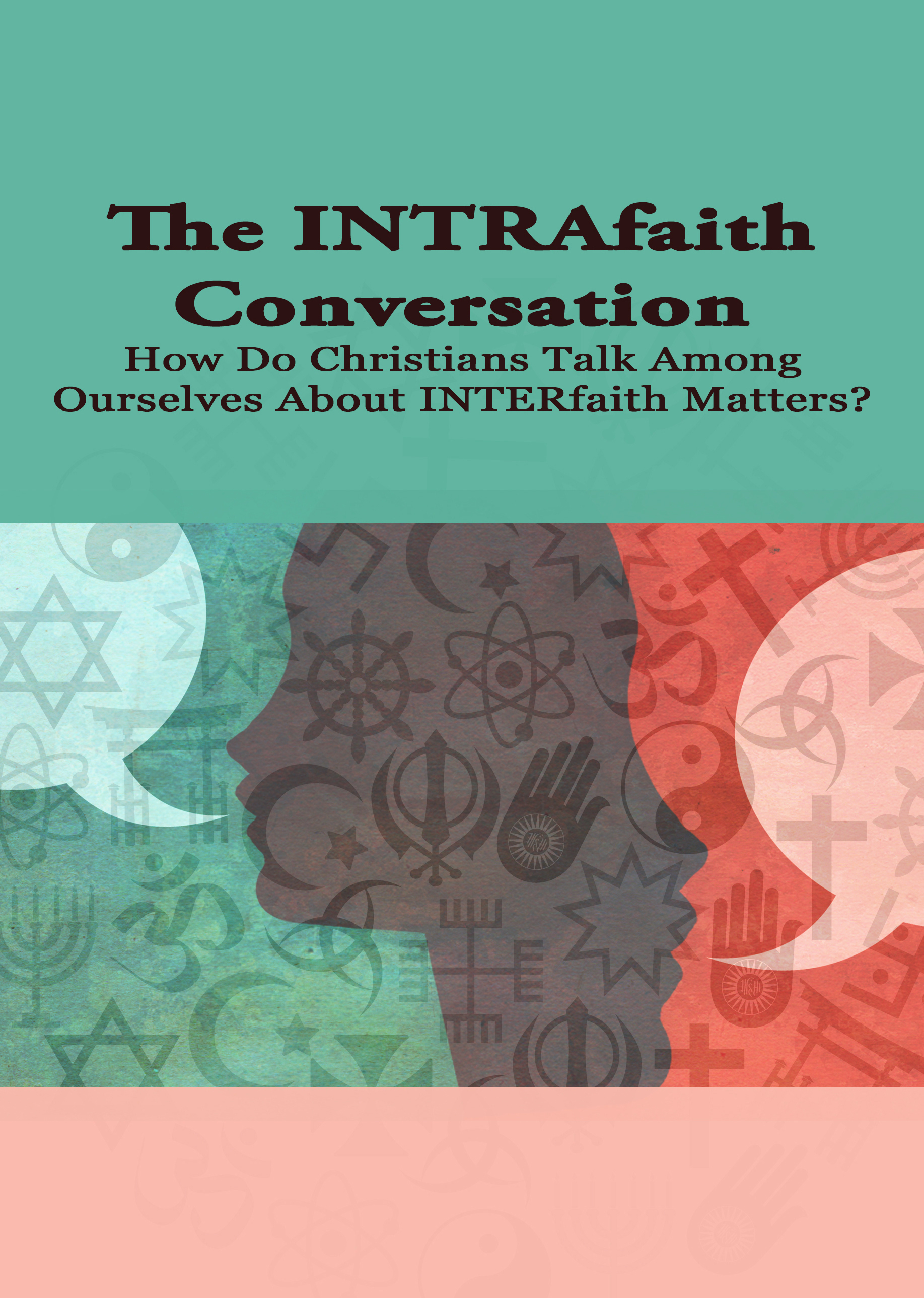
    Added to the pressure I felt was the fact that the day would also include the launching of my book, The INTRAfaith Conversation. So with interfaith dignitaries in attendance, my reputation was on the line (or so I thought)! Right here was a case study for the next edition of the boo.

    Well, the service turned out beautifully. But it did take some thoughtfulness and intentionality. I decided that the way to go was with an emphasis on interspirituality rather than interfaith. “Interspirituality” is a term coined by the late Wayne Teasdale, who described it as “a religious perspective that draws on the mystical core of the world’s religions.” The heart of interspirituality is the recognition that there are many approaches to the spiritual journey. The key is the prefix “inter.” The essential spiritual interdependence of the religions exists because of the essential oneness of being and reality. All religions are part of the one cosmos in which everything is interrelated. “Inter” implies an openness and eagerness to communicate with people of other faiths, to learn from the wisdom of their traditions, and to assimilate that which is useful for one’s own journey.

    The liturgy that Orion had put together was already there, so that was no problem. So the first question was about the readings. The gospel reading for the 5th Sunday of Easter was just perfect: John 13:31-35, which includes the verse from Jesus’ Farewell Discourse, “I give you a new commandment: love one another. And you are to love one another the way I have loved you.”

    But I decided to forego the texts from Acts and Revelation. Instead I chose an excerpt about interspirituality from an article by Wayne Teasdale. I divided it into sections and asked some of our interfaith guests to take turns reading. The second reading was a poem, “The Way Back, The Path Forward” from Light Reading: Selected Poems from a Pilgrim Journey by the Rev. Canon Charles P. Gibbs. Charles is an Episcopal priest; until his retirement he was the founding executive director of the United Religions Initiative; and he is now Senior Partner and Poet-in-Residence for the Catalyst for Peace foundation. He’s one of the most interspiritual people I know. His poem was perfect for our occasion. For the psalm of the day we used Opening to You: Zen-Inspired Translations of the Psalms by Norman Fischer.

    The next dilemma was Communion. I had no problem including Communion, as long as we were able to articulate that we believed it to be an all-inclusive ritual that is bigger than Christianity. So I wrote an article in our newsletter to make that clear ahead of time. And I also made an announcement to that effect both at the beginning of the service and at the invitation to receive the bread and wine. Of course, everyone was free to partake of anything in the service to the extent they felt comfortable.

    So it all turned out great. But it’s definitely  a study in interfaith and intrafaith awareness, sensitivity, and action. You may or may not agree with all of our decisions, but I hope this will get your creative juices flowing about how you would go about planning interfaith worship in a Christian church.


  • More Book News

    51GBQ6enMPL._AC_AA160_It’s gratifying to see that intrafaith is finally becoming part of the interfaith scene. Another new book has taken on the question of how we “live and witness as Christians in a multi-religious world” (Presiding Bishop Emeritus Mark Hanson on the back cover).

    I am humbly proud to be included in a chapter by Jonathan Brockopp entitled “Exploring the Uncomfortable Questions.” Several years ago, I had responded to an article in The Lutheran magazine asking for case studies from congregations that illustrated these questions. Two of my stories were selected. Both of them are also included in my own book (you can read Elsie’s story in a previous post, but you’ll have to buy my book for the other).

    While this book is from a decidedly Lutheran perspective and responsive to some specifically Lutheran considerations, there’s a lot of good material. As a Lutheran myself, I’m happy to see my church taking these challenging questions.

  • Is Jesus the Only Way to Salvation?

    Excerpted from The Intrafaith Conversation:

    Is a professed belief in Jesus Christ the only way to salvation? When Rob Bell published his book, Love Wins: A Book About Heaven, Hell, and the Fate of Every Person Who Ever Lived, in 2011, his answer in essence was “No.” Accusations of heresy immediately began to fly from Bell’s evangelical community.

    Bell anticipated their criticism in the book:
    As soon as the door is opened to Muslims, Hindus, Buddhists, and Baptists from Cleveland, many Christians become very uneasy, saying that then Jesus doesn’t matter anymore, the cross is irrelevant, it doesn’t matter what you believe, and so forth. Not true. Absolutely, unequivocally, unalterably not true.

    Whether or not you agree with all of Rob Bell’s conclusions, he has certainly highlighted the challenge for Christians today as we come into contact with those of other  religious traditions (as well as many within our own).

    she likes it

  • Beyond Tolerance

    Jo-Mead-Beyond-ToleranceTolerance … usually has an elitist lining; either an elitist lining in the sense that you can be tolerant because for you it is not that important, or an elitist lining of noblesse oblige I know, but I cannot expect the other to know as much as I do. – Krister Stendahl.

    Words matter. The meanings of words also change. Consider the ongoing discussions about the differences between interfaith and multifaith or between interfaith and interreligious. That debate is a topic for another book, but it points to the evolving picture of this work.

    We could say the same of the word “tolerance.” I’ve often seen the “Practice Tolerance”tolerance3 bumper sticker, with “Tolerance” spelled out with symbols of the world’s religions, and know that it’s meant to be an inclusive sentiment. When Swami Vivekananda addressed the World Congress of Religions in Chicago in 1893, he spoke of “a religion which will have no place for persecution or intolerance in its polity.” Since the Congress was the first formal gathering of representatives from both Eastern and Western traditions, it is easy to understand why he paired persecution and intolerance in his speech. Tolerance was then a great improvement over prejudicial beliefs and actions.

    But there are problems with the word tolerance. It can imply a willingness to put up with something disagreeable or disliked. If I say that I tolerate you, I convey a very different thing than if I say that I admire or respect you. The issue came to the fore in the global arena in the year 2000 at the United Nation’s Millennium Religion Summit. As reported by Rajiv Malhotra, founder of the Infinity Foundation, Swami Dayananda Saraswati, the head of the Hindu delegation proposed that the term “mutual respect” be substituted for the word “tolerance” in the Summit’s final document “Commitment to Global Peace.” According to Malhotra, the words became a fierce topic of debate, in which adherents of the Abrahamic religions were strongly challenged to respect the non-Abrahamic religions as equals. Mere tolerance was not enough.

    This was not a matter of mere political correctness. Christians, by agreeing to go beyond tolerance to mutual respect, begin to swim into the deep waters of church teachings about salvation. Although Cardinal Joseph Ratzinger (the future Pope Benedict), head of the Vatican delegation, objected strongly to the wording of the resolution, “mutual respect” won the day. However, the Vatican quickly issued a statement that affirmed that while “followers of other religions can receive divine grace, it is also certain that objectively speaking they are in a gravely deficient situation in comparison with those who, in the Church, have the fullness of the means of salvation.”

    Inherent in these challenges is the Christological question: in light of our religious
    diversity who and what is Jesus? If we do not reject the truth claims of other traditions, we may have some problems with our own. These dilemmas are not solely academic exercises. They are very practical issues that need to be addressed, for example, in our practices of evangelism and mission. As Asian theologian C. S. Song has written: “The problem of Christian mission is the problem of Christian theology. Reconstruction of Christian theology must then precede reconstruction of Christian mission.”

    It is not merely a matter of political correctness at the congregational level either. The question of tolerance or respect may relate to our willingness to be open to the real people we meet in interfaith encounters, to engage in dialogue which goes beyond tolerance. As Swami Dayananda and Cardinal Ratzinger found, however, moving from tolerance to mutual respect is not without challenges.

    (This is an excerpt from The INTRAfaith Conversation: How Do Christians Talk Among Ourselves about INTERfaith Matters?)

  • Book Launch: Coming Soon!

    she likes itIt’s almost here. This is just the draft cover. We have one more proof-reading to do. And then – book launch!

    For the past several weeks, I’ve been publishing excerpts here on this blog. If you’ve liked what you’ve read, I hope you’ll be interested in reading the entire book.

    Why did I write this book?

    I’m a pastor (Lutheran) with over twenty-five years of parish experience. I’ve also been involved in interfaith work in both western New York and the San Francisco Bay area. I received a doctorate degree in interfaith education from the Pacific School of Religion in Berkeley in 2005.

    In the course of my work I’ve noticed that many Christians who are open to other religious traditions become confronted with the exclusive claims of Christianity. In the midst of our wonderful religious diversity, many questions have arisen. Members of our congregations struggle with texts such as “I am the Way, the Truth, and the Life; no one comes to the Father except through me.” They wonder about the commandment to “have no other gods before me.” They are unsure what to make of the Great Commission to “go and make disciples of all nations.” Our interfaith awareness has now led us to the intrafaith questions.

    Through my doctoral work I became aware of the great amount of work being done at the academic level. Works on theology and biblical criticism abound in the seminary library. But, in spite of this leap forward into new ways of thinking about God, Jesus, scriptural interpretation, mission, etc., especially in relation to other religions, there’s hardly anything coming down to the congregational level.

    My purpose in writing the book is two-fold:

    1) to address the interfaith issues facing congregations and provide a resource for local Christian congregations to enter into relationships with their neighbors of other faiths; and

    2) to provide a process of theological and christological reflection in order to help Christians address the intrafaith questions that inevitably arise as a result of their interfaith encounters.


  • Why Christians Should Not Host Their Own Passover Seders

    “What to do, then, if you are a Christian who wants to be more like Christ, as well as to learn more about your cultural roots? Practice restraint. One of the privileges that comes with being part of the majority culture is that nobody is likely to call you out on your cultural appropriation. So, call yourself out. Don’t host a seder. Not even if you only invite other Christians. Especially not if you only invite other Christians.”

    A good (and timely) article about appropriate – not appropriating – ways of observing Passover.
    Read the full article here 

  • New Voices in the Conversation Part 3: Atheists and Humanists


    It is all too common for those of us in the church to disregard people in these categories. We might dismiss them with “There are no atheists in foxholes” and similar sayings. And while I struggle to find ways of communicating my understandings of the Divine to those whose unbelief is more of a reaction to the abuses of church and religion, I also recognize that there are many good, thoughtful, moral people who do not feel the need for a Higher Power. Yet more and more of them are joining the interfaith conversation (you see why interfaith and interreligious are problematic terms!).

    During the summer months, we welcome guests from different religious and non-religious traditions to speak at our church on a specific topic. Two years ago the subject was caring for creation. Most of our guests were easy to describe, e.g. Buddhist, Hindu, Jewish, Muslim. But one speaker, was not so easy to categorize. He didn’t like using any labels at all, but finally settled on “free-thinking naturalist.” Beginning his talk, he jokingly said that he had deliberately avoided the “A” word when referring to himself.

    Atheism is a tricky subject. It used to be simple: an atheist was someone who didn’t believe in God. Then many of us read or heard Marcus Borg describe his many conversations with university students. He recounts,

    “Every term, one or more of them says to me after class, ‘This is all very interesting, but I have a problem every time you use the word ‘God’ because, you see’- here there’s usually a pause and a deep breath- ‘I really don’t believe in God.’ I always respond the same way: ‘Tell me about the God you don’t believe in.’” [1]

    As Borg tells it, the student then describes a version of God perhaps learned in Sunday school, from parents or simply from popular culture. When Borg says, “Well, I don’t believe in that God either,”[2] a space opens up for conversation about other possible ways of understanding the Divine.

    As more people discover that there are other ways of thinking about their concept of God, the old definition of “not believing” becomes more problematic. Also, we are becoming more familiar with religions that are non-theistic (hence a-theistic), such as Buddhism, which has no concept of a creator God or divine intercessor. It is not so much that Buddhists do not believe in God (as if a conscious negative choice) as the fact that those are simply not aspects of their tradition.

    Karen Armstrong has this to say:

    “Atheism is often a transitional state: Jews, Christians, and Muslims were all called atheists by their pagan contemporaries because they had adopted a revolutionary notion of divinity and transcendence. The people who have been dubbed atheists over the years have always denied a particular conception of the divine. But is the God who is rejected by atheists today the God of the patriarchs, the God of the prophets, the God of the philosophers, the God of the mystics, or the God of the eighteenth-century deists? All these deities have been venerated, but they are very different from one another. Perhaps modern atheism is a similar denial of a God that is no longer adequate to the problems of our time.”[3]

    Of course there are those who do not believe in any kind of Divine being, no matter how we might reimagine what that means. Many of these folks are also interested in being part of interreligious conversations. Henry, a long-time member of the board at the Interfaith Center at the Presidio is a co-founder of an organization in Berkeley called Ahimsa (the Sanskrit word meaning ‘nonviolence’). One of the goals of the organization is “to encourage dialogues and public forums on issues which bridge spirituality and science and society.”[4] Henry is also an avowed atheist, yet appreciates deeply the opportunity to work on projects together with others who want to be peacemakers in the world.

    I contrast Chris and Henry with militant atheists, such as Richard Dawkins and Bill Maher, who denounce the God they don’t believe in, but are never willing to listen to or discuss any other possibilities. I consider them to be as intractable as any fundamentalist of any religion.

    I will admit that I never got the consternation that many Christians had about humanists (or as one elderly church member called them hoomanists). I thought humanists were pretty good people. I do now understand why they are considered by some to be fair game for Christian conversion: they value human agency and critical thinking over faith and doctrine. It could be said that humanism is a kinder, gentler atheism. As Nathan Phelps has said, “What I am is a proud humanist. Atheism says what I don’t accept, humanism says what I do.”[5]

    But these terms are very fluid. Another guest in our speaker series was Vanessa, who is very involved in the interfaith scene and describes herself (at least for today, she said) as a Secular Humanist. However, she said that others have called her a “faitheist.” This was the first I had heard of the term, which comes from the book Faitheist: How an Atheist Found CommonGround with the Religious by Chris Stedman.[6] Stedman’s point is that atheists should be involved in respectful dialogue with those of religious persuasion. Vanessa said, however, that being called a “faitheist” was not a compliment. The Urban Dictionary defines it as “an atheist who is ‘soft’ on religious belief, and tolerant of even the worst intellectual and moral excesses of religion; an atheist accommodationist.”[7] For some reason, it gives me satisfaction to know that there are factions even among the non-believers!

    What I have learned from listening to those on the interfaith scene who describe themselves with the “A” word or with other isms is that these are people of good will and great love for humanity and the world. I welcome the opportunity to be in dialogue. Right now I have members in my congregation with family members who are declared atheists. I would love to have the “Tell me about the God you don’t believe in” conversation with them – not in order to convince them that they are wrong, but to see where they really fit in the wide range of what atheism means today. And what “God” means today.


    FOR REFLECTION:

    • Do you know someone who is an atheist? Have you ever had or could you have a conversation with him or her about what that means?
    • How do you think it is possible for an atheist, agnostic or humanist can participate in interreligious dialogue?


    SUGGESTED READING:

    • Faitheist: How an Atheist Found Common Ground with the Religious by Chris Stedman[11]


    [1] Borg, Marcus, The Heart of Christianity. Christianity: Rediscovering a Life of Faith. New York: HarperCollins, 2003, 68-69.

    [2] Ibid.

    [3] “A New Axial Age: Karen Armstrong on the History—and the Future—of God” by Jessica Roemischer, http://www.adishakti.org/_/a_new_axial_age_by_karen_armstrong.htm (accessed February 26, 2016).

    [4] http://ahimsaberkeley.org (accessed February 26, 2016).

    [5] Nathan Phelps is the son of Westboro Baptist Church founder, Fred Phelps. He responded to my inquiry that this quote was something he had posted on Facebook and now has become a meme.

    [6] Stedman, Chris, How an Atheist Found Common Ground with the Religious. Boston, MA: Beacon Press. 2012.

    [7] Urban Dictionary, s.v. “faitheist,” http://www.urbandictionary.com/define.php?term=faitheist (accessed February 26, 2016).


    [8] Trent, Dana, Saffron Cross: The Unlikely Story of How a Baptist Minister Married a Hindu Monk, Nashville, TN: Fresh Air Books, 2013.

    [9] Brussat, Frederic and Mary Ann. “Welcoming the Spiritually Independent.” patheos.com.
    http://www.patheos.com/blogs/dailylifeasspiritualpractice/2013/09/welcoming-the-spiritually-independent/ (accessed February 26, 2016).

    [10] Shapiro, Rami, Perennial Wisdom for the Spiritually Independent. Woodstock, VT: SkyLight Paths, 2013.

    [11] Stedman, Chris, Faitheist: How an Atheist Found Common Ground with the Religious. Boston: Beacon Press, 2012.

  • New Voices in the Conversation Part 2: Multiple Belonging (Hybrid Spirituality)


    The phenomenon of “multiple religious belonging” is now deeply engrained in American Culture – Francis X. Clooney

    The first time I heard someone referred to as a Jewbu, I thought it was a pejorative term. But it’s not. Jewbu (or Jubu or Bu-Jew) is simply is the abbreviation for a Jewish Buddhist. This fairly recent term can refer to either a Buddhist who grew up Jewish but no longer practices Judaism (“This is true of a staggeringly high percentage of American Buddhist leaders; well over half by most counts,” according to Rabbi Julian Sinclair) or a Buddhist who still practices and identifies with Judaism.

    Sylvia Boorstein, a founding teacher of Spirit Rock Meditation Center in Woodacre, CA, is a good example of this category. Her autobiographical memoir, That’s Funny, You Don’t Look Buddhist: On Being a Faithful Jew and a Passionate Buddhist, places her squarely in the camp of those with multiple belongings. Her story of coming to terms with her identity as both a Jew and a Buddhist – and her deepened love for Judaism – is an engaging, easy read for anyone wanting an introduction to this phenomenon.

    Unfortunately, Christianity doesn’t have a catchy term to describe its hybrids (Chrisbu or Bu-Chris is just not as mellifluous as Jubu!). But there are those who are multiple belongers. For example, Father Gregory Mayers, coordinator of the East-West Meditation program at Mercy Center retreat center in Burlingame, CA, is both a Redemptorist priest and Associate Roshi of the Sanbô-Kyôdan Religious Foundation in Kamakura, Japan. Catholic theologian Paul Knitter, author of Without Buddha I Could Not Be A Christian, considers himself to be an adherent of both Christianity and Buddhism.

    It may be that the popularity of Buddhism has not caused a lot of consternation in our churches because Buddhism is not a theistic religion (not all Buddhists would even call it a religion at all). So now we have to wade into deeper waters to examine more controversial examples of multiple belonging.

    Many years ago a member of my congregation told me that she had become a Muslim. When I asked her how she reconciled that with being a Christian, she said that she saw no problems with it. At the time, I couldn’t understand that. Now I see that she was merely ahead of her time.

    In 2007, Episcopal priest Ann Redding Holmes declared herself to be a Muslim after a profound experience of Muslim prayer. However, she didn’t abandon her Christian identity, saying that her acceptance of Islam was “not an automatic abandonment of Christianity. For many, it is. But it doesn’t have to be.” In response to those who said that the two traditions are mutually exclusive, she said, “I just don’t agree.” The Episcopal Church did not agree with her and she was defrocked in 2009. In interviews, Redding has argued that her views about Jesus “fit well in the range of Christianity.”

    As strange as this story may seem, there are more and more examples of multiple belonging on the religious scene, as S. Wesley Ariarajah puts it, “throwing spanners into the smoothly oiled works of religious particularities.” But, reminding us that we are looking through Western lenses, he reports that multiple belonging is not a new phenomenon in Asia:
    It has been a common feature among the peoples especially in North Asia. Many of them have fund ways of holding together two or more of religious traditions like Confucianism, Buddhism, Shintoism, Shamanism, Christianity etc. as tributaries that feed their overall religious consciousness and practice. 

    Catherine Cornille, editor of Many Mansions: Multiple Religious Belonging and Christian Identity agrees:
    It may be argued that . . . religion in Europe, America and Australia is just coming to terms with a practice or a form of religiosity that has been prevalent for ages in most of the rest of the world, and especially in the East.

    For many of our clergy and church members, learning how to relate to those who claim multiple belonging may seem to be a very steep learning curve. And to be honest, it is. It involves looking carefully at our assumptions about what it means to be a Christian, to listen to the stories of those who have different assumptions, and to participate in a religious quest that is ongoing and evolving.

    For example, a member of my congregation admitted that she considered herself to be a Christian-Pagan. When I shared her story with a friend who is a Wiccan elder, he laughed and told me that Wicca is actually losing some of its appeal among disenfranchised Christians. Once, he said, Wicca was attractive to those looking for an earth-based, environment-friendly belief system and practice. But as Christianity has been slowly leaving behind its earth/ spirit dualism and rediscovering its “roots” in theologians such as St. Francis of Assisi and Hildegard of Bingen, it is retaining some of those who in the past would have become Pagan.

    It is clearly a new day for Christianity!


    Sinclair, Rabbi Julian. “Jubu.” thejc.com. http://www.thejc.com/judaism/jewish-words/jubu (accessed February 26, 2016)

    Tu, Janet I. “Episcopal Priest Ann Holmes Redding has been defrocked.” seattletimes.com. http://seattletimes.com/html/localnews/2008961581_webdefrocked01m.html (accessed February 24, 2016).

    Zimmerman, Cathy. “Ann Holmes, A Christian and a Muslim, to Share Message at St. Stephens.” tdn.com http://tdn.com/lifestyles/ann-holmes-a-christian-and-a-muslim-to-share-message/article_de097bc0-1727-11e2-a92d-0019bb2963f4.html?print=true&cid=print (accessed February 24, 2016).

    Ariarajah, S. Wesley. “Religious Diversity and Interfaith Relations in a Global Age.” flinders.edu.au. http://www.flinders.edu.au/oasisfiles/chaplains/geoff_papers/ariarajah.pdf

  • New Voices in the Conversation Part 1: Spiritual Independents                                                                                         

    51UJ1PNsX6L._SX322_BO1,204,203,200_Those of us who are still in the church must accept the fact that for many people the old categories of Catholic/ Protestant, Episcopal/ Methodist, high church/ low church, contemporary/ traditional, etc. just do not matter. There are new voices contributing to the religious scene, although most of them would not like to be referred to as religious. These voices deserve to be heard. They may have left or never been part of the church, but that doesn’t mean that they don’t have a lot to say about spirituality, the meaning of life and how to make a difference in the world.

    Spiritual Independents
    A piece of accepted wisdom among many involved in interfaith dialogue is that one must first be grounded in one particular tradition. This is reflected in the quote by Mahatma Gandhi that . . . our innermost prayer should be a Hindu should be a better Hindu, a Muslim a better Muslim, a Christian a better Christian.” However, according to the Pew Research Center, the number of Americans who do not identify with any religion continues to grow at a rapid pace. One fifth of the US public – and a third of adults under thirty – are religiously unaffiliated today, the highest percentages ever in Pew Research Center polling.

    We often refer to these folks as the “spiritual but not religious” or “Nones.” But I agree with Rabbi Rami Shapiro, who has declared that these designations are too negative and has coined the more positive “spiritually independent.”  In Perennial Wisdom for the Spiritually Independent he says:

    “Most of these so-called Nones are not dismissive of God or spirituality but simply find religious labels and affiliation too narrow and constraining. This is why I choose to call this segment of the population by the far more positive and accurate term spiritually independent.”

    In another positive take on it, the Rev. Dr. Anne Benvenuti, a Board Trustee for the Council for a Parliament of the World’s Religions, writes in “The Nones Are Off the Bus, and Many of Them are Alls”: “I know a lot of Nones and many of them are Alls. They celebrate the Winter Solstice, and Easter sunrise, they may do yoga or meditate, and they give thoughtfully to charities, all in no particular order, but depending on where they are, how they feel, what seems to be called for. They resist labels produced by media-saturated culture to represent certain predetermined sets of characteristics. They distrust such prepackaged beliefs, and also distrust religious institutions that are so often corrupt and hypocritical. Yet they value human spiritual heritage, often in great variety, and many of these people are more comfortable in a variety of religious settings than they would be in only one.”
    “The Nones Are Off the Bus, and Many of Them are Alls”

    In the new emerging community being formed by Mission Developer, Pastor Anders Peterson under the sponsorship of my congregation, First United Lutheran Church, we are finding the truth of these perspectives. Mission, defined as converting people to Christianity, does not work with this group. Openness to other religious traditions is essential. This is not to say that we deny or water down who we are; we do our work in the world as Christians. But we do it as Christians who have worked through the intrafaith questions that are raised by many as they are confronted with this population. According to the Rev. Bud Heckman, senior advisor to Religions for Peace USA in New York City:

    “A couple of decades ago this category accounted for no more than a single-digit percentage of the population. Today it accounts for one of every five people in the States, and one in every three amongst those under 30 years of age. The numbers are even higher in Europe and China. This means there is a great deal of fluidity in identity that is socially permissible in ways that simply were not true before.”
    “Five Things Changing the Way Religions Interact

    We do not know what Mahatma Gandhi would make of our world today. However it is clear that, both within Christianity and on the interfaith scene, the spiritual independents must be part of the interfaith and intrafaith conversations.

    • Do you know someone who would be considered spiritually independent? If so, have you had or could you have a conversation with that person about what they believe?
    • Are you a spiritual independent? How would you describe your spirituality?