 I first met Dolores White back in 2002 when I had just arrived in Berkeley. I’d met Paul Chaffee from the Interfaith Center at the Presidio and was invited to a board meeting. Somehow I found my way from the East Bay to the far side of San Francisco (the Presidio is not easy to get to on public transportation and my car was still back in Buffalo). I’ve gotten much more savvy about navigating the streets of San Francisco, but back then I wasn’t sure how I’d ever find my way back home.
Dolores, a member of the Baha’i faith, was one of the board members who welcomed me that day and the first to offer me a ride to the nearest BART station. I was so grateful. Since then I’ve learned that that’s just Dolores: graciousness personified.
She was one of our speakers two summers ago, when our theme was the environment, and I’m so glad she agreed to come back for Week 5 to address the question of how her Baha’i faith informs how she thinks about politics.
Unfortunately, however, I won’t be there. I’ll be attending NAINConnect 2106 in Guadalajara. NAIN is the North American Interfaith Network, founded in 1990 as a way to build communication and mutual understanding among interfaith organizations and diverse religious groups throughout North America.
 This will be the first gathering in Mexico and there will be an emphasis on Indigenous Peoples and their relationship to the land/struggle for land and water rights. The theme of the conference this year is Sacred Space. According to the planners, we’ll be looking at sacred space in the widest sense possible – our inner sacred space, the space we create together in relationship, our worship spaces, holy places, the land and the earth and the universe as sacred. Also, my workshop proposal was accepted, so I’ll be leading my first interfaith intrafaith conversation!
WEEK 6 of Pluralism Summer will be completely different. Middle Circle will be taking over the entire time slot. Middle Circle is the “spiritual but not religious” community sponsored by First United. The theme’s question had to be a little different for this group: “How does your religious/ spiritual/ philosophical tradition inform how you think about politics?” Not only will Middle Circle give us their insights, they’ll also help those of us in the “traditional” church expand our ideas of what the interfaith community includes.
Pluralism Summer is an initiative of First United Lutheran Church, a progressive church, rooted in the Reformation tradition, which says that the church, our worship, and our music must always be re-forming. We believe that it’s more important to ask the questions than to know all the answers.
We believe that, as theologian Hans Kung wrote:
“There will be no peace among the nations until there is peace among the religions. There will be no peace among the religions until there is dialogue among the religions.”
We believe our wisdom will only be enhanced by continued conversation with all of our neighbors. Together we work for peace, justice, and the good of all people and all creation.
 I’m particularly happy to welcome two guest speakers this coming Sunday. Ed Driscoll and Jim Lichti are members of
 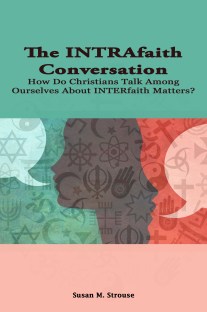 nevitably, profound questions arise out of respectful encounters with people of religions other than our own. Many who have been involved in cooperative engagements with people of other faith traditions discover that it is often easier to talk with people of a different religion than it is with the person sitting next to you in your own congregation. For others, the struggle is within, as in the case of Elsie L., a parishioner in Buffalo. After a church session in which a Hindu woman active in interfaith activities had spoken to the group, Elsie spoke to Pastor Strouse. “If I accept the Hindu path as equal to Christianity,” she said, “I’m worried that I’m betraying Jesus.”
 a colleague called me to ask if I knew a place where the author of a new book on interreligious spirituality might present a talk on this topic. Intrigued, I agreed to a virtual introduction and then went on to set up an in-person meeting.
 There’s a conversation in the movie Nick & Norah’s Infinite Playlist, that’s pretty profound for a romantic comedy.
 This Sunday, our guest speaker will be Rita Semel, who I often describe as the godmother of the San Francisco interfaith community. Don’t mistake her diminutive size or her age for lack of energy or passion for healing the world. Rita’s raison d’etre, which she received from her Jewish heritage, is tikkun olam (literally “world repair”).

 What is an interspiritual Christian?
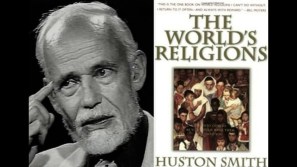 At the workshop, after we had been captivated by stories of Smith’s immersion in the world’s religions, someone asked the question that was on my mind: “Why are you still a Christian?” His answer, which I cannot find in any “Famous Quotes” site, was “Christianity is the string on which I hang my beads.”
 Sharing the Mystic Heart.” It was a two-day event, on Saturday and Sunday. The Saturday schedule included presenters from Buddhism, Christianity, Hinduism, Islam/Sufism and Judaism, who talked about their own spiritual beliefs and practices. The best part was that they each taught a practice to the rest of us. Each segment was followed by a period of silence when we could practice on our own. On Sunday afternoon, there was a panel discussion and Q&A time, followed by an interspiritual zikr

 The Interfaith Pastor