Tag: Religion

  • Sermon for Lent 2: The Belonging You Seek Is Not Behind You – It Is Ahead

    Maz_Kanata-Force_AwakensIt would appear that the quote from biblical scholar John Dominic Crossan didn’t apply to Nicodemus. Crossan famously said, “My point . . . is not that those ancient people told literal stories and we are now smart enough to take them symbolically, but that they told them symbolically and we are now dumb enough to take them literally.”

    Nicodemus took Jesus literally. When Jesus said, “No one can see the kindom of God without being born from above,” Nicodemus is stunned. He thinks Jesus means he has to somehow get back into his mother’s womb. Imagine what he must have been thinking. Here was this teacher everyone was raving about, the one he – a Pharisee – had sneaked out to see. It was no small risk; as a member of the religious establishment, being affiliated with this rabble-rouser could have been seen as an act of rebellion against the empire.

    So he comes to see Jesus under cover of darkness. And what does he get? This guy Jesus spouting some nonsense about being born again. We’re used to hearing that phrase; we have our own reactions when we hear it. We have to put ourselves in Nicodemus’ sandals to hear his bewilderment. Nicodemus thought that Jesus was telling him that in order to be part of the realm of God he needed to go back to the beginning, back to where he had come from. But that’s not what Jesus meant. Let’s watch a clip from Star Wars VII: The Force Awakens. Listen for what Rey thinks she needs to do and for the advice given to her by the ancient, wise Maz Kanata.   Watch clip

    Jesus couldn’t have said it better himself: “The belonging you seek is not behind you – it is ahead.” Not that we don’t remember and honor the past. Knowing from whence we’ve come is an important part of understanding ourselves. But we can’t stay or go back there, as much as we might be tempted or as much as we long for a time gone by.

    In his classic book, Stages of Faith, James Fowler identified seven stages of development in our spiritual lives. Unfortunately, it’s been widely accepted that one of these stages is where many people remain their entire lives. See if you can guess which one.

    Stage 1 (birth-2) is characterized by learning the safety of our environment. If we experience consistent nurture, we develop a sense of trust about the universe and the divine. Conversely, if we don’t receive consistent nurturing, the opposite will be true.

    The next stage is the stage of preschool children in which fantasy and reality often get mixed together. Our most basic ideas about God are usually picked up from our parents and/or society. Then, when we become school age, we start understanding the world in more logical ways. We generally accept the stories told by our faith community but tend to understand them in very literal ways. We have a strong belief in the justice and reciprocity of the universe, and our images of God are almost always anthropomorphic (with human form and/or human qualities).

    Then comes adolescence, characterized by conformity to authority and the development of our religious identity. At this stage, we tend to have a hard time seeing outside our religious box and don’t even recognize that we’re inside a belief system. We rely on some sort of institution (such as a church) to give us stability. We become attached to the forms of our religion and get extremely upset when these are called into question.

    The next stage, often begun in young adulthood, is a time of angst and struggle. We start seeing outside the box and realizing that there are other boxes. We begin to critically examine our beliefs and often become disillusioned with our faith. Ironically, people in the stage before this one usually think that those in this stage have become “backsliders” when actually they’ve moved forward. This stage can end up being very non-religious and some people stay in it permanently.

    It’s rare for people to reach this next stage before mid-life. This is when we begin to realize the limits of logic and start to accept the paradoxes in life. We begin to see life as a mystery and often return to sacred stories and symbols but this time without being stuck in a theological box.

    The last stage is often called a “universalizing” or “mystical” faith. Few of us ever get there. Those who do live their lives to the full in service of others without any real worries or doubts. People who reach this stage start to realize that there is truth to be found in both the previous two stages and that life can be paradoxical and full of mystery. Emphasis is placed more on community than on individual concerns. It’s pretty easy to see Jesus as an exemplar of this stage of human spiritual development.

    Can you guess the stage in which many people remain? It’s the teenage stage, where we have a hard time seeing outside our religious box and rely on the institution to give us stability. I’d definitely put Nicodemus in that category. And Jesus was challenging him to grow in spiritual maturity, to move forward into a new way of belonging, to re-formation.

    This is the same challenge before us today. Unless you’re one of the few enlightened ones, we’re all being called to move forward into a spirituality that is both mystical and practical. This is where our resistance to empire can be most effective. Our faith can both comfort and embolden us. When our emphasis is less on matters of personal salvation and more on the well-being of the Beloved Community of all God’s people and creatures, we are living into the reality of the kindom of God. After all, “for God so loved the world.”

    Jesus said we are born of water and the Spirit. The water of the womb and the breath of life launched us on our way. The water of our baptism sealed us again with the Spirit and ordained us to our life’s mission as followers of Jesus. As each new age requires disciples to respond to the empire of that age, Jesus calls us forward now. Maz Kanata was right; the belonging we seek is not behind us – it is ahead. The Force Awakens is not just the title of a cool movie; it is our response to the movement of the Spirit in us and in our world.

    Amen


    John 3:1-17
    The words of John 3:16 are more than a slogan to be put on signs at sports events; they describe the divine intentionality and universality. God loves the world. Salvation touches all creation, embracing our cells as well as our souls. There are no limits, outsides, or impediments to the ubiquitous and graceful providence of God.

    Now there was a Pharisee named Nicodemus, a member of the Sanhedrin, who came to Jesus by night and said, “Rabbi, we know you are a teacher come from God; for no one can perform the signs and wonders you, unless by the power of God.”

    Jesus gave Nicodemus this answer, “The truth of the matter is, unless one is born from above, one cannot see the kindom of God.”

    Nicodemus said, “How can an adult be born a second time? I can’t go back into my mother’s womb to be born again!”

    Jesus replied:
    “The truth of the matter is, no one can enter God’s kindom without being born of water and the Spirit. What is born of the flesh is flesh,  and what is born of the Spirit is Spirit.
    Don’t be astonished when I tell you that  you must be born from above. The wind blows where it will. You hear the sound it makes,  but you don’t know where it comes from  or where it goes.  So it is with everyone  who is born of the Spirit.”

    Nicodemus said, “How can this be possible?”

    Jesus replied, “You’re a teacher of Israel, and you still don’t understand these matters?
    The truth of the matter is,  we’re talking about what we know; we’re testifying about what we’ve seen – yet you don’t accept our testimony. If you don’t believe when I tell you about earthly things,  how will you believe  when I tell you about heavenly things?

    No one has gone up to heaven  except the One who came down from heaven –  the Chosen One. As Moses lifted up the serpent in the desert,  so the Chosen One must be lifted up,
    so that everyone who believes the Chosen One might have eternal life.

    Yes, God so loved the world as to give the Only Begotten One, that whoever believes may not die, but have eternal life. God sent the Only Begotten into the world not to condemn the world, but that through the Only Begotten the world might be saved.


    In his classic book, Stages of Faith, James Fowler identified seven stages of development in our spiritual lives. Unfortunately, it’s been widely accepted that one of these stages is where many people remain their entire lives. See if you can guess which one.

    Stage 1 (birth-2) is characterized by learning the safety of our environment. If we experience consistent nurture, we develop a sense of trust about the universe and the divine. Conversely, if we don’t receive consistent nurturing, the opposite will be true.


    The next stage is the stage of preschool children in which fantasy and reality often get mixed together. Our most basic ideas about God are usually picked up from our parents and/or society. Then, when we become school age, we start understanding the world in more logical ways. We generally accept the stories told by our faith community but tend to understand them in very literal ways. We have a strong belief in the justice and reciprocity of the universe, and our images of God are almost always anthropomorphic (with human form and/or human qualities).


    Then comes adolescence, characterized by conformity to authority and the development of our religious identity. At this stage, we tend to have a hard time seeing outside our religious box and don’t even recognize that we’re inside a belief system. We rely on some sort of institution (such as a church) to give us stability. We become attached to the forms of our religion and get extremely upset when these are called into question.


    The next stage, often begun in young adulthood, is a time of angst and struggle. We start seeing outside the box and realizing that there are other boxes. We begin to critically examine our beliefs and often become disillusioned with our faith. Ironically, people in the stage before this one usually think that those in this stage have become “backsliders” when actually they’ve moved forward. This stage can end up being very non-religious and some people stay in it permanently.


    It’s rare for people to reach this next stage before mid-life. This is when we begin to realize the limits of logic and start to accept the paradoxes in life. We begin to see life as a mystery and often return to sacred stories and symbols but this time without being stuck in a theological box. The last stage is often called a “universalizing” or “mystical” faith. Few of us ever get there. Those who do live their lives to the full in service of others without any real worries or doubts. People who reach this stage start to realize that there is truth to be found in both the previous two stages and that life can be paradoxical and full of mystery. Emphasis is placed more on community than on individual concerns. It’s pretty easy to see Jesus as an exemplar of this stage of human spiritual development.


    Can you guess the stage in which many people remain? It’s the teenage stage, where we have a hard time seeing outside our religious box and rely on the institution to give us stability. I’d definitely put Nicodemus in that category. And Jesus was challenging him to grow in spiritual maturity, to move forward into a new way of belonging, to re-formation.


    This is the same challenge before us today. Unless you’re one of the few enlightened ones, we’re all being called to move forward into a spirituality that is both mystical and practical. This is where our resistance to empire can be most effective. Our faith can both comfort and embolden us. When our emphasis is less on matters of personal salvation and more on the well-being of the Beloved Community of all God’s people and creatures, we are living into the reality of the kin-dom of God. After all, “for God so loved the world.”


    Jesus said we are born of water and the Spirit. The water of the womb and the breath of life launched us on our way. The water of our baptism sealed us again with the Spirit and ordained us to our life’s mission as followers of Jesus. As each new age requires disciples to respond to the empire of that age, Jesus calls us forward now. Maz Kanata was right; the belonging we seek is not behind us – it is ahead. The Force Awakens is not just the title of a cool movie; it is our response to the movement of the Spirit in us and in our world.


    Amen


    Genesis 12:1-4

    The call of Abram (or Abraham as he later became known) to leave his homeland and migrate to an unknown country is one of the crucial events of the Old Testament. Despite the brevity of the text and the absence of Sarah as an equal protagonist, the passage points to forward looking spirituality. Whether the stories surrounding this migration are tribal legends or actual events, there is no doubt that they became a formative part of Israel’s faith history.  Later generations would look back to this patriarch and see in Abram’s obedience to the divine summons the initial response to God’s covenant with Israel.


    It is written . . .


    YHWH said to Abram, “Leave your country, your people, and the home of your parents, and go to a place I will show you. I will make of you a great people. I will bless you and make your name so great that it will used in blessings. I will bless those who bless you, and I will curse those who curse you. And all the people on the face of the earth will be blessed through you.”
    Abram, who was 75 years old when he left Haran, began the journey as YHWH had instructed, and his nephew Lot went with him.


    John 3:1-17

    The words of John 3:16 are more than a slogan to be put on signs at sports events; they describe the divine intentionality and universality. God loves the world. Salvation touches all creation, embracing our cells as well as our souls. There are no limits, outsides, or impediments to the ubiquitous and graceful providence of God.

    It is written . . .


    Now there was a Pharisee named Nicodemus, a member of the Sanhedrin, who came to Jesus by night and said, “Rabbi, we know you are a teacher come from God; for no one can perform the signs and wonders you, unless by the power of God.”

    Jesus gave Nicodemus this answer, “The truth of the matter is, unless one is born from above, one cannot see the kindom of God.”

    Nicodemus said, “How can an adult be born a second time? I can’t go back into my mother’s womb to be born again!”


    Jesus replied:
    “The truth of the matter is,
    no one can enter God’s kindom

    without being born of water and the Spirit.

    What is born of the flesh is flesh,
    and what is born of the Spirit is Spirit.

    Don’t be astonished when I tell you that
    you must be born from above.

    The wind blows where it will.
    You hear the sound it makes,
    but you don’t know where it comes from
    or where it goes.
    So it is with everyone
    who is born of the Spirit.”


    Nicodemus said, “How can this be possible?”

    Jesus replied, “You’re a teacher of Israel, and you still don’t understand these matters?

    The truth of the matter is,
    we’re talking about what we know;
    we’re testifying about what we’ve seen –

    yet you don’t accept our testimony.

    If you don’t believe

    When I tell you about earthly things,
    how will you believe
    when I tell you about heavenly things?

    No one has gone up to heaven
    except the One who came down from heaven –
    the Chosen One.

    As Moses lifted up the serpent in the desert,
    so the Chosen One must be lifted up,

    so that everyone who believes the Chosen One
    might have eternal life.

    Yes, God so loved the world

    as to give the Only Begotten One,
    that whoever believes may not die,

    but have eternal life.

    God sent the Only Begotten into the world

    not to condemn the world,

    but that through the Only Begotten the world might be saved.


  • Announcing Pluralism Sunday 2017

    interfaith-calendar11th ANNUAL
    PLURALISM SUNDAY 
    MAY 7, 2017 
    (or another day of your choosing)

    A little history . . .

    Pluralism Sunday began in 2007. The idea came out of the 8 Points of Progressive Christianity, especially points 1 and 2:

    By calling ourselves progressive Christians, we mean we are Christians who…

    1.  Believe that following the path and teachings of Jesus can lead to an awareness and experience of the Sacred and the Oneness and Unity of all life.

    2.  Affirm that the teachings of Jesus provide but one of many ways to experience the Sacredness and Oneness of life, and that we can draw from diverse sources of wisdom in our spiritual journey.

    Coordinator of the project, Rev. Jim Burklo, explained that there are three general ways in which religions relate to each other:

    (i) Exclusivism, which is the idea that my religion is correct, and all other religions are wrong, at best, and evil, the worst…

    (ii) Inclusivism, which is the idea that my religion is the only true one, but yours is interesting. So we should tolerate each other’s religions and find ways to cooperate and communicate…

    (ii) Pluralism, the idea that my religion is good for me and your religion may turn out to be as good for you as mine is for me.

    “Pluralism is the concept that there are multiple loci of truth and salvation among the religions. [It] does not imply that all religions are the same or that all religions are equal; but it does recognize the possibility that my way is not the only way and that my religion is not necessarily superior to your” (J. Burklo, Pluralism Sunday, 2007).

    You can observe Pluralism Sunday in any way you like. Click here for more information or to see what other congregations have done in the past. There will soon be an overhaul of our website page, so please stay tuned. In the meantime, I am always happy to share my experiences and resources and would love to hear yours!

    Send me an email to let me know you’ll be participating!

    nov6-1


  • Pluralism Sunday 2017

    firstsundayheader1On Pentecost Sunday 2007, we had our first Pluralism Sunday at First United. In fact, that was the very first ever Pluralism Sunday. The event was initiated by Rev. Jim Burklo, a pastor in the United Church of Christ and now Associate Dean in the Office of Religious Life at USC. A long-time proponent of progressive Christianity, affiliated with The Center for Progressive Christianity (now progressivechristianity.org), Burklo got the idea from the second of The Eight Points of  Progressive Christianity:

    By calling ourselves progressive Christians, we mean we are Christians who affirm that the teachings of Jesus provide but one of many ways to experience the Sacredness and Oneness of life, and that we can draw from diverse sources of wisdom in our spiritual journey.

    This was the original promotion:
    Progressive Christians thank God for the diversity of religions in the world!  We don’t claim that ournov6-1 religion is superior to all others.  We grow closer to God, grow deeper in compassion, and understand our own tradition better by honoring and exploring the world’s religions.  Many if not most people think that in order to be a Christian, it’s necessary to believe that Christianity is the only valid way to salvation, and that other religions are inferior at best and evil at worst. But Pluralism Sunday spreads good news: there is a way to be Christian without making this prideful claim, which has been the cause of so much inter-religious division and misunderstanding.  Pluralism Sunday takes a big step beyond mere “tolerance” of other religions, and affirms that other faiths may be as good for their adherents as our faith is for us.

    This week, Jim handed the reins of Pluralism Sunday over to me. Yikes!

    Thankfully, the folks at progressivechristianity.org will maintain the website; all I have to do is send them stuff. My immediate goals will be to:

    • update the website with resources, stories, etc.
    • get publicity out for this year’s Pluralism Sunday

    The next stage will be actively recruiting new participants. So this is where you can help. If you’d like to receive information about Pluralism Sunday (and I promise there will not be a flood of emails), let me know and I’ll add you to the list.

    Pluralism Sunday is May 7 (although you can change that date to suit your congregation’s needs). It’s not too late to plan something for this year. And I’m happy to be of assistance! 10425105_685298248244578_4828843527378246256_n

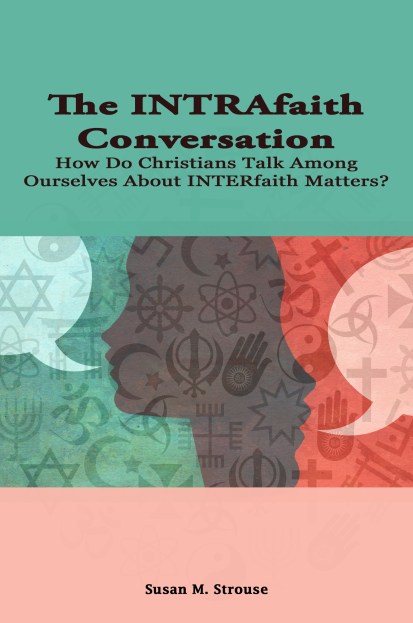
    PS – If you’re concerned about how Pluralism Sunday will be received in your congregation, might I recommend The INTRAfaith Conversation: How Do Christians Talk Among Ourselves about INTERfaith Matters? It would be a good place to start.

  • Is Sin Our Problem – or Is It Shame?

    images

    I’ve been thinking a lot about shame lately. For many people – myself included – shame is a much more insidious problem than our guilt over our sins. Make no mistake – I’m not denying the reality of sin or of our need to confess and repent. Though I would like to see us pay at least as much attention to our systemic sins (such as racism) as we do to our individual wrong-doings.

    As Lent approaches, I’m wondering if the attention we give to sin is the best way to go. In his book The Heart of Christianity, Marcus Borg asks whether ‘sin’ is the best way to name what is wrong and why we are lost. Not that he denies the reality of sin either. Borg doesn’t dispute that sin is a primary image within the Bible. But there are other images of our human predicament as well, each requiring a kind of healing. He writes:

    To list some but not all of them: we are blind, in exile or in bondage; we have closed hearts; we hunger and first; we are lost. Each of these images for our problem has a correlative image; that is, each implies a remedy, a solution.  If we are blind, we need to see. If we are in exile, we need to return. If we are in bondage, we need liberation. If we have closed hearts, we need to have our hearts opened. If we hunger and thirst, we need food and drink. If we are lost, we need to be found.

    But what do we need to help us heal when we feel shame? And just to be clear: I’m not equating shame with guilt. Guilt is about what we ‘ve done; shame is about who we are. Some use the phrase “toxic shame” to describe the feeling that we are somehow inherently defective, that something is wrong with our very being. Toxic shame can come about for all kinds of reasons: being bullied as a child, being sexually assaulted, for example. Veterans diagnosed with PTSD often experience shame. Unhealthy family dynamics can bring about shame in children.

    Unfortunately, the church has often been guilty of shaming its members – usually for sexual “sins”. And while the church does offer a path to confession and forgiveness for our actions, it’s much less equipped to offer healing for the shame that affects our being.

    So how can we in the church promote this kind healing?  As Borg would put it: If we have been shamed, then we need . . . what?

    I suggest that the first step is acknowledging this as a human condition from which many of us suffer. Maybe instead of focusing exclusively on our sinfulness this Lent, we lift up all the ways we can be broken and out of sync with our true humanity. And instead of offering only confession and forgiveness, we also offer a listening ear and compassion.

    For some, especially those who have suffered severe trauma, psychological therapy is also needed. But wouldn’t it be wonderful if the church could also participate in what author John Bradshaw called Healing the Shame that Binds You?

    Marcus Borg used to tell of  the Buddhist who once said , “You Christians must be very bad people—you’re always confessing your sins.” Maybe we could learn from that critique.

  • Lent from an INTRAfaith Perspective

    she likes itWe’re going to use my book, The  INTRAfaith Conversation: How Do Christians Talk Among Ourselves about INTERfaith Mattersfor our mid-week Lent discussion group this year. You might be thinking that it’s an odd choice for a Lent study.

    I agree that some seasons of the church year lend themselves better than others to delving into interfaith education/discussion/relationship-building. Epiphany, for instance, with its Zoroastrian Magi crossing over into Judaism to pay homage to Jesus, then going back to their own country and religion “by another way,” is a wonderful example of what John S. Dunne calls “passing over and coming back” in his book, The Way of All the Earth.

    Lent, however, might seem to be more problematic. The cross looms over us, and questions about the identity, mission, purpose of Jesus also loom large. But I suggest that it is, in fact, the perfect time for intrafaith education and discussion. At the very least, worship planners can take a new look at some of the anti-Semitic texts that will come up. I address this in more detail in Chapter 23 of my book, but here are a few examples.

    The Gospel of John especially gets into rants against “the Jews.” While some people know that this reflected the growing split between Judaism and the followers of Jesus, not all will understand the context. In The Passion According to John, which is often read on Good Friday, the phrase “the Jews” appears nineteen times in the New Revised Standard Version (NRSV). We don’t have to look very far for evidence of the damage done by anti-Jewish rhetoric. Language matters. Repetition nineteen times only reinforces hateful stereotypes.

    In The Inclusive Bible (TIB), “the Jews” appears only six times, when the reference is to the title “King of the Jews.” In seven places, “Temple authorities” is used to convey the part played by Jewish leadership is the crucifixion of Jesus. In other places “the Jews” is omitted entirely. For example, in contrast to John 19:20 in the NRSV, which reads “Many of the Jews read this inscription,” TIB has “Many of the people read this inscription.” And in verse 21, where the NRSV reads: “the chief priests of the Jews said to Pilate, ‘Do not write, “The King of the Jews . . . ”, TIB has: The chief priests said to Pilate, “Don’t write ‘King of the Jews . . . ’”.

    And another: changing John 20:19 from “When it was evening on that day, the first day of the week, and the doors of the house where the disciples had met were locked for fear of the Jews . . .” (NRSV) to “In the evening of that same day, the first day of the week, the doors were locked in the room where the disciples were, for fear of the Temple authorities . . .” (TIB)

    A helpful resource here is Sermons without Prejudice. Its stated purpose is “to counter this anti-Semitism by addressing the anti-Judaism that some New Testament readings may convey.” Another is Preaching the Gospels without Blaming the Jews: A Lectionary Commentary by Ronald J Allen and Clark M. Williamson. These would be excellent places to start.

    But the questions do go much deeper and raise issues within Christianity and among members of our churches. In Chapter 8 of my book I ask: “Is a professed belief in Jesus Christ the only way to salvation?” What do we mean by salvation? What do we believe about Jesus that effects this salvation?

    If you read Chapter 8, you’ll discover – as I did –  that things start to get complicated and scholars debate this from every which way. But as a parish pastor, I wanted to know how to bring these issues to bear on the beliefs and questions of our church members and the educational and liturgical practices of our congregation.

    So we’ll be delving into topics, such as:

    • The Intrafaith Landscape: A New Reformation
    • New Voices: Spiritual Independents and Hybrid Spirituality
    • Faces of God and Jesus: “Who Do You Say I Am?”
    • Exclusivism, Inclusivism, and Pluralism
    • Heresy, Syncretism and Relativism – Oh, My!
    • The Mystic Heart
    • Evolutionary Christianity

    It will be a mix of intra and inter faith work. Once you begin, there’s no way to separate them. Shameless promotion alert: there are reflection questions at the end of each chapter and suggestions for further reading. So  if you haven’t chosen your Lent study book yet, might I suggest . . .

    she likes it

  • Beginning the InterPolitical Conversation

    Oh, the comfort, the inexpressible comfort of feeling safe with a person. – Dinah Craik dscn0223

    “Safe Space” is one of the thousand plus words added to the Merriam Webster dictionary this week. MW defines a safe space as “a place (as on a college campus) intended to be free of bias, conflict, criticism, or potentially threatening actions, ideas, or conversations.”

    I must take exception to that last bit, although I understand its purpose. No one should be physically or verbally threatened or attacked. However it is likely in conversations about highly charged issues that one’s assumptions, worldviews, and belief systems will be challenged – if not threatened. In that sense, it’s not a safe space.
    I address this issue in my book as it applies to interfaith and intrafaith conversations.

    For some people, entering into an interfaith experience can be confrontational. For some, engaging in intrafaith conversation can be equally or more challenging. For this reason, I usually begin a new group with the poem, “It Is Difficult, O God” by C.S. Song. I do this to let them know that discomfort is to be expected, in fact it is perfectly normal. Having said that, it is essential to create an environment of respect and safety. By safety, I do not mean that one’s belief system may not be shaken. It is entirely possible that it might be. What I mean by a safe environment is one in which viewpoints are respected and in which the leader is capable of managing the group process under all circumstances. There will inevitably be challenging ideas and differences of opinion. There will often be conversations that will cause some participants to become distressed or upset. The idea is not to avoid conflict, disagreements or upset, but to manage them in appropriate and safe ways.

    I am coming more and more to the belief that this is the same kind of basis we now need in order to enter into interpolitical conversations. Many of us are recognizing that people on opposite sides in our polarized nation need to talk to one another. But what I also hear again and again is that we don’t know how to do that. From both sides I hear the expectation of not being heard and/or verbally attacked.Thankfully, help is becoming available. I’ve recently discovered a resource called Reaching Across the Red-Blue Divide, a free download from the Essential Partners website.

    Their pitch:screenshot-2016-11-23-08-37-31
    Most of us have at least one important relationship that has either been strained by painful conversations about political differences or silenced due to fear that it could get ugly. Bring it up and fight about it or avoid the conversation – and sometimes the person – altogether. Both options limit who we can be together as friends or family and limit what we can accomplish in our communities. What alternatives are there? You can let media pundits and campaign strategists tell you that polarization is inevitable and hopeless. Or you can consider reaching out and taking a journey with someone who is important to you. With some tools to support your best intentions, you can actually learn about what motivates other people and understand how they’ve come to believe the way they do. Connecting across our differences is both possible and necessary.

    The introduction promises to:
    help prepare you to speak about what is most important to you in ways that can be heard, and to hear others’ concerns and passions with new empathy and understanding even if — especially if — you continue to disagree.The guide offers a step-by-step approach to inviting another person — someone whose perspectives differ from your own — into a conversation in which:

    • You agree to set aside the desire to persuade the other and instead focus on developing a better understanding of each other’s perspectives, and the hopes, fears, and values that underlie them;
    • You agree to be curious and to avoid the pattern of attack and defend;
    • You choose to ask questions and move beyond stereotypes and assumptions.

    A lot of the process they outline is very similar to what I advocate in The INTRAfaith Conversation. But there is material specifically geared to the interpolitical, such as how to be at our best on social media.

    So – now there’s no excuse. The plan is pretty simple. We – I – just have to do it. As I read my words describing interfaith and intrafaith conversations, I wonder if I can substitute political and be able to say the same thing. I think it’s worth a try.

    I learned that entering into an exploration of other peoples’ religious faith and practice is a wonder-filled experience. For me, hearing another’s story is an intimate look inside that person’s heart, and that is not something to be taken lightly. In both my interfaith and intrafaith encounters, I have heard stories of joy, as well as stories of pain and hurt. In many of the encounters, each participant brought his or her whole self into the process. Entering into an examination of religious beliefs took us even more deeply into one another’s lives. It was crucial that an atmosphere of safety and trust had been created because, as I came to realize, the ground of this kind of encounter is a place of extreme intimacy and vulnerability. It is sacred ground. I often found myself in awe at the willingness of many of the participants to give of themselves, not only in terms of time, but more importantly in terms of openness — to me, to others, to their own growth process.   It is a privilege to be in the company of such people.

    she likes it

  • That Time I Shared the Hotel Shuttle with Trump Supporters

    22march9-superjumbo“Were you here for the Women’s March?” The woman joining me as I waited for the hotel shuttle to the airport was friendly.
    “Yes!” I responded.
    “Where are you from?”
    “Berkeley, CA”

    “How about you,” I asked.
    “Phoenix, AZ.”
    “Were you here for the March?” I was expecting to launch into another conversation about what a wonderful event it had been.

    “No,” she said, “we were here for the inauguration,” indicating her adult son who had now joined her. He was wearing a knit cap with TRUMP stitched across the front. I then noticed her American flag scarf. (7:00 am is way too early for me; I wasn’t as observant as I might have been later in the day).

    Then she went on to say, “We’re some of the ‘deplorables’ you’ve heard about.”

    Oh, boy. I responded by shaking my head and saying something like, “No, no. Let’s not go there. We have to learn how to talk with one another.” They agreed.

    The conversation continued in the shuttle. Mostly I listened. I did state my own opinion several times. I wasn’t trying to hide or play down my own position. I explained to them about my book and that I think the process of the intrafaith conversation could be the same for an interpolitical one. She took down my email address and book information and said she would check it out. She said I was “level-headed.”

    I thought about this encounter often over the next several days. I wondered if I had sold myself short by not speaking out against some of the things she’d said. I worried that I was becoming a hypocrite, advocating interpolitical dialogue, but then going back to my Bay area bubble where I can easily speak out against He-Who-Shall-Not-Be-Named.

    When I boarded the Amtrak train for Philadelphia, I found it was filled with women from the March. Yea! I was back among my peeps! I even met two ELCA women who were sitting right across the aisle from me. We had a grand time talking about the weekend and discussing next steps in the resistance.

    But that shuttle conversation keeps nagging at me. Will I ever have the courage – or the will – to bring together an interpolitical group? It would have to have the same safety and respect guidelines that I wrote about in my book. And the same expectations – that, while participants positions may not change drastically, the ability to listen respectfully would.

    Because it’s got to be about relationship-building. I don’t agree with a whole lot of the political opinions of my friends on the shuttle, but I don’t feel good about calling them names either. I have a feeling  they’re going to stay in my mind, nagging at me and challenging me to put my money where my mouth is. One thing I’ve learned about discerning whether something is a calling is that the thing you don’t want to do is often he very thing you’re being called to do.

    Great.

    More discernment is definitely necessary.


  • Enneagram Types and the INTRAfaith Conversation

    1483423938742Do congregations have Enneagram types? My friend who leads workshops on the Enneagram, thinks so and has helped two of the congregations I’ve served to determine their number. Lately I’ve been wondering whether different religions also have different Enneagram types. What got me thinking was a friend who is a Religious Scientist (not a Christian Scientist or a Scientologist) and a Seven on the Enneagram. Listening to her one day, I realized how compatible her theology was with her personality. Then I had the stunning revelation that the same could be said about me as a Lutheran One.

    So I went looking to see if anyone had done any work in this area. The best I could find  (at least in a pretty quick search) was an article about a book called Travels In Consciousness by David Hey. It confirmed my thoughts about me as a Reformer One and my friend as a Positive-Thinking Seven. I have to do more thinking about some of the others.

    Then I also started to wonder about how these insights might be useful to us in our interfaith relationships. If Islam mirrors the Type Four (Idealist or Romantic) personality and Judaism is akin to Type Six  the Questioner or Skeptic) and Karma Yoga from the Hindu tradition reflects Type Three (the Doer, Achiever or Performer) and Buddhism reflects Type Five (the Sage or Observer), how do these personalities interact?

    I also wonder how this relates to our intrafaith relationships. What do the diverse Enneagram types in our congregations bring to the conversation? How might a One and a Seven view such things as grace, salvation, social justice, etc. differently?

    Of course where one is on the continuum of integration and disintegration is a factor. When I’m at my perfectionistic, sarcastic worst is not the same as when I’m in my healthy range. And the same is true for all of us.

    It’s an interesting rabbit hole to dive into today – gets me away from politics for a little while. Although I do believe that we as a country are dealing with an unhealthy Eight (but that’s a subject for another day).


  • Pluralism and Election Politics

    pluralismbanner

    How different might this election cycle have been had more voters been willing to be curious about, understand, accept, or even embrace a pluralist nation, rather than panic in the face of “the other? – Kate Blanchard

    Kate Blanchard, Associate Professor of Religious Studies at Alma College, asks a very important question. If we think that engaging in interfaith activities and education is just a nice “add-on” to the more important work of ministry in our churches, we are sadly mistaken.

    And if part of our hesitancy of doing  it is that people within our congregations might disagree on some of the issues that will be raised, we need to buckle up and prepare for the ride.

    It would be strange if there were not differences of opinions and beliefs within a group of people – even in our credal, doctrinal churches. Trust me; if you allow people to express themselves and ask questions without fear of being branded heretics, you’ll discover a wealth of theological perspectives. Maybe that’s why so many leaders don’t want to ask!

    But the truth is that people do have minds of their own, they do think about spiritual and theological matters, and they do form opinions about other belief (and non-belief) systems.

    A wise leader would be willing to enter into the experience of interfaith and intrafaith discussions, not in order to tell people what to think and believe, but to facilitate the process of discovery.

    As Professor Blanchard’s question articulates so well, this isn’t an abstract matter. There are concrete consequences to our avoidance of the challenges of pluralism. 


  • Christmas, Hanukkha, and the Qur’an

    479113_gallery_5644449997087_jpg_fa_rszdIf you’re looking for an excellent time to introduce something interfaith-y in your church, that time is NOW!

    On Christmas Eve, Christians will celebrate the birth of Jesus. And while Christmas isn’t a holy day in Islam, the birth of Jesus is a very big deal. Surah 3:45 in the Qur’an tells the story of the Annunciation this way: [And mention] when the angels said, “O Mary, indeed Allah gives you good tidings of a word from Him, whose name will be the Messiah, Jesus, the son of Mary – disting180px-virgin_mary_and_jesus_old_persian_miniatureuished in this world and the Hereafter and among those brought near [to Allah].

    There are some 71 verses in the Quran that refer to Jesus. And Mary (Maryam‎) is revered as one of he most righteous and greatest women in Islam. She’s actually mentioned more times in the Qur’an than in the New Testament. Here’s an interesting video of the Nativity story. You’ll definitely see some differences from our versions. But what a great topic for discussion! Especially if you invite some Muslim friends to join in.

    Also on December 24th is the first night of Hanukkah, the eight-day “festival of lights.” As Christians celebrate the Light that has come into the world, Jews will light the first candle on the llmc9237606menorah. Again, differences between our religions – but similarities too.

    If these differences raise questions among the people in your church, hallelujah! Now it’s time to enter the intrafaith conversation.

    You can check out my website for more information on how to go about doing that. Or simply buy the book and get a group together to explore what it means to be a faithful Christian and to be in respectful relationship with those of other religious traditions.

    she likes it