
It’s been a long time since I’ve posted here. When last we met in January 2020, I was organizing a screening of Same God, the story of the Wheaton College professor who was removed from her tenured position because of her “embodied solidarity” with Muslims.
But then . . . well, 2020 happened. And it felt like a whole lot of other issues took center stage. I pretty much decided to give up on promoting my book, blog, etc. When I got the notice that the Parliament of the World’s Religion would be on line this year and was soliciting proposals for workshops at this years online gathering, I decided to give it a pass.
But, as is the way of the universe, something happened. I received two emails. The first was from members of FEZANA, a coordinating organization for Zoroastrian Associations of North America. They planned to propose a panel discussion on the need for Interfaith organizations to become incubators for intrafaith dialogue. They had somehow found me on the Internet and wondered if I would be interested. Of course, I was interested! That proposal was accepted and plans have begun for our presentation on “Tweaking the Interfaith model: Interfaith Organizations as Incubators for Intrafaith Dialogue.” More details will come as our planning proceeds.

The second email was from a retired Lutheran pastor in St.Paul, MN who had found my interview with Steve Kindle on Pastor to Pew about how to deal with John 14: 6: “I am the way, and the truth, and the life. No one comes to the Father except through me,” which John attributed to Jesus. Listen to that podcast here.
Rev. John Matthews had begun an initiative called the 14:6 Project. He says, “The exclusivity of this verse, while ‘understandable’ in its late-first-century historical context, hinders authentic dialogue with other faith traditions. The mission of the 14:6 Project is to focus on this verse of New Testament scripture that is so problematic for Christian involvement in interfaith settings.
He comes to these conclusions from a long career in this area. He was a founding member of the Evangelical Lutheran Church in America (ELCA) Consultative Panel for Lutheran-Jewish Relation (1990-2000), chaired the Region III (ELCA) Task Force for Jewish-Christian Relations (1990-2005), and served on the program advisory committee of the Jay Phillips Center for Interfaith Learning at the University of St. Thomas in St. Paul (2004-2008). While on the ELCA Consultative Panel, Pastor Matthews assisted in drafting the “Declaration of the Evangelical Lutheran Church in America to the Jewish Community” (1994) which is now a part of the permanent display on anti-Semitism at the United States Holocaust Memorial Museum in Washington, DC.
Our workshop will be “A Deep Dive into One Barrier to Christian Interfaith Relations: Introducing ‘The John 14:6 Project.’” Our hope is to find others who want to continue the work of re-imagining this verse. We believe that If interfaith relationships are to thrive, each tradition must work on its own intra-faith issues. John 14:6 is Christianity’s intra-faith challenge.
So I’m back in. In fact, a third proposal, “Dismantling Patriarchy in the World’s Religions” was also accepted – but that’s the subject of another post. My commitment to the intra-faith conversation continues!
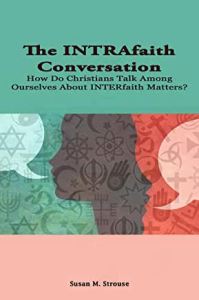
 Intersection of Ecumenical and Inter-Religious Relations. One of the reasons that session appealed to me (among the 15+ other offerings at the same time) was the moderator of the panel was Kathryn Lohre, executive for Ecumenical and Inter-Religious Relations for my denomination, the Evangelical Lutheran Church in America (ELCA)
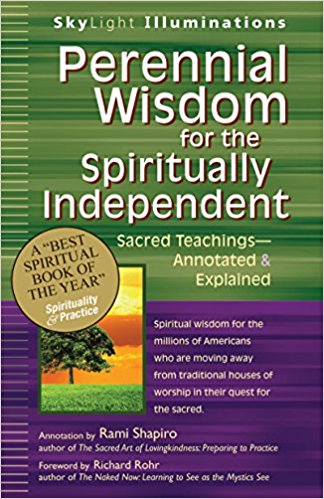 Those of us who are still in the church must accept the fact that for many people the old categories of Catholic/ Protestant, Episcopal/ Methodist, high church/ low church, contemporary/ traditional, etc. just do not matter. There are new voices contributing to the religious scene, although most of them would not like to be referred to as religious. These voices deserve to be heard. They may have left or never been part of the church, but that doesn’t mean that they don’t have a lot to say about spirituality, the meaning of life and how to make a difference in the world.
 The Interfaith Pastor