Category: Uncategorized

  • Pluralism Summer Week 10: Mark Carlson, Lutheran Office of Public Policy–CA

    martin-luther-1No, our Pluralism Summer speaker this week is not Martin Luther! But as a Lutheran pastor, I would be remiss in neglecting the contribution of Luther to the subject of religion and politics. While his Doctrine of the Two Kingdoms may not seem to be the sexiest topic for a summer interfaith series,  in reality it was – and still – is a controversial subject. How many times have you heard (or said) that the church is no place to discuss politics? Well, Luther did draw a clear line between spiritual and secular authority and said that the two realms should never be confused.

    The trouble is that his writings on the subject particularly in Temporal Authority: To What Extent it Should Be Obeyed have been interpreted in various ways. Critics claim that Luther paved the way,  not only for the secularisation of society but also for what would become the ideology of National Socialism in 20th century Germany.That’s a hard pill for a good Lutheran to swallow. And coupled with Luther’s unfortunate anti-Semitic writings, a double dose of history to be reconciled.

    Fortunately, other interpretations have prevailed. David Lose, for example, currently president of the Lutheran Theological Seminary at Philadelphia, in an article entitled “The Ambidextrous God: Luther on Faith and Politics,” asserts that “Luther expects that we ask, not whether God is at work in the political institutions of our world, but rather, and always, how.” No unmoveable line between the two realms there.

    19307_10203771415674714_8834993001436362622_nHaving heard from other traditions on the subject of the intersection of religion and politics, it is certainly appropriate to hear from someone working in both realms. In fact, it is an intrafaith conversation, since we’ve heard from other Christian traditions, such as Mennonites and Quakers. There are differences.

    So Mark Carlson, director of the Lutheran Office of Public Policy-CA in Sacramento, part of the political advocacy ministry of the ELCA, will be at First United this Sunday to take on the job of telling us how he sees God at work in the political institutions of our world.

    Or not – and what we can do about it.


    Pluralism Summer is an initiative of First United Lutheran Church, a progressive church, rooted in the Reformation tradition, which says that the church, our worship, and our music must always be re-forming. We believe that it’s more important to ask the questions than to know all the answers. 
    We believe our wisdom will only be enhanced by continued conversation with all of our neighbors. Together we work for peace, justice, and the good of all people and all creation. 

    We believe that, as theologian Hans Kung wrote:
    “There will be no peace among the nations until there is peace among the religions.  There will be no peace among the religions until there is dialogue among the religions.”

    A few words about our service:
    Our 5:00 service is decidedly interspiritual. This means that, while we are rooted in the Christian tradition, we believe that  spirituality is at the heart of all the world religions. This shared spiritual heritage enables us to go beyond the differences in our theological beliefs and traditions. In other words: all are welcome

  • Pluralism Summer Week Nine: Elaine Donlin Sensei, Buddhist Church of SF

    elaineI’m happy to announce a return visit from Elaine Donlin of the Buddhist Church of San Francisco, which is the oldest Jodo Shinshu (Pure Land) Buddhist Church in America. Elaine is an ordained priest and a Minister’s Assistant and has been teaching the Essentials of Buddhism since 2008. She serves as Buddhist Community Clergy for several SF Hospitals, as well as, partners with the SF Zen Center to provide Meditation and Buddhism in the SF County Jails. She is also a founding member of the BCSF LGBTQQ group.

    Elaine has become a good friend of First United. She and Rev. Ron Kobata were in attendance at our big anniversary celebration back in April. Elaine has also shared with me some resources she’s been using in intrafaith conversations in the Buddhist community.

    I’m looking forward to hearing about how her practice informs her politics and her work in the world.
    Pluralism Summer is an initiative of First United Lutheran Church, a progressive church, rooted in the Reformation tradition, which says that the church, our worship, and our music must always be re-forming. We believe that it’s more important to ask the questions than to know all the answers.

    We believe that, as theologian Hans Kung wrote:
    “There will be no peace among the nations until there is peace among the religions.  There will be no peace among the religions until there is dialogue among the religions.”

    We believe our wisdom will only be enhanced by continued conversation with all of our neighbors. Together we work for peace, justice, and the good of all people and all creation.

    A few words about First United:
    Our 5:00 service is decidedly interspiritual. This means that, while we are rooted in the Christian tradition, we beleive that  spirituality is at the heart of all the world religions. This shared spiritual heritage enables us to go beyond the differences in our theological beliefs and traditions. In other words: all are welcome!


  • Pluralism Summer Week 8: Society of Friends (Quaker)

    laura headshotNext up in our summer of “religion and politics” is Laura Magnani from the Quaker tradition. Laura is director of the American Friends Service Committee’s Bay Area Healing Justice Program in California and has worked on criminal justice issues for over 35 years. She wrote “America’s First Penitentiary: A 200 Year Old Failure in 1990” and co-authored the AFSC publication, “Beyond Prisons: A New Interfaith Paradigm for Our Failed Prison System” in 2006. She is also a  nationally known expert on solitary confinement. We are honored to have her as a speaker in our summer series.

    A few words about First United:effc5190d0f805a4130997d6703a5eef

    Our 5:00 service is decidedly interspiritual. This means that, while we are rooted in the
    Christian tradition, we beleive that  spirituality is at the heart of all the world religions. This shared spiritual heritage enables us to go beyond the differences in our theological beliefs and traditions. In other words: all are welcome!

    Pluralism Summer is an initiative of First United Lutheran Church, a progressive church, rooted in the Reformation tradition, which says that the church, our worship, and our music must always be re-forming. We believe that it’s more important to ask the questions than to know all the answers.

    We believe that, as theologian Hans Kung wrote:
    “There will be no peace among the nations until there is peace among the religions.  There will be no peace among the religions until there is dialogue among the religions.”

    We believe our wisdom will only be enhanced by continued conversation with all of our neighbors. Together we work for peace, justice, and the good of all people and all creation.

  • Turkey and the Gülen Movement

    I couldn’t agree more These are the folks who, among other things, are our partners in our Muslim/Christian book study and co-hosts of the annual interfaith iftar.

    D Andrew Kille's avatarNews & Notes

    Turkish flagNews reports from Turkey have noted that Turkish President Recep Tayyip Erdogan has repeatedly blamed the Hizmet (“Service”) movement and its exiled leader Fethullah Gülen for being a “shadow” subversive organization, and the instigators of the recent attempted coup. Erdogan has declared a state of emergency, arrested thousands of Turkish citizens, including Gülen’s nephew, and called for the closure of 1,043 private schools, 1,229 charities and foundations, 19 trade unions, 15 universities and 35 medical institutions over suspected links to the Gulen movement.

    Those of us, however, who have known and worked for many years with local members of the Hizmet movement remain highly skeptical about Erdogan’s motives and characterization of Gülen and the movement. Hizmet is a loosely-organized movement comprising hundreds of local groups who have devoted themselves to service in the best sense- education, multicultural relationship-building and emergency relief projects serving disaster victims, the homeless, the hungry, and beyond…

    View original post 325 more words

  • Pluralism Summer Week 7: Archbishop Franzo King

    st_john_coltrane_fmivnlThe Church of St. John Coltrane was in the news a while back because of the loss of their worship space on Fillmore Street. No one was sure where they would go or if this unique expression of spirituality and worship would be lost. Thankfully, in April, they took up residence along with us at St. Cyprian’s Episcopal Church. They join, not only 10155866_10153102768389325_6707118149508077725_nFirst United and St. Cyprian’s, but also Sophia in Trinity (the Roman Catholic Womanpriest congregation) and Middle Circle (First United’s outreach to the spiritually independent).

    The corner of Turk & Lyon has become quite the  eclectic center!125

    This Sunday, we are delighted to have as our guest speaker Archbishop Franzo W. King, co-founder of The Church of St. John Coltrane and presently Archbishop of the African Orthodox Church-Jurisdiction West. He is also a founding Member of the San Francisco Interfaith Council.

    This will undoubtedly be a highlight in our summer series!
    And, as always, regardless of what you believe or don’t believe, all are welcome.


    Pluralism Summer is an initiative of First United Lutheran Church, a progressive church, rooted in the Reformation tradition, which says that the church, our worship, and our music must always be re-forming. We believe that it’s more important to ask the questions than to know all the answers.

    We believe that, as theologian Hans Kung wrote:
    “There will be no peace among the nations until there is peace among the religions.  There will be no peace among the religions until there is dialogue among the religions.”

    We believe our wisdom will only be enhanced by continued conversation with all of our neighbors. Together we work for peace, justice, and the good of all people and all creation.


  • The Intrafaith Conversation in Mexico

    NAINConnect16Well, it’s over. The 28th annual gathering of the North American Interfaith Network at the Convento Esclavas de Cristo Rey in Guadalajara was the first (and hopefully not the last) NAIN Connect in Mexico.

    The theme was “Sacred Space” and much attention was rightly given to the indigenous people of Mexico. But there were other expressions of sacred space – both internal and external. I myself was privileged to lead a workshop on creating safe and sacred space in which intrafaith conversations can happen.

    My wshe likes itorkshop was on Tuesday, but on Monday I got some great publicity. During the discussion at a workshop on interfaith hospitality, someone spoke up and said, “What we really need to have is an intrafaith dialogue.” I almost jumped out of my seat as I raised my  hand to jump in and tell everyone about the opportunity to do just that – and buy the book as well!

    Going in, I had no idea how many religions might be represented. This was my first venture with a potentially interfaith group. It turned out that the group was largely Christian, with a smattering of Buddhists, Religious Science adherents, a Jewish/Buddhist, and a “none.”

    I started off with a personal intrafaith story. Then I shared a resource I had  just learned at the hospitality workshop: The Differences Between Dialogue and Debate. This was part of the presentation about how to create a safe space for difficult dialogue to happen – and we all agreed that these can be very difficult conversations for us to be part of. Too often our buttons get pushed and our “non-anxious presence” (I prefer “non-reactive presence”) goes out the window.

    IMG_4605Then we broke into small groups and everyone got a chance to share their own stories and struggles with members of their own tradition. Finally, we  began to strategize about how to create an intrafaith conversation when we got back home.

    IMG_4606I don’t know if anyone will do that. But I believe that, at the very least, the issue was put out onto the table, and participants went away with some resources and hopefully lots to think about.

    And that’s a start.

    Check out my web site at https://intrafaithconversation.com 
    Follow my blog at https://intrafaithconversation.com/blog-2/
    Buy my  book at AmazonBarnes & Noble, and Sagrada Sacred Arts in Oakland, CA
    Kindle edition is also available on Amazon

  • Pluralism Summer: Weeks 5 & 6

    165763_489522519437_2022599_nI first met Dolores White back in 2002 when I had just arrived in Berkeley. I’d met Paul Chaffee from the Interfaith Center at the Presidio and was invited to a board meeting. Somehow I found my way from the East Bay to the far side of San Francisco (the Presidio is not easy to get to on public transportation and my car was still back in Buffalo).  I’ve gotten much more savvy about navigating the streets of San Francisco, but back then I wasn’t sure how I’d ever find my way back home.

    Dolores, a member of the Baha’i faith, was one of the board members who welcomed me that day and the first to offer me a ride to the nearest BART station. I was so grateful. Since then I’ve learned that that’s just Dolores: graciousness personified.

    She was one of our speakers two summers ago, when our theme was the environment, and I’m so glad she agreed to come back for Week 5 to address the question of how her Baha’i faith informs how she thinks about politics.

    Unfortunately, however, I won’t be there. I’ll be attending NAINConnect 2106 in Guadalajara. NAIN is the North American Interfaith Network, founded in 1990 as a way to build communication and mutual understanding among interfaith organizations and diverse religious groups throughout North America.

    d4ba2c0967b317439c004019f5e18b66This will be the first gathering in Mexico and there will be an emphasis on Indigenous Peoples and their relationship to the land/struggle for land and water rights.  The theme of the conference this year is Sacred Space. According to the planners, we’ll be looking at sacred space in the widest sense possible – our inner sacred space, the space we create together in relationship, our worship spaces, holy places, the land and the earth and the universe as sacred. Also, my workshop proposal was accepted, so I’ll be leading my first interfaith intrafaith conversation!

    WEEK 6 of Pluralism Summer will be completely different. Middle Circle will be taking over the entire time slot. Middle Circle is the “spiritual but not religious” community sponsored by First United. The theme’s question had to be a little different for this group: “How does your religious/ spiritual/ philosophical tradition inform how you think about politics?” Not only will Middle Circle give us their insights, they’ll also help those of us in the “traditional” church expand our ideas of what the interfaith community includes.

    Pluralism Summer is an initiative of First United Lutheran Church, a progressive church, rooted in the Reformation tradition, which says that the church, our worship, and our music must always be re-forming. We believe that it’s more important to ask the questions than to know all the answers.

    We believe that, as theologian Hans Kung wrote:
    “There will be no peace among the nations until there is peace among the religions.  There will be no peace among the religions until there is dialogue among the religions.”

    We believe our wisdom will only be enhanced by continued conversation with all of our neighbors. Together we work for peace, justice, and the good of all people and all creation.


  • Pluralism Summer: Week 4

    Sue Englander/John Durham weddingI’m particularly happy to welcome two guest speakers this coming Sunday. Ed Driscoll and Jim Lichti are members of First Mennonite Church of San Francisco. When we chose the topic of religion and politics as the theme for this summer’s series, I knew I wanted to include someone from one of the historic peace churches. We’ll have a member of the Society of Friends (Quaker) later in the summer, so we’ve really been blessed.
    The great thing about Ed and Jim, though, is that there’s a personal connection with First United, through our music director/administrative assistant, Orion Pitts. Plus, Orion and I both grew up in Pennsylvania Dutch country, so we’re familiar with Mennonites, particularly their conservative dress and oft-mistaken identification with the Amish.

    It will be great to hear from these “west coast” Mennonites and hear their perspectives on faith and politics, especially on this Independence Day weekend.

    Pluralism Summer is an initiative of First United Lutheran Church, a progressive church, rooted in the Reformation tradition, which says that the church, our worship, and our music must always be re-forming. We believe that it’s more important to ask the questions than to know all the answers.

    We believe that, as theologian Hans Kung wrote:
    “There will be no peace among the nations until there is peace among the religions.  There will be no peace among the religions until there is dialogue among the religions.”

    We believe our wisdom will only be enhanced by continued conversation with all of our neighbors. Together we work for peace, justice, and the good of all people and all creation.

  • Join the INTRAfaith Conversation

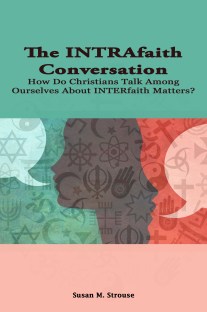
    Reviews for  The INTRAfaith Conversation: How Do Christians Talk Among Ourselves About INTERfaith Matters?   

    Ishe likes itnevitably, profound questions arise out of respectful encounters with people of religions other than our own. Many who have been involved in cooperative engagements with people of other faith traditions discover that it is often easier to talk with people of a different religion than it is with the person sitting next to you in your own congregation. For others, the struggle is within, as in the case of Elsie L., a parishioner in Buffalo. After a church session in which a Hindu woman active in interfaith activities had spoken to the group, Elsie spoke to Pastor Strouse. “If I accept the Hindu path as equal to Christianity,” she said, “I’m worried that I’m betraying Jesus.”

    Years of wrestling with that question and similar ones resulted in Strouse’s new book, The INTRAfaith Conversation: How Do Christians Talk Among Ourselves about INTERfaith Matters? In it, Dr. Strouse addresses the challenges that the increasingly interfaith realities of today present to Christians, and invites reflection on how Christian theology and identity might be shaped and even strengthened by cooperative interfaith relationships.Blending personal stories, thoughtful reflection on the changing face of America and pastoral concern, The INTRAfaith Conversation invites readers to understand and appreciate just what doing Christian theology means in today’s multi-religious world. The book’s sections reflect the breadth of Strouse’s focus: dealing with the new religious context; what it means to think theologically as a comunity; tolerance, exclusivism, inclusivism, and pluralism; personal experience; and pastoral and leadership issues for congregations entering the interfaith world.

    The book is designed to be used with a discussion group; each section is followed by a series of questions for reflection and discussion along with suggestions for further reading.I personally have been involved in interfaith work in the Bay Area for over 35 years and have never seen a book quite like The INTRAfaith Conversation. It addresses a very real issue with depth, humor, and pastoral sensitivity. I highly recommend it not only to pastors and other leaders in Christian churches, but to lay people who may be asking some of the same questions. Further, although it is specifically aimed at a Christian audience, it offers a model for how similar questions might be raised and wrestled with in non-Christian contexts as well.
    Rev. Dr. D. Andrew Kille

    This crisp and cogent book by the Rev. Dr. Strouse is published at a time when both interfaith and intrafaith dialogue are critical to the vitality of spiritual life in our nation. As a parish pastor in a small, struggling congregation I have become increasingly aware of the insularity and isolation of many of our parishioners. This seems less the result of inadequate parish education as it is the byproduct of too many people getting their information from biased TV networks, so-called social media or word-of-mouth. We parish pastors need to examine our internal (intra-congregational) conversations about diverse faith traditions and how they bear on congregational mission. I was particularly impressed by the author’s use of footnotes and her extensive bibliography. The book is a “walking-talking workshop” in print with its detailed reflection/discussion questions and suggestions for further reading. Thank you, Pastor Strouse, for such a comprehensive presentation of how to approach constructively this timely and important conversation.
    Rev. Richard G. Eddy

    Expertly laid out, providing a roadmap for a much needed dialogue.
    Russell H. Miller

    Available online at Amazon, Barnes & Noble,
    and at Sagrada Bookstore in Oakland, CA
  • Pluralism Summer: Week 3

    This past spring, peter_erlenweina colleague called me to ask if I knew a place where the author of a new book on interreligious spirituality might present a talk on this topic. Intrigued, I agreed to a virtual introduction and then went on to set up an in-person meeting.

    When I met Dr. Peter Erlenwein at the Dolores Park Cafe, I knew we were talking the same language! And I was delighted that he accepted my invitation to be part of our Pluralism Summer series.  I didn’t know much about Dr. Erlenwein at the time of that first meeting, but I have since discovered the depth of his knowledge and experience. And while listening to him talk at that first meeting, I realized how relevant his research is for today’s explorations of what it means to be “spiritual but not religious.”

    Peter Erlenwein, Ph.D., is a sociopsychologist and transpersonal therapist from Germany. His integral approach combines Jungian archetypal psychology, meditation and body mind work with dance, ritual and role-playing in the context of sacred text reflections of different religious traditions. His spiritual insight and life has been deeply inspired by his decades long travels to India, Southern Africa and now the US. As a radio journalist, author and intercultural researcher he has been publishing continuously on interreligious subjects. His latest book is titled: Und sah die Himmel offen. Spiritualität diesseits und jenseits von Religion (And saw the heaven open. Spirituality this side and beyond religion).

    I’m looking foreward to hearing what Dr. Erlenwein will have to say this Sunday about the intersection of religion and politics!