Category: Interfaith

  • Pluralism Summer: Week 4

    Sue Englander/John Durham weddingI’m particularly happy to welcome two guest speakers this coming Sunday. Ed Driscoll and Jim Lichti are members of First Mennonite Church of San Francisco. When we chose the topic of religion and politics as the theme for this summer’s series, I knew I wanted to include someone from one of the historic peace churches. We’ll have a member of the Society of Friends (Quaker) later in the summer, so we’ve really been blessed.

    The great thing about Ed and Jim, though, is that there’s a personal connection with First United, through our music director/administrative assistant, Orion Pitts. Plus, Orion and I both grew up in Pennsylvania Dutch country, so we’re familiar with Mennonites, particularly their conservative dress and oft-mistaken identification with the Amish.

    It will be great to hear from these “west coast” Mennonites and hear their perspectives on faith and politics, especially on this Independence Day weekend.

    Pluralism Summer is an initiative of First United Lutheran Church, a progressive church, rooted in the Reformation tradition, which says that the church, our worship, and our music must always be re-forming. We believe that it’s more important to ask the questions than to know all the answers.

    We believe that, as theologian Hans Kung wrote:
    “There will be no peace among the nations until there is peace among the religions.  There will be no peace among the religions until there is dialogue among the religions.”

    We believe our wisdom will only be enhanced by continued conversation with all of our neighbors. Together we work for peace, justice, and the good of all people and all creation.

  • Join the INTRAfaith Conversation

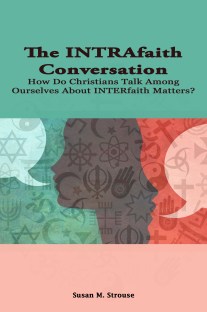
    Reviews for  The INTRAfaith Conversation: How Do Christians Talk Among Ourselves About INTERfaith Matters?   

    Ishe likes itnevitably, profound questions arise out of respectful encounters with people of religions other than our own. Many who have been involved in cooperative engagements with people of other faith traditions discover that it is often easier to talk with people of a different religion than it is with the person sitting next to you in your own congregation. For others, the struggle is within, as in the case of Elsie L., a parishioner in Buffalo. After a church session in which a Hindu woman active in interfaith activities had spoken to the group, Elsie spoke to Pastor Strouse. “If I accept the Hindu path as equal to Christianity,” she said, “I’m worried that I’m betraying Jesus.”

    Years of wrestling with that question and similar ones resulted in Strouse’s new book, The INTRAfaith Conversation: How Do Christians Talk Among Ourselves about INTERfaith Matters? In it, Dr. Strouse addresses the challenges that the increasingly interfaith realities of today present to Christians, and invites reflection on how Christian theology and identity might be shaped and even strengthened by cooperative interfaith relationships.Blending personal stories, thoughtful reflection on the changing face of America and pastoral concern, The INTRAfaith Conversation invites readers to understand and appreciate just what doing Christian theology means in today’s multi-religious world. The book’s sections reflect the breadth of Strouse’s focus: dealing with the new religious context; what it means to think theologically as a comunity; tolerance, exclusivism, inclusivism, and pluralism; personal experience; and pastoral and leadership issues for congregations entering the interfaith world.

    The book is designed to be used with a discussion group; each section is followed by a series of questions for reflection and discussion along with suggestions for further reading.I personally have been involved in interfaith work in the Bay Area for over 35 years and have never seen a book quite like The INTRAfaith Conversation. It addresses a very real issue with depth, humor, and pastoral sensitivity. I highly recommend it not only to pastors and other leaders in Christian churches, but to lay people who may be asking some of the same questions. Further, although it is specifically aimed at a Christian audience, it offers a model for how similar questions might be raised and wrestled with in non-Christian contexts as well.
    Rev. Dr. D. Andrew Kille

    This crisp and cogent book by the Rev. Dr. Strouse is published at a time when both interfaith and intrafaith dialogue are critical to the vitality of spiritual life in our nation. As a parish pastor in a small, struggling congregation I have become increasingly aware of the insularity and isolation of many of our parishioners. This seems less the result of inadequate parish education as it is the byproduct of too many people getting their information from biased TV networks, so-called social media or word-of-mouth. We parish pastors need to examine our internal (intra-congregational) conversations about diverse faith traditions and how they bear on congregational mission. I was particularly impressed by the author’s use of footnotes and her extensive bibliography. The book is a “walking-talking workshop” in print with its detailed reflection/discussion questions and suggestions for further reading. Thank you, Pastor Strouse, for such a comprehensive presentation of how to approach constructively this timely and important conversation.
    Rev. Richard G. Eddy

    Expertly laid out, providing a roadmap for a much needed dialogue.
    Russell H. Miller

    Available online at Amazon, Barnes & Noble,
    and at Sagrada Bookstore in Oakland, CA
  • Pluralism Summer: Week 3

    This past spring, peter_erlenweina colleague called me to ask if I knew a place where the author of a new book on interreligious spirituality might present a talk on this topic. Intrigued, I agreed to a virtual introduction and then went on to set up an in-person meeting.

    When I met Dr. Peter Erlenwein at the Dolores Park Cafe, I knew we were talking the same language! And I was delighted that he accepted my invitation to be part of our Pluralism Summer series.  I didn’t know much about Dr. Erlenwein at the time of that first meeting, but I have since discovered the depth of his knowledge and experience. And while listening to him talk at that first meeting, I realized how relevant his research is for today’s explorations of what it means to be “spiritual but not religious.”

    Peter Erlenwein, Ph.D., is a sociopsychologist and transpersonal therapist from Germany. His integral approach combines Jungian archetypal psychology, meditation and body mind work with dance, ritual and role-playing in the context of sacred text reflections of different religious traditions. His spiritual insight and life has been deeply inspired by his decades long travels to India, Southern Africa and now the US. As a radio journalist, author and intercultural researcher he has been publishing continuously on interreligious subjects. His latest book is titled: Und sah die Himmel offen. Spiritualität diesseits und jenseits von Religion (And saw the heaven open. Spirituality this side and beyond religion).

    I’m looking foreward to hearing what Dr. Erlenwein will have to say this Sunday about the intersection of religion and politics!


  • Pluralism Summer: Week 2

    tikkunolam_hpThere’s a conversation in the movie Nick & Norah’s Infinite Playlist, that’s pretty profound for a romantic comedy.
    Norah: It reminds me of this part of Judaism that I really like. It’s called ikkun olam. It says that the world’s been broken into pieces and it’s everybody’s job to find them and put them back together again.
    Nick: Well maybe we’re the pieces. Maybe we are not supposed to find the pieces. Maybe we are the pieces.

    920x920This Sunday, our guest speaker will be Rita Semel, who I often describe as the godmother of the San Francisco interfaith community. Don’t mistake her diminutive size or her age for lack of energy or passion for healing the world. Rita’s raison d’etre, which she received from her Jewish heritage, is tikkun olam (literally “world repair”).

    Rita – a co-founder of the United Religions Initiative, the San Francisco Interfaith Council, and the Interfaith Center at the Preisdio – will address the question: how does your tradition inform how you think about politics?

    It’s a real honor to have this dsitinguished guest as part of our summer series. In light of recent events, I hope many of you will come to hear what this wise elder has to say as we seek to heal our broken hearts and our broken world.

    5:00 pm
    First United Lutheran Chiruch
    2097 Turk Street (at Lyon)
    San Francisco, CA

    For more information, contact me.

    Pluralism Sunday began some years ago as an initiative of progressivechristianity.org.
    But at First United we decided that one Sunday wasn’t enough. So now, for the fourth year, we’re embarking on a summer of interfaith exploration. Each week a speaker from a different tradition will address the question of religion and politics within our regular Sunday service.

    Our service, while rooted in our Christian tradition, is decidedly interspiritual. For a description of what it means to be an interspiritual Christian, read my blog post here.

    Everyone is welcome – those of all faiths and of no faith. Visitors are invited to participate in the service to the extent that you are comfortable.


  • Who’s to Blame for Intra-Religious Diversity?

    Here’s a good assessment of our intrafaith milieu . . .

    CAFETERIA CHRISTIANITY IN THE AGE OF SOCIAL MEDIA: WHAT’S OLD IS NEW AGAINCalendar_for_Lunch_May-June-2016-800px-1

    When people ask questions like “Why do we pick and choose our religious beliefs?” they usually don’t mean “we” but “they.” This is because within such a question, there is often an implied criticism of “religion”—however defined—that has not been swallowed hook, line, and sinker.

    In this recent example, the question is being asked about America’s youth, and the answer is —what else?— “Blame social media.” A Baylor study, relying on information from Notre Dame’s National Study of Youth and Religion, finds that people who have been exposed to social media from young ages are more likely to agree that it is “OK for someone of your religion to also practice other religions.”

    Without weighing in on the merits of this particular study (which requires login access), and after a couple of decades studying and teaching religion/s, I feel safe in saying that “we” pick and choose among tenets and practices because “we” are human and that is what humans do.

    The term cafeteria Christianity is one I grew up with in evangelical circles, usually referring to those Christians who went to church on Sundays but then did whatever they wanted the rest of the week. In recent decades though, the left has gleefully co-opted the term, now applying it to supposed Bible-believers for selective neglect of certain teachings, like those on divorce or economic justice or contraception.

    Both uses ignore the fact that human beings are reasoning animals. Some humans embrace the traditions they inherit, more or less as they receive them. This does not mean they are—necessarily—mindless idiots, but rather that these traditions work well for them for a variety of complex reasons. Other humans question, ignore, revise, rebel against, or even convert to different traditions. This does not mean that they are—necessarily—selfish, but rather that their forebears’ traditions do not work well for them, again for a variety of complex reasons. There is no simple way to explain why some of us submit to the whole shebang and others don’t.

    In the spirit of gross oversimplification, I blame not social media but Constantinian Catholicism—not for intra-religious diversity, but for the idea that life should be any other way. Before 325 CE there existed a vast network of small clusters of pagan and Jewish Christians around the Mediterranean, mostly meeting in people’s homes, sharing a collection of related but not uniform sacraments and stories about Jesus.

    But when Constantine became the Roman Caesar he decided he needed to build a more uniform religion for his empire. The religious power elite saw their chance and spent the next decades fighting over which version of Christianity would prevail, developing a biblical canon, determining official formulae for Jesus and the Trinity, and approving only certain ways of doing baptism and communion. By the end of the century, Theodosius I would outlaw all “wrong” forms of Christian belief and practice and punish them severely.

    The emergence of an “official” or “orthodox” or “pure” Christianity in the fourth century, however, does not mean Christians haven’t continued to choose their religious beliefs and practices. In the eighth century, for example, the orthodox St. Boniface “had to” cut down an oak tree for Thor that remained sacred to Germanic Christians; the break-up between Eastern and Western churches in 1054 was largely a matter of Roman intolerance of Eastern variety; and medieval inquisitions existed for the purpose of cracking down on unlawful Christian variations. This is to say nothing of the picking and choosing unleashed in the 16th century by Luther and his ilk. (What could be more ironic than any Protestant pointing fingers at anyone about picking and choosing?)

    Christian history, in other words, could be uniquely summed up as the millennia-long battle to define “true” Christianity. It didn’t have to be this way. In China, for example, most folks have no problem mixing and matching three or more religious traditions, and the idea of a unified Hinduism was more or less invented in the modern era. But most traditions have at least some who take a my-way-or-the-highway approach and have particular shibboleths upon which no compromise is possible. (What would mainstream religion coverage look like without them?)

    Nevertheless, despite the best efforts of those who would make their traditions an all-or-nothing proposition, human beings have gone on picking and choosing, if perhaps never quite as unabashedly as young Americans in the 21st century.

    I cannot say it any better than the ancient sage, Qoheleth, “What has been is what will be, and what has been done is what will be done; there is nothing new under the sun” (Eccl. 1:9). For that matter, “Do not say, ‘Why were the former days better than these?’ For it is not from wisdom that you ask this” (Eccl. 7:9).

    Religious purity—indeed any kind of pure cultural tradition—has always only ever been a dream for control freaks. It’s high time we gave that dream up, not only in the spirit of neighborly love, but also for the sake of asking more interesting questions.

    Kate Blanchard is Associate Professor of Religious Studies at Alma College in central Michigan. She is the author of The Protestant Ethic or The Spirit of Capitalism: Christians, Freedom, and Free Markets(Cascade 2010) and co-editor of Lady Parts: Biblical Women and The Vagina Monologues (Wipf & Stock 2012).

    Cafeteria Christianity in the Age of Social Media: What’s Old Is New Again

  • The INTRAfaith Conversation at Synod Assembly


    Last week The INTRAfaith Conversation went to the annual assembly of the Sierra Pacific Synod Assembly (Evangelical Lutheran Church in America).

    At least for an hour.

    My presentation was one among a group of offerings  during the Saturday afternoon workshop time. It was a decidedly truncated version of my workshop at the Parliament of the World’s Religions, but it was just as stimulating – and affirming of my assertion that this is a wanted and needed conversation in the church today.

    Some recurring themes:

    • How can we talk non-judgementally/non-dogmatically to young people about their faith/God questions?
    • How can we understand baptism in a non-exclusionary way?
    • If other religions are valid, why did Jesus have to die?
    • What is the goal of evangelism? Is Christian mission about conversion?
    • How can we express our Christian identity, unapologetically but not offensively?
    • What do we do about language in our scriptures, liturgies, hymnody, etc. that imply Christian superiority?

    Great questions!

    And as I always say: there are no cookie-cutter answers to these questions. However the answer to the question of methodology is conversation. If you want to know how to get a conversation  started, check out The INTRAfaith Conversation: How Do Christians Talk Among Ourselves about INTERfaith Matters? It’s a congregation-friendly way of getting started.
    And if you have questions, comments, stories to share, please feel free to contact me. I’d love to hear from you!

    she likes it


  • On Being an Interspiritual Christian

    interfaithps_interspirituality_1What is an interspiritual Christian? 
    The term ‘interspirituality’ was coined by Brother Wayne Teasdale  (1945 -2004), author of The Mystic Heart: Discovering a Universal Spirituality in the World’s Religions. He believed that spirituality is at the heart of all the world religions  (he also called used the terms  “global spirituality” and ‘interspiritual wisdom’). He maintained that since mystical spirituality is the origin of all the world’s religions, this shared spiritual heritage enables us to go beyond differences in our theological beliefs and traditions.

    Already I can hear the questions and concerns: have I abandoned Christianity; am I encouraging others to do the same in favor of a single new religion? And as St. Paul would respond, “By no means!”


    The heart of interspirituality is the recognition that there are many approaches to the spiritual journey. Proponents don’t advocate for a rejection of the individual traditions or for the creation of a new super-spirituality. A favorite saying is the Hindu aphorism: “The paths are many but the goal is the same.” Hence, a faithful Christian is free to explore.

    Here’s how Teasdale described it:Unknown
    By ‘interspiritual’ is not meant the mixing of the various traditions but the possibility and  actuality that we can learn and be nourished from more than our own mystical tradition. The note of interspiritual wisdom suggests that there is an underpinning, universal metaphysics from which all particular religions are derived.

    Interspirituality is not a one-way street, but an intermystical intersection where insights cross back and forth, intermingle, and find new habitats.

    Or as Episcopal priest, author and retreat leader, Cynthia Bourgault puts it:
    Wisdom is an ancient tradition, not limited to one particular religious expression but at the headwaters of all the great sacred paths.

    The String on Which I Hang My Beads
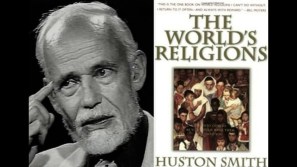
    Back in 2001, when I was just beginning my interfaith adventure, I attended a weekend workshop at the Omega Institute in Rhinebeck, NY. There I was privileged to sit at the feet of Huston Smith (1919-2016), the preeminent authority on world religions. Smith not only studied and taught, but actually practiced Hindu Vedanta, Zen Buddhism, and Sufi Islam for more than ten years each—all the while remaining a member of his local Methodist Church. I was deeply interested in knowing how that worked: how could I (could I?) remain a Christian while exploring and even accepting aspects of other religious traditions?

    maxresdefaultAt the workshop, after we had been captivated by stories of Smith’s immersion in the world’s religions, someone asked the question that was on my mind: “Why are you still a Christian?” His answer, which I cannot find in any “Famous Quotes” site, was “Christianity is the string on which I hang my beads.”

    That declaration has stayed with me over the years and has informed my ministry as a preacher, teacher, and worship leader.

    Bringing It to the Congregation
    Back in 2010, my congregation sponsored an event called “InterSpiritual Wisdom: effc5190d0f805a4130997d6703a5eefSharing the Mystic Heart.” It was a two-day event, on Saturday and Sunday. The Saturday schedule included presenters from Buddhism, Christianity, Hinduism, Islam/Sufism and Judaism, who talked about their own spiritual beliefs and practices. The best part was that they each taught a practice to the rest of us. Each segment was followed by a period of silence when we could practice on our own. On Sunday afternoon, there was a panel discussion and Q&A time, followed by an interspiritual zikr[1] led by our two Sufi presenters. The evaluations we received from attendees overwhelmingly indicated that they wanted more of the same.

    It seems like interspirituality might be tapping into a need that our churches have been unwittingly neglecting. It’s a perspective that may appeal to those more attracted to mysticism than to a dogmatic faith. It also removes the difficulties of an interfaith theology and reframes the conversation in terms of an interfaith spirituality. It does not address, nor does it claim to address, the issues of differences within the traditions. That’s a conversation for another time.

    For Reflection:

    • How have you or how could you incorporate interspiritual wisdom in your own spiritual practice?
    • How have you or how could you incorporate interspiritual wisdom in the worship life of your congregation?

    image


    [1] Zikr (Arabic for ‘remembrance’) is a form of devotion, in which participants are absorbed in the rhythmic repetition of the Divine name or attributes of the Divine.

    Sources:
    Bourgeault, Cynthia, The Wisdom Way of Knowing: Reclaiming an Ancient Tradition to Awaken the Heart. San Francisco: Jossey-Bass, 2003, 4.

    Teasdale, Wayne. The Mystic Heart: Discovering a Universal Spirituality in the World’s Religions. Novato, CA: New World Library, 1999, 27.

    Teasdale, Wayne. “The Interspiritual Age:
Practical Mysticism for the Third Millennium.”
 http://www.interreligiousinsight.org/April2006/TeasdaleEssay.html  


  • The Athanasian Creed and an Unholy Trinity – a sermon for Trinity Sunday — pastordawn

    This is a repost of a sermon by my colleague, Pastor Dawn Hutchings in Newmarket, Ontario. It’s good in itself as a commentary for Trinity Sunday. But as a bonus, she has a great illustration of an interfaith encounter with intrafaith implications.

    I don’t remember the first time I ever saw him. I was barely 17 months old when my brother Alan arrived. Despite the fact that he ruined my gig as an only child, Alan and I grew close over the years. We moved around a lot so we became one another’s best friends. But we went our […]

    via The Athanasian Creed and an Unholy Trinity – a sermon for Trinity Sunday — pastordawn

  • Are the Days of Doing Evangelism Over?

    I read an interesting blog post the other day called Why Progressive Christians Can’t Evangelize, which critiques the accompaniment model adopted by the Evangelical Lutheran Church in America. In Global Mission for the 21st Century, the ELCA defines accompaniment as:
    walking together in a solidarity that practices interdependence and mutuality. The basis for this accompaniment, or what the New Testament calls koinonia, is found in the God-human relationship in which God accompanies us in Jesus Christ through the Holy Spirit.

    The blog author, however questions whether most of us have seriously reflected on the who, what, why, and whether of Christian mission. In other words: why do we think it’s a good thing to share the gospel in the first place? And while he doesn’t disagree with the need to be sensitive to our history of colonialism, he does warn that “our fear of colonialism is performed daily in our tepid to non-existent faith-sharing.”

    It was an interesting post. But what followed made it even more so. In the “Comments,” a reader confessed to his or her own struggle with the issue:
     I firmly base my life on the death and resurrection of Jesus (or try to), and believe that through my baptism into Christ’s death, I will share in a resurrection like his. HOWEVER, I am not convinced that everyone needs to be a Christian . . . if I meet, say, a Buddhist, who has found meaning, and a spiritual path, and is exhibiting “good fruits,” why should I attempt to “evangelize” her?

    And that is the INTRAfaith question!

    As Asian theologian C. S. Song has written: “The 

problem of Christian mission is the problem of Christian theology. Reconstruction of 

Christian theology must then precede reconstruction of Christian mission.”

    Documents such as “Global Mission for the 21st Century” and “Accompaniment” that are available from my denomination (and I am sure from others) are important teaching tools. But I don’t know how many of our congregations are using them.

    The conversation needs to happen at the grass roots. And a fine place to start is with the experiences that most of us have had with people of other religions and cultures. The question is no longer “if I meet a Buddhist (or a Jew or a Muslim, etc.),” but when I do . . . then how am I to think about evangelism?

    When you go out with your evangelism team to knock on doors on your neighborhood and a man in a turban answers – or a woman in a hijab – or a man in a yarmulke – or a monk in saffron robe, what are you going to say?

    There are, of course, several theological options. And you’ll probably find a variety in your own church. It’s not only an interesting question for pastors to ponder, it’s a necessary one for the whole church as we ponder together the place of Christianity in a multi-religious world.

  • Taking The Conversation To Other Religions

    nain_lg1Several months ago, the newsletter of the North American Interfaith Network (NAIN) put out a call for workshop proposals for this summer’s annual conference. I have attended only one NAIN gathering, in 2008 when it was held here in San Francisco.
    I was on the planning team that year, and attended as a participant, not a presenter. NAINConnect-2016-3-1024x626

    But this year, it just so happens that I have a new book that deals with matters both interfaith and intrafaith. And the conference will be in  Guadalajara! So I thought, “Why not?”

    Well, my proposal was accepted – and now my challenge has begun.

    When I first started working on my doctoral project – “What does it mean to be a Christian in an interfaith world?” – many in the interfaith community suggested that I broaden my scope to include all religions. And indeed, I agreed that there are intrafaith issues within all traditions (even atheists don’t always agree with one another!) But I’m a Christian, and I felt that I could speak only to the issues that arise within my own tradition when we engage in interfaith relationships. I still feel that way, even though I’ve talked with friends from other religions about their particular challenges.

    But now, since I made the proposal (what was I thinking?!), it’s time to broaden the scope in a way that has integrity both for me in my own tradition and for those of other traditions who will attend my workshop. The really great thing is that the session will be an hour and 45 minutes and the expectation is that workshops will be activity focused and participatory. In other words, it can be a real workshop, not the usual quick presentation with no time for interaction.

    So, while I don’t have the workshop fleshed out yet, I know that it will be flexible enough  so that no matter what the makeup is of the group that shows up, we’ll work together on finding commonalities, differences, and shared wisdom.

    And – I am more than happy to hear from those who want to let me know about the intrafaith issues they’ve observed or experienced. In other words: HELP!!!

    Join the INTERfaith INTRAfaith Conversation!she likes it copy she likes it copy.jpg