Category: Current Events

  • Announcing Pluralism Sunday 2017

    interfaith-calendar11th ANNUAL
    PLURALISM SUNDAY 
    MAY 7, 2017 
    (or another day of your choosing)

    A little history . . .

    Pluralism Sunday began in 2007. The idea came out of the 8 Points of Progressive Christianity, especially points 1 and 2:

    By calling ourselves progressive Christians, we mean we are Christians who…

    1.  Believe that following the path and teachings of Jesus can lead to an awareness and experience of the Sacred and the Oneness and Unity of all life.

    2.  Affirm that the teachings of Jesus provide but one of many ways to experience the Sacredness and Oneness of life, and that we can draw from diverse sources of wisdom in our spiritual journey.

    Coordinator of the project, Rev. Jim Burklo, explained that there are three general ways in which religions relate to each other:

    (i) Exclusivism, which is the idea that my religion is correct, and all other religions are wrong, at best, and evil, the worst…

    (ii) Inclusivism, which is the idea that my religion is the only true one, but yours is interesting. So we should tolerate each other’s religions and find ways to cooperate and communicate…

    (ii) Pluralism, the idea that my religion is good for me and your religion may turn out to be as good for you as mine is for me.

    “Pluralism is the concept that there are multiple loci of truth and salvation among the religions. [It] does not imply that all religions are the same or that all religions are equal; but it does recognize the possibility that my way is not the only way and that my religion is not necessarily superior to your” (J. Burklo, Pluralism Sunday, 2007).

    You can observe Pluralism Sunday in any way you like. Click here for more information or to see what other congregations have done in the past. There will soon be an overhaul of our website page, so please stay tuned. In the meantime, I am always happy to share my experiences and resources and would love to hear yours!

    Send me an email to let me know you’ll be participating!
    nov6-1


  • Beginning the InterPolitical Conversation

    Oh, the comfort, the inexpressible comfort of feeling safe with a person. – Dinah Craik dscn0223

    “Safe Space” is one of the thousand plus words added to the Merriam Webster dictionary this week. MW defines a safe space as “a place (as on a college campus) intended to be free of bias, conflict, criticism, or potentially threatening actions, ideas, or conversations.”

    I must take exception to that last bit, although I understand its purpose. No one should be physically or verbally threatened or attacked. However it is likely in conversations about highly charged issues that one’s assumptions, worldviews, and belief systems will be challenged – if not threatened. In that sense, it’s not a safe space.
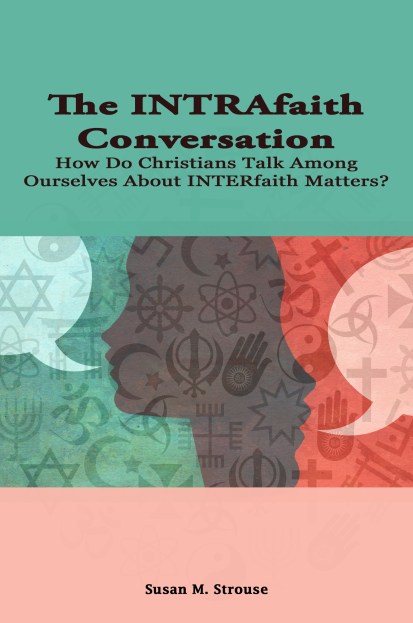
    I address this issue in my book as it applies to interfaith and intrafaith conversations.

    For some people, entering into an interfaith experience can be confrontational. For some, engaging in intrafaith conversation can be equally or more challenging. For this reason, I usually begin a new group with the poem, “It Is Difficult, O God” by C.S. Song. I do this to let them know that discomfort is to be expected, in fact it is perfectly normal. Having said that, it is essential to create an environment of respect and safety. By safety, I do not mean that one’s belief system may not be shaken. It is entirely possible that it might be. What I mean by a safe environment is one in which viewpoints are respected and in which the leader is capable of managing the group process under all circumstances. There will inevitably be challenging ideas and differences of opinion. There will often be conversations that will cause some participants to become distressed or upset. The idea is not to avoid conflict, disagreements or upset, but to manage them in appropriate and safe ways.

    I am coming more and more to the belief that this is the same kind of basis we now need in order to enter into interpolitical conversations. Many of us are recognizing that people on opposite sides in our polarized nation need to talk to one another. But what I also hear again and again is that we don’t know how to do that. From both sides I hear the expectation of not being heard and/or verbally attacked.Thankfully, help is becoming available. I’ve recently discovered a resource called Reaching Across the Red-Blue Divide, a free download from the Essential Partners website.

    Their pitch:screenshot-2016-11-23-08-37-31
    Most of us have at least one important relationship that has either been strained by painful conversations about political differences or silenced due to fear that it could get ugly. Bring it up and fight about it or avoid the conversation – and sometimes the person – altogether. Both options limit who we can be together as friends or family and limit what we can accomplish in our communities. What alternatives are there? You can let media pundits and campaign strategists tell you that polarization is inevitable and hopeless. Or you can consider reaching out and taking a journey with someone who is important to you. With some tools to support your best intentions, you can actually learn about what motivates other people and understand how they’ve come to believe the way they do. Connecting across our differences is both possible and necessary.

    The introduction promises to:
    help prepare you to speak about what is most important to you in ways that can be heard, and to hear others’ concerns and passions with new empathy and understanding even if — especially if — you continue to disagree.The guide offers a step-by-step approach to inviting another person — someone whose perspectives differ from your own — into a conversation in which:

    • You agree to set aside the desire to persuade the other and instead focus on developing a better understanding of each other’s perspectives, and the hopes, fears, and values that underlie them;
    • You agree to be curious and to avoid the pattern of attack and defend;
    • You choose to ask questions and move beyond stereotypes and assumptions.

    A lot of the process they outline is very similar to what I advocate in The INTRAfaith Conversation. But there is material specifically geared to the interpolitical, such as how to be at our best on social media.

    So – now there’s no excuse. The plan is pretty simple. We – I – just have to do it. As I read my words describing interfaith and intrafaith conversations, I wonder if I can substitute political and be able to say the same thing. I think it’s worth a try.

    I learned that entering into an exploration of other peoples’ religious faith and practice is a wonder-filled experience. For me, hearing another’s story is an intimate look inside that person’s heart, and that is not something to be taken lightly. In both my interfaith and intrafaith encounters, I have heard stories of joy, as well as stories of pain and hurt. In many of the encounters, each participant brought his or her whole self into the process. Entering into an examination of religious beliefs took us even more deeply into one another’s lives. It was crucial that an atmosphere of safety and trust had been created because, as I came to realize, the ground of this kind of encounter is a place of extreme intimacy and vulnerability. It is sacred ground. I often found myself in awe at the willingness of many of the participants to give of themselves, not only in terms of time, but more importantly in terms of openness — to me, to others, to their own growth process.   It is a privilege to be in the company of such people.

    she likes it

  • That Time I Shared the Hotel Shuttle with Trump Supporters

    22march9-superjumbo“Were you here for the Women’s March?” The woman joining me as I waited for the hotel shuttle to the airport was friendly.
    “Yes!” I responded.
    “Where are you from?”
    “Berkeley, CA”

    “How about you,” I asked.
    “Phoenix, AZ.”
    “Were you here for the March?” I was expecting to launch into another conversation about what a wonderful event it had been.

    “No,” she said, “we were here for the inauguration,” indicating her adult son who had now joined her. He was wearing a knit cap with TRUMP stitched across the front. I then noticed her American flag scarf. (7:00 am is way too early for me; I wasn’t as observant as I might have been later in the day).

    Then she went on to say, “We’re some of the ‘deplorables’ you’ve heard about.”

    Oh, boy. I responded by shaking my head and saying something like, “No, no. Let’s not go there. We have to learn how to talk with one another.” They agreed.

    The conversation continued in the shuttle. Mostly I listened. I did state my own opinion several times. I wasn’t trying to hide or play down my own position. I explained to them about my book and that I think the process of the intrafaith conversation could be the same for an interpolitical one. She took down my email address and book information and said she would check it out. She said I was “level-headed.”

    I thought about this encounter often over the next several days. I wondered if I had sold myself short by not speaking out against some of the things she’d said. I worried that I was becoming a hypocrite, advocating interpolitical dialogue, but then going back to my Bay area bubble where I can easily speak out against He-Who-Shall-Not-Be-Named.

    When I boarded the Amtrak train for Philadelphia, I found it was filled with women from the March. Yea! I was back among my peeps! I even met two ELCA women who were sitting right across the aisle from me. We had a grand time talking about the weekend and discussing next steps in the resistance.

    But that shuttle conversation keeps nagging at me. Will I ever have the courage – or the will – to bring together an interpolitical group? It would have to have the same safety and respect guidelines that I wrote about in my book. And the same expectations – that, while participants positions may not change drastically, the ability to listen respectfully would.

    Because it’s got to be about relationship-building. I don’t agree with a whole lot of the political opinions of my friends on the shuttle, but I don’t feel good about calling them names either. I have a feeling  they’re going to stay in my mind, nagging at me and challenging me to put my money where my mouth is. One thing I’ve learned about discerning whether something is a calling is that the thing you don’t want to do is often he very thing you’re being called to do.

    Great.

    More discernment is definitely necessary.


  • Pluralism and Election Politics

    pluralismbanner

    How different might this election cycle have been had more voters been willing to be curious about, understand, accept, or even embrace a pluralist nation, rather than panic in the face of “the other? – Kate Blanchard

    Kate Blanchard, Associate Professor of Religious Studies at Alma College, asks a very important question. If we think that engaging in interfaith activities and education is just a nice “add-on” to the more important work of ministry in our churches, we are sadly mistaken.

    And if part of our hesitancy of doing  it is that people within our congregations might disagree on some of the issues that will be raised, we need to buckle up and prepare for the ride.

    It would be strange if there were not differences of opinions and beliefs within a group of people – even in our credal, doctrinal churches. Trust me; if you allow people to express themselves and ask questions without fear of being branded heretics, you’ll discover a wealth of theological perspectives. Maybe that’s why so many leaders don’t want to ask!

    But the truth is that people do have minds of their own, they do think about spiritual and theological matters, and they do form opinions about other belief (and non-belief) systems.

    A wise leader would be willing to enter into the experience of interfaith and intrafaith discussions, not in order to tell people what to think and believe, but to facilitate the process of discovery.

    As Professor Blanchard’s question articulates so well, this isn’t an abstract matter. There are concrete consequences to our avoidance of the challenges of pluralism. 


  • News Flash: War on Christmas Is Over

    waronchristmas2It’s safe to say “Merry Christmas” again. So says Corey Lewandowski, former campaign manage for the president-elect, declaring victory on the War on Christmas. “It’s OK to say, it’s not a pejorative word anymore.” One of the main contributing factors in this so-called war, according to Lewandowski, et al has been President Obama’s refusal to say it. Despite evidence to the contrary (see a video compilation of President Obama saying “Merry Christmas” over and over again), many people still think that Christmas has been under attack.

    I suggest that what is really going on here is the belief of many that it’s Christianity itself that is under attack. The fourth chapter of my book, The INTRAfaith Conversation is entitled “A Question of Identity” because our increasingly diverse world is challenging our assumptions about who we are. This makes us anxious.

    Not that this anxiety is unique to Christianity. In her book, That’s Funny, You Don’t Look Buddhist: On Being a Faithful Jew and a Passionate Buddhist, Sylvia Boorstein  reflects on the popularity of Buddhism: “I think the alarm people express about Buddhism has more to do with instinctive fears about tribal survival than philosophical error. I think it’s the natural, self-protective, genetic response of tribes.” images-1

    Amidst all this religious diversity, our Christian tribe is anxious. And when we’re anxious and afraid, we’re not readily able to process facts and rational arguments. So one response is to retreat into an exclusivist, triumphalism that claims that we’re right and every one else is wrong. At the other extreme is the unexamined assertion that “we’re all worshipping the same God anyway.”

    In the middle is where intrafaith conversations can help. Respectful sharing, listening, and  relationship-building can bridge the divide between those for whom “Merry Christmas” is a sacred cow and those who are able to encompass a multitude of traditions within their “Happy Holidays.”

    Maybe when we take the need for this kind of conversation seriously, we’ll finally get to the place where it’s not a matter of saying either “Merry Christmas” or “Happy Holidays,” but “Merry Christmas” and “Happy Holidays.”

    29f2c9c011b394443742889cfaef-merry-christmas-vs-happy-holidays-is-happy-holidays-part-of-a-war-on-christmas


  • If God Is an Authoritarian Bully . . .

    unnamedWow! I just read a blog post equating the evangelical Christian version of God with He-Who-Shall-Not-Be-Named (HWSNBN) and describing them both as authoritarian bullies.

    Thankfully I don’t believe in a God who, according to some mysterious criteria, chooses to grant some people their wishes and not others, who saves some and not others, who allows some to live and not others , who favors some people over others, and demands our groveling adoration. Sign me up for #notmygod!

    But a lot of people evidently still do believe in this kind of God . And according to the blogger, the president-elect is a mirror image of the evangelical community – which explains why 81% of white evangelical voters chose HWSNBN as their leader.

    If this isn’t a good reason to keep on putting forth a progressive alternative, I don’t know what is. Not that I think all evangelicals are alike. And there is certainly a movement within evangelical circles that is less judgmental and more social justice oriented. Read, for example, The Evangelicalism of Old White Men Is Dead bNot Normal, Not Now, Not to Come by Sojourners’ Jim Wallis.

    But even there, I’m aware of the lack of women’s voices or awareness of the misogyny rampant in much of conservative Christianity. In the article by Wallis (who I do admire greatly), he states that an “explicit message of the Incarnation is that Jesus the Christ’s arrival will mean ‘peace on earth, good will toward men.’”And he closes with the gloriously prophetic Magnificat, a proclamation marred for me by the plethora of ‘he,’ ‘his,’ and ‘him.’

    And Mary said,
    “My soul magnifies the Lord, and my spirit rejoices in God my Savior, for he has looked with favor on the lowliness of his servant.
    Surely, from now on all generations will call me blessed; for the Mighty One has done great things for me, and holy is his name.
    His mercy is for those who fear him from generation to generation. He has shown strength with his arm; he has scattered the proud in the thoughts of their hearts.
    He has brought down the powerful from their thrones, and lifted up the lowly; he has filled the hungry with good things, and sent the rich away empty.
    He has helped his servant Israel, in remembrance of his mercy, according to the promise he made to our ancestors, to Abraham and to his descendants forever.”

    But try this – from The Inclusive Bible: The First Egalitarian Translation (with one little substitution from The Message:

    Mary said,
    “My soul proclaims your greatness O God, and my spirit rejoices in you my Savior.
    For you have looked with favor upon your lowly servant,
    and from this day forward all generations will call me blessed.
    For you, the  Almighty, have done great things for me, and holy is your Name.
    Your mercy reaches from age to age for those who are in awe before you.
    You have shown strength with your arm; you have scattered the proud in their conceit.
    You have deposed the mighty from their thrones and raised the lowly to high places.
    You have filled the hungry with good things, while you have sent the rich away empty.
    You have come to the aid of Israel, your servant, mindful of your mercy virgin-mary-stylized1
    the promise you made to our ancestors – to Sarah and Abraham and to their descendants forever.”

    This is no Mary, meek and mild. This is an authoritative prophet, speaking for a God of compassion and justice. This is the God I love and in whose name I will resist the authoritarian bullies of the world.

    If our recent election has brought to the fore the differences in what Christians believe about the Holy One, that is all to the good. People need to know that there’s an alternative to the great cosmic bully.

  • Can We Cross INTRAfaith Boundaries?

    divisionsI happened to see a question submitted to answers.yahoo.com: “What is the difference between interfaith and intrafaith boundaries?”

    Someone replied: “There is no such thing as intrafaith boundary.”

    I was relieved to see that of the six responses to that reply, all were thumbs-down.

    If we didn’t know that Christianity has intrafaith boundaries, we certainly know it now that election polling results are in.

    According to The Washington Post, 80% of white evangelical Christians voted for He Who Shall Not Be Named (HWSNBN), even though a group of 100 evangelical leaders posted a declaration before the election stating that they would “not tolerate the racial, religious, and gender bigotry that (HWSNBN) has consistently and deliberately fueled . . .” Divisions within evangelical Christianity continue to widen, as Jim Wallis, evangelical author and founder of  Sojourners, said he felt Christians who voted for Trump “ought to be embarrassed.”

    Progressive Christianity, of course, is used to being out of the mainstream. But now, many are declaring a new area in American Christianity. In What Progressive Christians Need To Do To Take Back Their Faith, Pastor Jacqueline Lewis of Middle Collegiate Church in Manhattan declares, “Maybe what’s happening is progressive people of faith are finding ways to connect around our shared beliefs that all people are children of God. All of those people are joining together right now, we’re crying together, plotting and planning how to resist together. That to me is the new religion, the new Christianity.”

    Emerging Church leader Benjamin Corey suggests that progressive Christians should start evangelizing  among other Christians: “We need to continue converting Christians to following Jesus. We need to create disciples, and reach evangelical Christian Americans with the gospel of Jesus.”

    piocs_-00_without-background_christian-cross-special-design-pin-with-usa-flagSome are even calling for a new “confessing church” like that in Germany, when pastors and churches banded together to resist the Nazi regime. For example, Jo Anne Lyon, General Superintendent in the Wesleyan Church, said “I wonder if we may be heading toward a confessing church as opposed to a nationalistic church.”

    The question is: will Christians of differing stripes be able to engage in meaningful dialogue with one another?

    sg_dividedMany are advising that we must reach out across the boundaries and listen to those with whom we disagree. I can’t argue with this; it’s what I advocate in my book, The INTRAfaith Conversation. But most of what I’ve been hearing is “not yet.” The shock and anger are too raw.

    What shape will Christianity take in this new era? Will we be able to cross our intrafaith boundaries? It was difficult before the election; it’s even more so now.

    Time will tell.

  • Not That Kind of Christian!

    backto3It’s a tough time to be a Christian. More and more, we’re being forced to choose what kind of Christianity we shall be identified with. Evangelical, fundamentalist, progressive, traditional, conservative, liberal: the labels aren’t that simple.

    In this presidential election campaign, a rift has split evangelical Christians. The candidacy of Donald Trump has required many evangelicals to do theological gymnastics to defend their candidate. Even after the release of the video which graphically revealed Trump’s ugly, misogynistic character, his defenders stood fast. Robert Jeffress, pastor of First Baptist Church in Dallas and a member of Trump’s Faith Advisory Council, said Trump is “still the best candidate to reverse the downward spiral this nation is irotaten.”

    But other evangelicals disagree. In a letter published on September 28 (so even before the video was made public), about 100 evangelical Christian leaders, including Rachel Held Evans and Jim Wallis, condemned Trump’s candidacy. Some snippets from “A Declaration by American Evangelicals Concerning Donald Trump:
    Wallis and AOS book, 2.jpgWe believe that racism strikes at the heart of the gospel; we believe that racial justice and reconciliation is at the core of the message of Jesus.
    We believe the candidacy of Donald J. Trump has given voice to a movement that affirms racist elements in white culture – both explicit and implicit.
    We . . . simply will not tolerate the racial, religious, and gender bigotry that Donald Trump has consistently and deliberately fueled.

    Although I don’t agree with all of the theology expressed in the letter, what I like about it (besides its condemnation of Trump) is its unapologetic Christian witness. They clearly do make the disclaimer of “not that kind of Christian”:
    A significant mistake in American politics is the media’s continued identification of “evangelical” with mostly white, politically conservative, older men. We are not those evangelicals. The media’s narrow labels of our community perpetuate stereotypes, ignore our diversity, and fail to accurately represent views expressed by the full body of evangelical Christians.

    But they also clearly say what kind of Christians they are. We progressives often fail to do that. We’re very good at saying “not that kind of Christian!” but not always so good about putting our beliefs out there. So in the interest of putting my money where my mouth is, here’s my declaration:

    As a progressive Christian, I am a follower of Rabbi Jesus, who consistently taught that the realm of God is near, within us and around us. My role as a citizen of my community, country, and world is defined by the example of Jesus, which includes boundary-crossing, inclusivity, and prophetic witness in the face of oppression. It is also defined by the teachings of Jesus, which include compassion, forgiveness, and concern for the “least of these.”

    I also believe in the mystical body of Christ, which I do not see as limited to Christianity. One might call this the Cosmic Christ, the Tao, the Universe, or Buddha Nature. In this body, in which all things are interconnected, there is no separation between divinity and humanity, humanity and the rest of creation, male and female, body and spirit, etc., etc. My connection to this great web of life is what gives me the inspiration and ability to follow the teachings of Jesus.

    Therefore, as a progressive Christian, I cannot condone the misogynistic behaviors, the racist rhetoric, or unethical business practices of Donald Trump. I just can’t imagine what Jesus those evangelicals who continue to make excuses for him follow.

    I am unapologetically (not arrogantly, exclusivistically, or obnoxiously) Christian – just  not that kind. 13722038_975213099262133_1521863844_n


  • Should the Atheist Pastor Be Defrocked?


    2393916804_765925fe9d_bWhen I told the people of Northern Ireland that I was an atheist, a woman in the audience stood up and said, ‘Yes, but is it the God of the Catholics or the God of the Protestants in whom you don’t believe?’ – Quentin Crisp
    Tell me about the God you don’t believe in – Marcus Borg


    Atheism is a tricky business – especially these days. It used to be simple: an atheist was someone who didn’t believe in God. Then many of us read or heard Marcus Borg describe his many conversations with university students. He recounts, “Every term, one or more of them says to me after class,‘This is all very interesting, but I have a problem every time you use the word ‘God’ because, you see’ – here there’s usually a pause and a deep breath – ‘I really don’t believe in God.’ I always respond the same way: ‘Tell me about the God you don’t believe in.’”*

    As Borg tells it, the student then describes a version of God that he or she perhaps learned in Sunday school, from his or her parents or simply from popular culture. When Borg says, “ Well, I don’t believe in that God either,” a space opens up for conversation about other possible ways of understanding the Divine.
    The United Church of Canada had an opportunity to enter such a space for conversation. WKxYuGGyLast week a review committee that found Gretta Vosper, pastor of West Hill United Church in Toronto “not suitable” to continue in her pastoral role because she doesn’t believe in God. Now she faces a formal hearing to determine whether or not she should be defrocked.
    A petition circulating in support of Rev. Vosper concludes:
    “Persuaded that the theological conversation Gretta Vosper has provoked is a matter for dialogue and not a matter for discipline; we, the undersigned, urge the sub-Executive of Toronto Conference to reject the recommendations of the report of the Conference Interview Committee.”But what does Gretta Vosper believe? It might be easier to begin with what she does not believe: “I do not believe in a theistic, supernatural being called God.”
    At her ordination in 1993, when asked if she believed in God, Father, Son and Holy Spirit. She said yes, speaking metaphorically. Eight years later, she began to deconstruct the idea of God. She said, “Our hymns and our prayers and the way that we did things, they all reinforced this idea of a supernatural divine being who intervened in human affairs. I just took it apart – I was not willing to continue to let (my congregation) think that I believed in that kind of God.” The worship service now uses more metaphorical interpretation of religious symbols and places emphasis a strong emphasis on environmental and social justice.
    She’s been controversial, to be sure. The congregation has undergone a severe decline in membership. However, those who’ve stayed are steadfast. One member has said, “West Hill is the future of what religion will be like. We’re thinking and saying what the rest of the world is scared to, but moving towards.”
    So is Vosper a church-wrecking heretic? Or a prophet, pushing to bring the “God” conversation into the church – a role she describes as “irritating the church into the 21st century”
     As more people discover that there are other ways of thinking about their concept of God, the old definition of “not believing” becomes more problematic. Agree with Vosper or not, she is bringing to the fore a conversation that needs to happen. Heresy trials aren’t the way to go.


    *Borg, Marcus, The Heart of Christianity: Rediscovering a Life of Faith. New York: HarperCollins, 2003, 68-69.

  • 9/11 and the INTRAfaith Conversation

    img_1470I returned to the Jersey shore this summer. I hadn’t been there since 2001. In fact, I was in Ocean City on 9/11/2001. As I watched the towers fall on TV, I could see fighter planes and helicopters flying up the coast. It’s not something you forget. Of course, others have more horrific and tragic stories to tell. But for those of us who were old enough to be aware of what was happening at the time, we’ll always remember where we were on that day. And we should remember: those who died, their families, the first responders, the ongoing after-effects of trauma.alg-flag-jpg

    But we should also remember other stories. In Ocean City – and I’m sure in many other
    places as well – there was a run on American flags. A friend who was staying with me that week was determined to get a flag to hang off our balcony. I was conflicted about it. I didn’t want to hang a flag off my balcony; I’m not a big fan of flags in the first place. So I was quietly thrilled that every store was sold out.

    I also remember overhearing conversations that included words like “rag-heads” and “towel-heads” and references to the Qur’an that were either completely false or taken out of context. The first hate crime reported as a result of 9/11 didn’t happen until the 15th, but the seeds were being sown.

    I was due back in the pulpit on September 16. Obviously, I’d have to talk about 9/11. I decided to try to make the service a combination of remembrance, lamentation, and confession. The remembrance and lamentation parts were fairly easy to do, and there were lots of resources being sent out for use that Sunday.

    But I was determined not to let us off the hook for our part in the rise of global terrorism. Simplistic answers to “Why do they hate us?” make my blood boil. “Because they hate our freedoms” isn’t an informed answer. We Americans are famous for our ignorance about history, geography, and geopolitical affairs. It takes only a scratch of the surface to find reasons for resentment of American arrogance throughout the world. Even our remembrances of 9/11 will usually neglect to mention the acts of violence and terrorism experienced by people of other countries each and every day.

    Do I condone terrorism? Absolutely not. Do I understand it. Definitely yes.

    So on that Sunday I tried to gently insert some reminders of our own American culpability. I don’t know how well I pulled it off. I do know that at the end of the service, one member asked if we could sing “God Bless America.” I didn’t handle it well. Following Nancy Reagan’s advice I “just said no.” Looking back, it would have been an opportunity to suggest singing “Finlandia” (“This Is My Song”). Here it is, sung by Joan Baez.

    This is my song, O God of all the nations, joan_baez
    A song of peace for lands afar and mine.
    This is my home, the country where my heart is,
    Here are my hopes, my dreams, my holy shrine.
    But other hearts in other lands are beating,
    With hopes and dreams as true and high as mine.

    My country’s skies are bluer than the ocean,
    And sunlight beams on clover leaf and pine.
    But other lands have sunlight too, and clover,
    And skies are everywhere as blue as mine.
    O hear my song, thou God of all the nations,
    A song of peace for their land and for mine.

    So what will we do this Sunday? Will we have only remembrances and memorials? Or will we acknowledge the ongoing interfaith and intrafaith work we still have to do in knowing and understanding ourselves and our neighbors?