Subscribe to my Youtube channel at http://www.youtube.com/@revdrsusan.
Category: Current Events
-
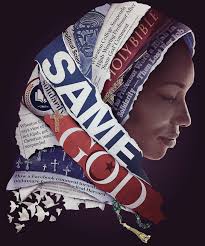
Same God Is Out! Go See It!
 “Same God” – Embodied Solidarity Comes at a Price
Back in 2016, I wrote two posts about Professor Larycia Hawkins, who was removed from her tenured position at Wheaton College because of her “embodied solidarity” with Muslims.
Wheaton College: an Intra-faith Controversy
The Professor Wore a Hijab in Solidarity – Then Lost Her Job:
An INTRAfaith Case StudyThen in 2018, I learned that there was a documentary about this intriguing story. So, of course, I wrote about that: Do Muslims and Christians Worship the Same God: More from Wheaton College
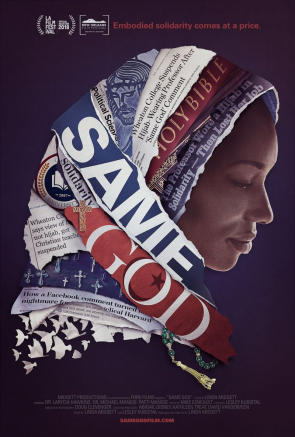
Now, it’s here! “Same God” is being shown this month on some PBS stations. Watch the trailer and find local listings here. There will also be a limited theatrical release beginning March 8. The best way to get information is to follow @samegodfilm on FB, Twitter, and Instagram.
“Same God” was directed by Emmy-winning documentary filmmaker Linda Midgett, who is herself a graduate of Wheaton. But make no mistake about it; this is not a defense of the institution. Nor is it a condemnation. It is a beautifully filmed, honest telling, not only of Dr. Hawkins’ story, but also of the history and current state and challenges of evangelical Christianity.
A Quick Recap
It really all started in 2013, when Dr. Hawkins (or Doc Hawk as students call her in the film) became the first female African-American tenured professor at Wheaton. At Wheaton, an explicitly Christian liberal arts college, all faculty members are required to annually sign a covenant which defines what it means to be “dedicated to the service of Christ and His Kingdom.” As the film tells us, Dr. Hawkins willingly and faithfully signed this covenant upon her employment and every year thereafter.
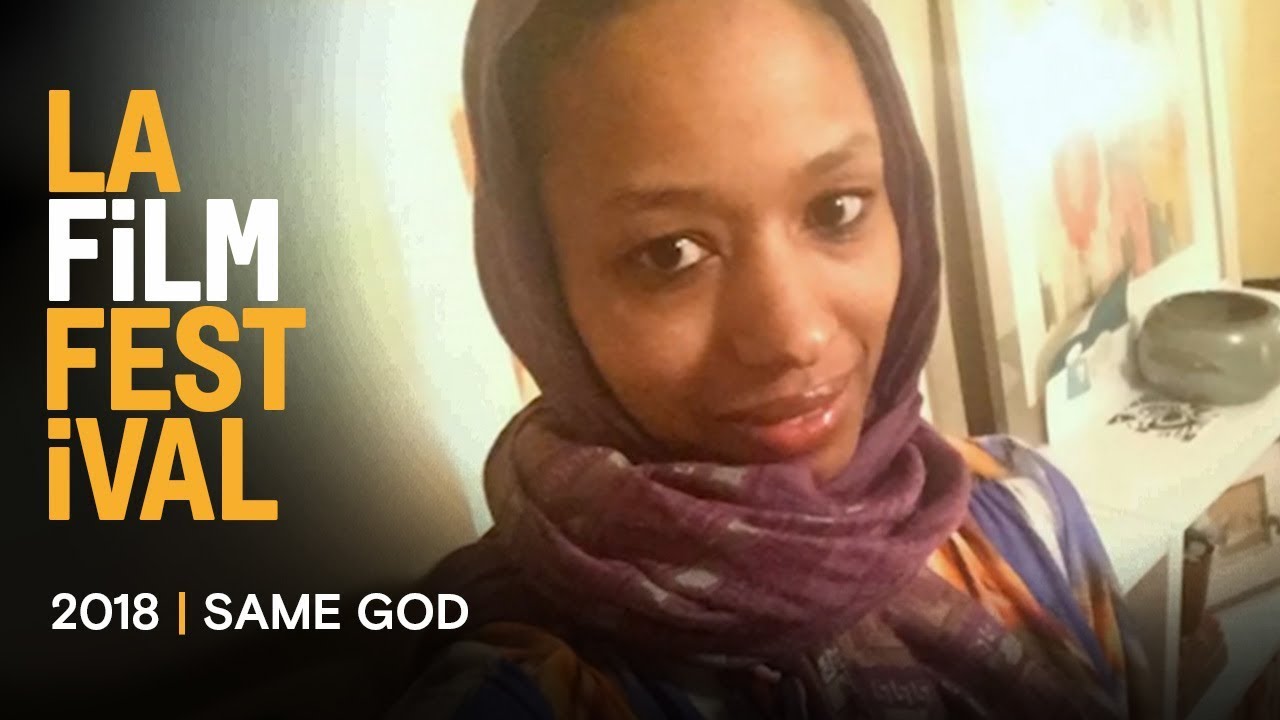
Then, on December 2, 2015, 14 people were killed in a terror attack in San Bernardino. Immediately, anti-Muslim rhetoric in the US began to ramp up. Then-candidate Donald Trump called for a Muslim travel ban. In response to this, Dr. Hawkins posted on her Facebook page that she was standing in solidarity with Muslims because they are also “people of the book” who worship “the same God.” As part of her Advent devotions, she posted a picture of herself wearing a hijab. That’s when it hit the fan. Long story short: she lost her job. The film covers all this very well, with interviews of Hawkins, plus faculty members and students. No one from the administration agreed to be interviewed.
 A Rorschach Test
There is so much in this film that could and should spark dialogue. Someone said that the picture of Dr. Hawkins wearing a hijab was like a Rorschach test; different people would see different things. For example, many Muslim women would see an act of compassionate solidarity (what Hawkins would call embodied solidarity). For others, it would surface questions about academic freedom, religious liberty, and theology. I would add that having seen the film, the picture is a stark symbol of the systems of patriarchy and white privilege at work. It’s also a reminder of the need for interfaith dialogue. The ignorance expressed in many of the reactions to Dr. Hawkins’ post is simply appalling.What I see in the inkblot is an intrafaith conversation needing to happen.
To be sure, there are many facets to this story: blatant racism and sexism; the emotional toll of the entire saga on Dr. Hawkins; and not to be ignored, the career and financial hits she was forced to take. All of these are very worthy of our attention. But what caught my intrafaith eye was the hurt she experienced in being accused of not being Christian. In a review in the Chicago Tribune, Linda Midgett expressed hope that her documentary will spark dialogue between people of different faiths so they can find common ground. I wholeheartedly agree! But I also hope it will encourage dialogue between people within the same faith – in this case Christianity.It Really Is about Theology . . .
In the film, Dr. Hawkins says that the controversy in which she was embroiled was not about a theological debate. In the context of her grilling by the Wheaton provost, I agree and applaud her courage in naming what was unfair in the process and her refusal to engage in further “theological conversation.”Having said that, it is clear that theological questions loom large over the whole saga. Dr. George Kalantziz, Professor of Theology, hits the nail on the head: “When we ask the question ‘does Islam (or any other religion than Christianity) worship the same God?’ it’s always a qualified ‘yes’ and ‘no.’ We don’t all understand the word, not only ‘God,’ the same way, but worship the same way.”
Bingo! Wheaton missed an opportunity to explore these questions.
And Even More So, Christology . . .

I’m particularly interested in the Christological questions raised by the firestorm of responses to Dr. Hawkins’ assertion that Muslims and Christians worship the same God. In the film, as Dr. Kalantziz is speaking, the camera pans across a beautiful church sanctuary. In the foreground is a gold processional cross. The symbolism is unmistakeable: this is a place that worships Jesus the Christ. Although never explicitly stated in the film, this is the heart of the matter. Who was/is Jesus? How does belief in Christ as the second person of the Trinity inform our beliefs about the truth of other religions?The interview with Bishop David Zac Niringiye would be the perfect discussion starter on how our interfaith encounters inform/strengthen/challenge/change our own beliefs. Speaking eloquently of the need for Christians to listen to our Muslim siblings, he says, “There is something about what they know of God that might cause me to understand God more.” He goes on to qualify: “Now, it is true, that the revelation of God is finally in Jesus Christ. It is complete.”
There is where I’d want the conversation to begin.
“Your Christianity Isn’t Real”
One of the most heartbreaking aspects of Dr. Hawkins’ story is the fact that her identity as a Christian was called into question. I can relate to a point. My job was never on the line. But I know that my adherence to orthodoxy has been questioned. In my case, it’s because I’ve moved further into Progressive Christianity, which has major differences with more traditional ways of believing. The ironic thing here, though, is that Hawkins is quite at home in evangelical Christianity. In the film, she movingly speaks about her baptism in her grandfather’s church, her love for Jesus and how that informs her work in the world. An interesting aspect of the film is its contrasting of African-American and white evangelicals. I was reminded that ‘evangelical’ does not describe a monolithic group; we on the more liberal side should not use the term irresponsibly.I’m part of a denomination with ‘evangelical’ in its name: The Evangelical Lutheran Church in America. We often have discussions about removing the ‘evangelical’ part because we don’t want to be identified with what has become white evangelicalism since the 1970s (this was a really helpful part of the documentary). Listening to Wheaton faculty members, it’s clear they’re having some of the same dilemmas. I believe we could easily find some common ground in an intrafaith dialogue.
Who Are We? Christian Identity in the 21st Century
Most religious groups are undergoing a time of questioning about their place in the world. This is causing great anxiety among many people and institutions. As Dr Kalantziz said, “Questions have moved. People, ideas have moved . . . expressions of theology have changed.” This is not good news to many who are resistant to change, especially in theology and religious practice. He talks about the evangelicalism of the past and the future, about two kinds of leadership: pioneers and overseers. The role of overseers is to keep the heritage of American evangelicalism alive.Wheaton College, despite its pioneering history as a stop on the Underground Railroad, has become an overseer, dedicated to an evangelicalism of the past. Larycia Hawkins, on the other hand, can be seen as helping to usher in an evangelicalism of the future. That’s obviously not an easy place to be. The film poignantly allows us to enter into her life – in the courage, strength, conviction, and resilience, as well as the vulnerability, suffering, and loss. I don’t know how anyone could fail to be moved by her story.
My interest in Dr. Hawkins began as a rather academic exercise in showing an example of an intrafaith issue. Having seen the film, I’m even more of a fan – of the person and her witness of faith in action. It’s still an intrafaith story, but so much more. I hope it will be seen by Christians, from evangelicals to progressives. And I sincerely hope that director Linda Midgett’s vision of her documentary sparking dialogue will be fulfilled: both between people of different faiths and between people within the same faith.
https://www.facebook.com/samegodfilm/
https://twitter.com/samegodfilm/
https://www.instagram.com/explore/tags/samegodfilm/

-
Luther and the Jews: It’s a New Day
 A lot happened at the Churchwide Assembly of the Evangelical Lutheran Church in America (ELCA) last week. Some of it even made national news – and rightly so.
What you might not have seen in the news, but which is a very big deal, is all the interfaith activity. One of the matters brought to the attention of the 927 voting members in attendance was the relationship between Lutherans and Jews. It has not always been a good one.
Years ago, a co-worker who heard I was about to go off to the Lutheran seminary, exclaimed, “I hate Lutherans!” It turned out that her husband was Jewish and she’d read the ugly things that Martin Luther had written in some of his later writings. At that time, I was only barely cognizant of this part of my religious heritage. I didn’t know how to respond.
Many years later, when a group of college students visited my congregation on a tour of local religious communities, one of the first questions they asked was about Luther and the Jews. This time I was more prepared and, thankfully had something positive to contribute.

For one thing, I had studied Church History and Reformation Studies under Dr. Eric Gritsch at the Lutheran Theological Seminary at Gettysburg (now part of United Lutheran Seminary) and was aware of his active involvement in the Christian-Jewish dialogue. And although his book, Martin Luther’s Anti-Semitism: Against His Better Judgment, was published long after my seminary days, I do remember him talking about this neuralgic (a favorite Gritsch word) part of our history.
In 1994, “Declaration of the ELCA to the Jewish Community” was released. And in 1998, Guidelines for Lutheran-Jewish Relations. Both of these documents are important milestones. But, in my opinion, what took place at the Assembly took our relationship with our Jewish siblings to a new level. Members of the ELCA Consultative Panel on Lutheran-Jewish Relations led voting members and visitors in litany based on the 1994 statement, including this paragraph:
In the spirit of that truth-telling, we who bear his name and heritage
must with pain acknowledge also Luther’s anti-Judaic diatribes
and the violent recommendations of his later writings against the Jews.
As did many of Luther’s own companions in the sixteenth century,
we reject this violent invective, and yet more do we express
our deep and abiding sorrow over its tragic effects on subsequent generations.
In concert with the Lutheran World Federation,
we particularly deplore the appropriation of Luther’s words
by modern anti-Semites for the teaching of hatred toward Judaism
or toward the Jewish people in our day.
Watch the entire litany here.
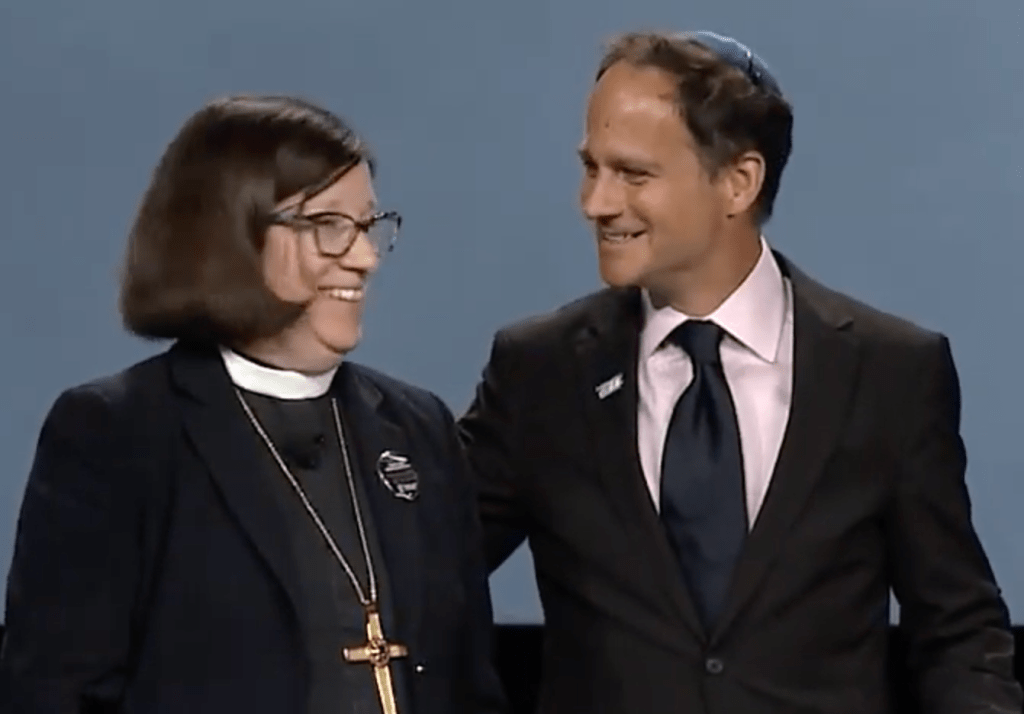
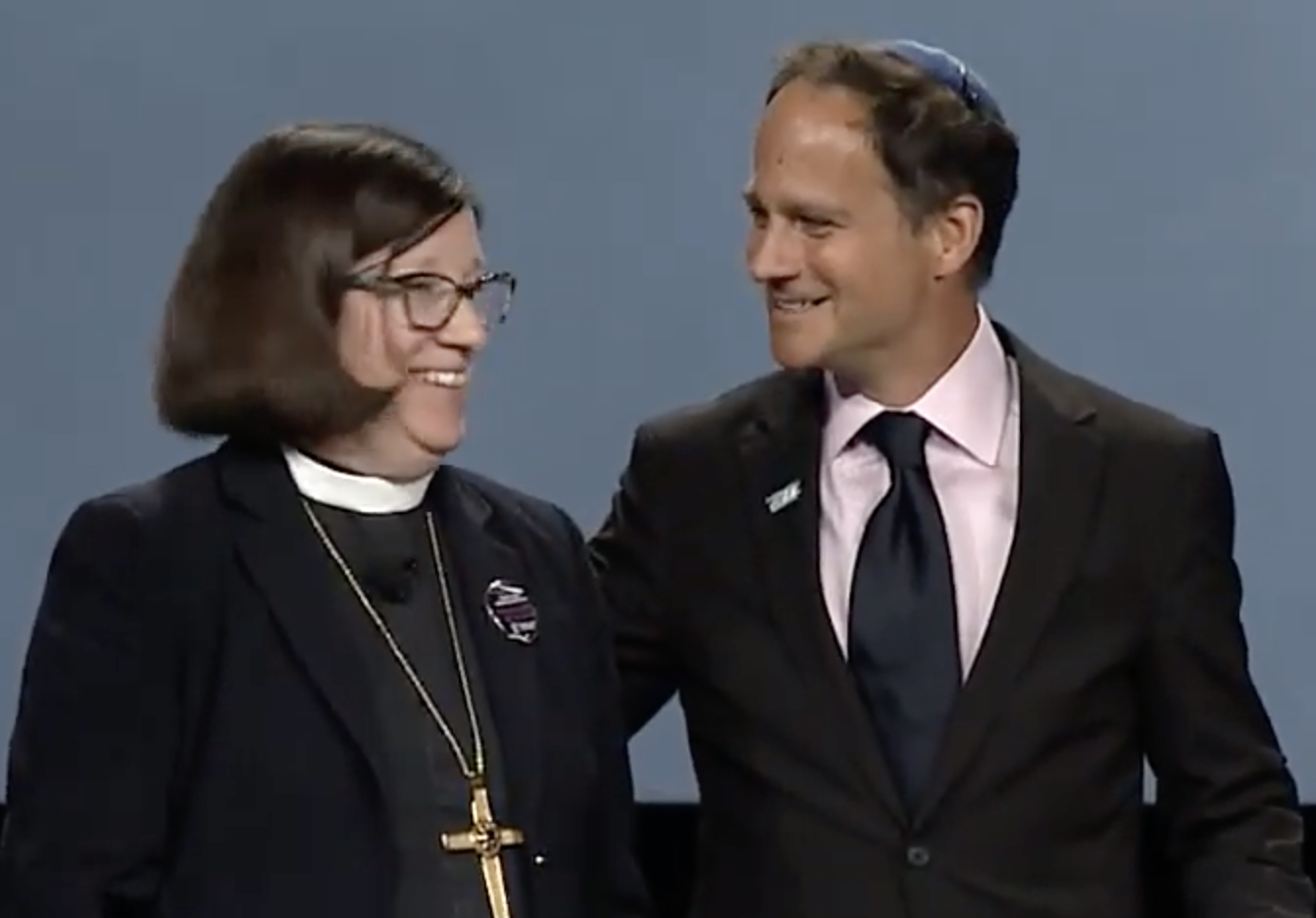
And then, Presiding Bishop Elizabeth Eaton introduced Rabbi Jonah Dov Pesner, director of the Religious Action Center of Reform Judaism and senior vice president of the Union for Reform Judaism. His address to the assembly was incredible!
Watch it here. You’ll be glad you did!
I’ll be writing about more of the interfaith and intrafaith aspects of the assembly. But I thought this deserved its own post. Anti-Semitism has deep roots in American history, but in 2018, anti-Semitic attacks were near record highs.
All Christians should stand in solidarity with our Jewish siblings.
Lutherans should be in the forefront.
After watching the news from Churchwide Assembly, I believe – by the grace of God – we just may be.
-
Muslims and Christians Worship the Same God: the Pope Said So!
 1219 CE: St. Francis and the Sultan
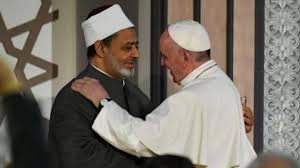
This year marks an important date in interfaith history. Eight-hundred years ago, as Christians and Muslims were in the midst of fighting the fifth crusade/jihad, St. Francis of Assisi had a remarkable visit with Sultan al-Malik al-Kamil of Egypt. You can read more about that historic event here.What I really want to talk about is another, much more recent, historic meeting. Last month, Pope Francis visited Abu Dhabi, capital of the United Arab Emirates, and met with Sheik Ahmad el-Tayeb, the Grand Imam of Egypt’s Al-Azhar mosque. What transpired is just as momentous as the meeting of St. Francis and the Sultan.
2019 CE: The Pope and the Imam
On February 4, Pope Francis and Sheik el-Tayeb signed a document on improving Christian-Muslim relations called “Human Fraternity for World Peace and Living Together”. It begins:
In the name of God who has created all human beings equal in rights, duties and dignity, and who has called them to live together as brothers and sisters, to fill the earth and make known the values of goodness, love and peace . . .
By beginning this way, the document (hopefully) puts to rest the idea that we do not worship the same Deity, whether we call that Deity God, Allah, Ground of our Being, or Nameless One.The really stunning part comes two-thirds of the way down. Tucked into a list of convictions essential for upholding the role of religions in the construction of world peace, is this statement:
The pluralism and the diversity of religions, colour, sex, race and language are willed by God in His wisdom, through which He created human beings.
(I know. I have to temporarily suspend all of my convictions about exclusively male language for God. But the implications of the statement are too big to ignore.)It’s Been Done Before
While potentially provocative, it’s not the first time the Catholic Church has made such a declaration. In 1965, the Second Vatican Council approved Nostra Aetate: Declaration on the Relation of the Church to Non-Christian Religions. Regarding Islam, it said:
The church also regards with esteem the Muslims. They adore the one God, living and subsisting in himself, merciful and all-powerful, the Creator of heaven and earth.Remember the brouhaha at Wheaton College a few years ago when one the professors was fired for wearing a hijab in solidarity with Muslims? It was also about quoting the Pope: “As Pope Francis stated last week, we worship the same God.” Her reference was to: Meeting with the Muslim Community at the Central Mosque of Koudoukou, Bangui (Central African Republic) on November 30, 2015. Pushback!
There has been criticism of these pronouncements. In 2000, then-Cardinal Joseph Ratzinger issued a warning about the danger of “relativistic theories which seek to justify religious pluralism.” In “Dominus Iesus,” the future Pope Benedict XVI said
This truth of faith (that Christ is the salvation of all humanity) does not lessen the sincere respect which the Church has for the religions of the world, but at the same time, it rules out, in a radical way, that mentality of indifferentism “characterized by a religious relativism which leads to the belief that ‘one religion is as good as another.Of course, the Protestants also got into the act. Hank Hanegraaff, known as the “Bible Answer Man” on his radio show has said that “the Allah of Islam” is “definitely not the God of the Bible.” And the evangelical Christian Apologetics and Research Ministry unequivocally states that Christians and Muslims do not adore the same God, and that the Catholic Church has “a faulty understanding of the God of Islam.”
Now granted, these are positions from the Catholic Church and evangelical Christianity. I have problems with both sides on issues other than this one. But I applaud the efforts of Pope Francis to further our interfaith awareness and acceptance.
What Does Progressive Christianity Say?
As a progressive Christian, I agree with the second point of The 8 Points of Progressive Christianity:
 By calling ourselves progressive Christians, we mean we are Christians who affirm that the teachings of Jesus provide but one of many ways to experience the Sacredness and Oneness of life, and that we can draw from diverse sources of wisdom in our spiritual journey.
 The INTRAfaith Conversation
Agreeing to this statement, though, doesn’t mean I don’t recognize the dilemma that exists within these statements, pro and con. I give Cardinal Ratzinger just a tiny bit of credit because he attempted to engage the elephant in the living room: what about Jesus? I don’t agree where he comes down, but he did engage the question. Pope Francis and Sultan al-Malik al-Kami didn’t get into knotty questions, such as the divinity of Jesus or the Trinity.They were all about peacemaking – and props to them for that!
 It is left to us to wrestle with our inherited Christologies (as well as doctrines, creeds, liuturgies, hymns, prayers, etc.) in light of our desire to live in peace and harmony with our religious neighbors. As Kristin Johnston Largen wrote in Finding God Among Our Neighbors, “. . .issues of Christology cannot be avoided in an interreligious conversation that professes to take Christian faith claims seriously.” In other words, who/what is Jesus in an interreligious context?
 Such wrestling is what I attempt to facilitate in my book, The INTRAfaith Conversation: How Do Christians Talk Among Ourselves About INTERfaith Matters?
Pope Francis and the Imam have given us a lot to think about.
Let’s talk!
-
World Interfaith Harmony Week

Now that the Week of Prayer for Christian Unity has ended, how about expanding the vision outward? Create some good news in the world by creating or participating in an event for World Interfaith Harmony Week, which begins February 1.
What is World Interfaith Harmony Week?
World Interfaith Harmony Week was first proposed at the United Nations General Assembly on September 23, 2010 by H.M. King Abdullah II of Jordan. Just under a month later, on October 20, 2010, it was unanimously adopted by the UN and henceforth the first week of February will be observed as a World Interfaith Harmony Week.
World Interfaith Harmony Week is based on the pioneering work of The Common Word initiative. This initiative, which started in 2007, called for Muslim and Christian leaders to engage in a dialogue based on two common fundamental religious Commandments; Love of God, and Love of the Neighbour, without nevertheless compromising any of their own religious tenets. The Two commandments are at the heart of the three Monotheistic religions and therefore provide the most solid theological ground possible.
World Interfaith Harmony Week extends the Two Commandments by adding ‘Love of the Good, and Love of the Neighbour’. This formula includes all people of goodwill. It includes those of other faiths, and those with no faith.
World Interfaith Harmony Week provides a platform—one week in a year—when all interfaith groups and other groups of goodwill can show the world what a powerful movement they are. The thousands of events organized by these groups often go unnoticed not only by the general public, but also by other groups themselves. This week will allow for these groups to become aware of each other and strengthen the movement by building ties and avoiding duplicating each others’ efforts.
You can find ideas for events here.
-
The Intra-faith Quandary of John Allen Chau

The tragic story of missionary John Allen Chau should cause us to ask: what is Christian mission in an interfaith world?
The Great Commission at the end of the gospel of Matthew has always been the impetus for doing mission in the world. It’s so familiar, we might not stop to consider what we mean when we read it or say it. But, in fact, it’s a prime example of our need for the intrafaith conversation. The recent death of Chau – and the controversy over his actions – reveal the dilemma.
“Thinking about Missionaries: Stupid Fools or Believers Obeying Core Christian Beliefs?” on GetReligion hits the nail on the head (GetReligion is a website that attempts to highlight the religious aspects of news stories often neglected by mainstream news outlets). Author Terry Mattingly explains that he has three “hot-button” doctrinal questions that he finds “useful when exploring debates inside Christian flocks.” In other words, the intrafaith conversation.
He goes on to say, “The Chau story is, in my opinion, linked to question No. 2.”
And what is question No. 2? “Is salvation found through Jesus Christ alone? Was Jesus being literal when he said, “I am the Way, the Truth, and the Life. No one comes to the Father except through me.” One of the big questions at the heart of the intrafaith conversation.So, what’s the debate over Chau’s actions and death? The thing is: the definition and purpose of mission has been changing. In my denomination, the Evangelical Lutheran
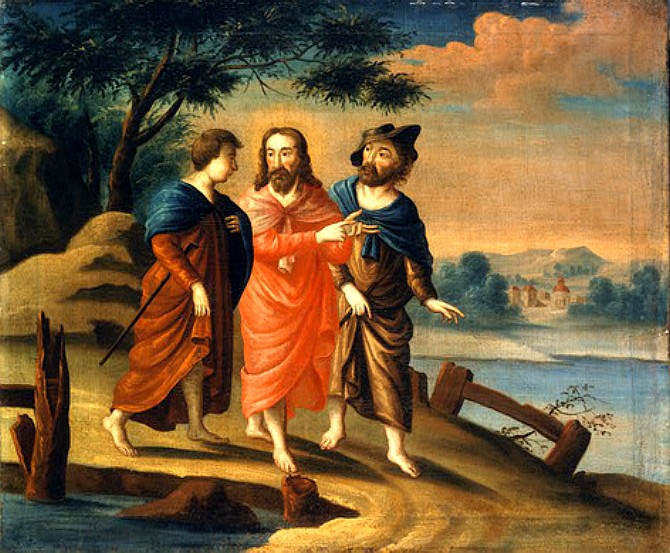 Church in America (ELCA), mission is described as a journey, in which disciples walk with others, listen to them, learn from them and with them. The biblical story used as a model is the “road to Emmaus,” in which the gospel is revealed in the relationship that develops among the travelers: in talking, listening, and breaking bread together. This way recognizes the mistakes of past history, such as seeing people as “objects of mission,” and defines mission as accompaniment.
 On the other hand, there are those who still subscribe to the goal set forth by All Nations, the mission-training organization which trained John Allen Chau: “to see Jesus worshiped by all the peoples of the earth.”
The people on both sides of this interpretive chasm are faithful Christians. However, one side looks at the Chau story and sees an oblivious young man propagating the worst of Christian imperialism. The other sees a martyr who died attempting to fulfill Jesus’ mandate. Both have biblical texts and theologies to support their positions. Who is right?
The better question is: how do we talk with our brothers, sisters, and siblings in the faith about such matters?
-
Christianity on the Spot
 “Can I put you on the spot?”
That was the question asked by the woman who came up to me after the International Day of Peace brunch at Pacifica Institute.I might have been the only Christian in the room. I’m not sure about that, but of all the people who spoke and identified their tradition, most were either Jewish or Muslim. But I was the one who was there in a clergy collar, was introduced as a reverend, and had stood on the stage to
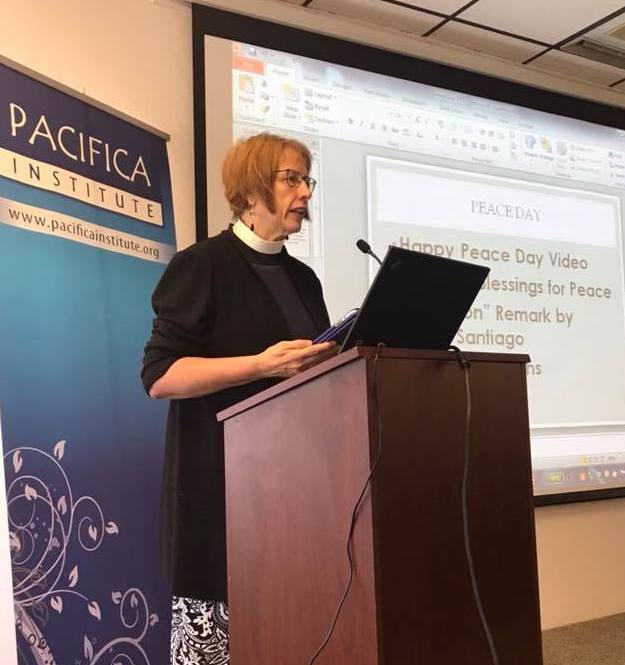 offer a peace blessing after brunch.
 Can I put you on the spot?”
“Of course,” I said, pretty much guessing at what the question would be.
“What do you think about these Christians who are supportive of Trump?”I knew it! Immediately the anger rose up in me – not at my new friend, but at the awful predicament we Christians are in. I explained about the growing divide between us. On one side are some evangelicals who are trying with all their might to hold onto a dying theological worldview which embraces tribalism, exclusivity, individual salvation, and a hierarchical/patriarchal ordering of the world. On the other side are those who are leaning into a new paradigm of interconnectedness, interdependence, interspirituality, and inclusivity.
I also shared my theory that the reactivity we’re witnessing in both religion and politics is due to the fear engendered by this shift. In a way, I can sympathize. Theologian Hans Küng calls what we’re going through a “Macro-Paradigm-Shift,” affecting all of our institutions on a global scale. Some characteristics of the emerging paradigm are:
- It’s global. Humanity is seen as a single tribe and this one tribe is interconnected with the total cosmos.
- It’s an age of dialogue, not monologue. Instead of talking only with those like us, we meet with people of differing convictions, not as opponent, but in order to listen, share and learn from one another.
- It will be characterized by a deep commitment to environmental justice, including a shift from an exclusively anthropocentric view to one which sees humanity in interdependent relationship with all other life forms and with the Earth itself.
- It will involve a redefinition of religion. Many of the answers given in the past do not address questions being asked today. Just as Christianity moved from a Jewish way of thinking into one of Greek philosophy (which produced the ‘substance’ language of the Nicene Creed), we are now moving into a new way of reflecting on theological matters.
I get it; change is difficult. Even when I’m in full agreement with a change in my own life, I still feel discomfort as I go through it. So I get the resistance to change. I can even sympathize with it to a point – but not with the reactionary, knee-jerk attempts to hold back the flow of history.
As a Christian, it is helpful (although sometimes frustrating) to be in an interfaith setting. Seeing myself through the eyes of a Jew, Muslim, Pagan, or Atheist reveals the intrafaith spot we’re in. It’s not enough to vehemently declare, “I’m not like those Christians. We have to define ourselves by who we are.
At another interfaith gathering last week, a Jewish woman spoke up and said that she was usually more comfortable with Muslims because the issue with Jesus never comes up; with Christians, you just couldn’t be sure. Once again, I felt the desire – the urgency – to promote a different kind of Christianity than the kind that turns people off.
The divide is growing and we are on the spot. How will we contribute to peacemaking in our churches, communities, and world – as Christians of a new paradigm?
-
Remembering Swami Vivekananda: We Need INTRAfaith Harmony
 “Need for intra-faith harmony, says ex-Prez”
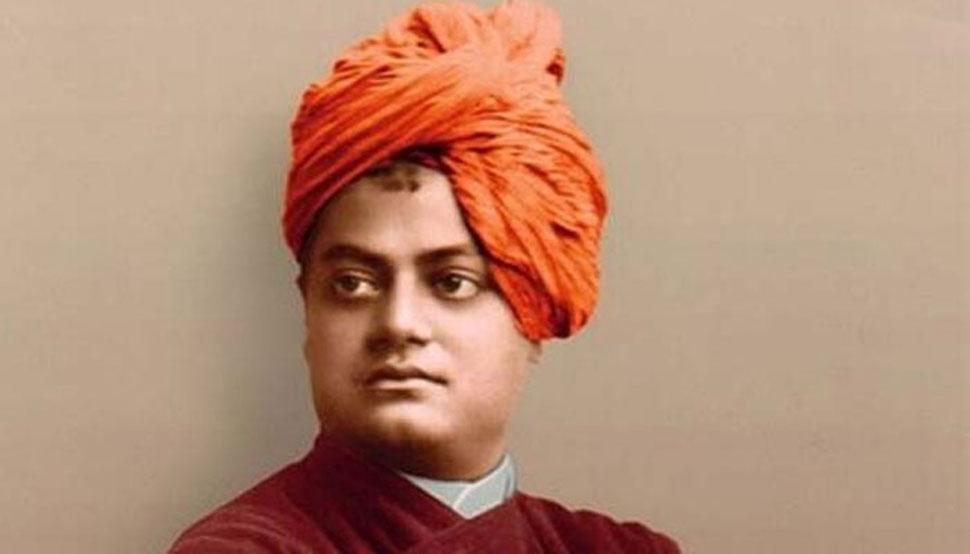
is the headline in The Pioneer, the second oldest English language newspaper in India.Remembering Swami Vivekananda’s historic appearance at the Chicago World Parliament of Religions, held in 1893, many notable personalities, including former President of India Pranab Mukherjee organised a interfaith meet at Vivekananda Mission on Wednesday to celebrate the 125th anniversary of the historic speech.
Celebrating the anniversary, Mukherjee said,
“There is perhaps a need for intrafaith harmony
even more than the interfaith harmony.”Vivekananda’s historic speech has been remembered and celebrated by many across the country every year.
-
The INTRAfaith Conversation in Islam
“The Shoe Is On the Other Foot: Pluralism and the Qur’an” is a terrific article by Professor Jane Smith from Harvard Divinity School. She raises the question of whether or not Islam itself can find a way to live out the pluralism that many are persuaded is at the heart of the Qur’an’s message. She writes:
It seems to me that the future of Islam, at least as I understand it in the American context, has much to do with the way that Muslims figure out how they are going to position themselves on the question of pluralism. That we all live in a religiously differentiated society is a given. But is that a good thing in the Muslim perspective? While Muslims struggle to be truly accepted by Christians, Jews, and other groups in America, can they promise the same in return? And if so, at what level?
This is the crux of the intrafaith conversation within Islam. Mostly the same kind of questions as within Christianity. The content of the issues is different but the process is essentially the same.
You can read the whole article here.
-
Do Muslims and Christians Worship the Same God: More from Wheaton College
 A new documentary asks the question: Do Muslims and Christians worship the same God?
 Same God, which will be screened at the Los Angeles Film Festival later this month, is based on the story of Professor Larycia Hawkins and her experience at an evangelical Christian college. You can see a trailer for the film here.
I’ve been interested in this story since it broke in December 2015, when Professor Hawkins, the first female African-American tenured professor at Wheaton College, announced her intention to wear a hijab during Advent in solidarity with Muslims.
But it wasn’t just this announcement that put her in the Wheaton crosshairs; it was a Facebook post in which she said that Christians and Muslims worship the same God. This caused administrators to question whether Hawkins had violated the school’s statement of faith. They put her on paid leave, and on January 5, issued a Notice of Recommendation to Initiate Termination-for-Cause Proceedings. That’s when I posted about it on this blog, calling it a classic example of our need for an intrafaith conversation: Wheaton College: an Intra-faith Controversy
Intrafaith Controversy Redux
In October, 2016, the New York Times Magazine published an article entitled “The Professor Wore a Hijab in Solidarity – Then Lost Her Job” and I wrote an update to my blog. My contention was – and still is – that it’s a perfect example of the necessity of intrafaith discussions among Christians of differing theological perspectives. I wrote:
Dr. Hawkins identifies as a Christian. Her Christianity allows her to make the statement she made by wearing the hijab. The administration and many alumni of Wheaton College have a different interpretation of Christianity. Rather than dismissing this popular, well-qualified educator, would it not have been wiser to use the controversy as an opportunity for an intrafaith conversation?The Story Continues . . .
Linda Midgett, director of Same God and a graduate of Wheaton College, admits that she didn’t think much of the situation at the time. But when she realized the uproar among students, alumni, and within the larger evangelical community, she said:
A rift quickly formed. On one side were those, like me, who felt her gesture was unmistakably Christian in nature. On the other side were those who felt she was guilty of heresy, and deserved to be terminated.As the controversy continued, Midgett began to ask,
Do evangelicals worship the same God? It’s the question that led me to direct this film, and one I continue to ask as evangelicals split over Donald Trump.. . . Into Politics
I believe that Linda Midgett is right; this question is a key part of how Christians do politics. Watch the movie trailer and tell me you don’t agree. Ironically, Wheaton has now launched a scholarship in Hawkins’ name which is designed for students pursuing summer internships in peace and conflict studies. But even this – as an article in The Christian Post reflects – has only fueled the controversy.Wouldn’t it be wise of us – as we strive to rediscover our capacity for civil discourse in the political arena – take on the elephant in our own Christian living room? The Intrafaith Conversation is not a frivolous enterprise. It endeavors to help us get past our differences (without denying them) in order to find common ground.
Maybe this film will be a good discussion starter.
 The Interfaith Pastor