 What is an interspiritual Christian?
The term ‘interspirituality’ was coined by Brother Wayne Teasdale (1945 -2004), author of The Mystic Heart: Discovering a Universal Spirituality in the World’s Religions. He believed that spirituality is at the heart of all the world religions (he also called used the terms “global spirituality” and ‘interspiritual wisdom’). He maintained that since mystical spirituality is the origin of all the world’s religions, this shared spiritual heritage enables us to go beyond differences in our theological beliefs and traditions.
Already I can hear the questions and concerns: have I abandoned Christianity; am I encouraging others to do the same in favor of a single new religion? And as St. Paul would respond, “By no means!”
The heart of interspirituality is the recognition that there are many approaches to the spiritual journey. Proponents don’t advocate for a rejection of the individual traditions or for the creation of a new super-spirituality. A favorite saying is the Hindu aphorism: “The paths are many but the goal is the same.” Hence, a faithful Christian is free to explore.
Here’s how Teasdale described it:
By ‘interspiritual’ is not meant the mixing of the various traditions but the possibility and actuality that we can learn and be nourished from more than our own mystical tradition. The note of interspiritual wisdom suggests that there is an underpinning, universal metaphysics from which all particular religions are derived.
Interspirituality is not a one-way street, but an intermystical intersection where insights cross back and forth, intermingle, and find new habitats.
Or as Episcopal priest, author and retreat leader, Cynthia Bourgault puts it:
Wisdom is an ancient tradition, not limited to one particular religious expression but at the headwaters of all the great sacred paths.
The String on Which I Hang My Beads
Back in 2001, when I was just beginning my interfaith adventure, I attended a weekend workshop at the Omega Institute in Rhinebeck, NY. There I was privileged to sit at the feet of Huston Smith (1919-2016), the preeminent authority on world religions. Smith not only studied and taught, but actually practiced Hindu Vedanta, Zen Buddhism, and Sufi Islam for more than ten years each—all the while remaining a member of his local Methodist Church. I was deeply interested in knowing how that worked: how could I (could I?) remain a Christian while exploring and even accepting aspects of other religious traditions?
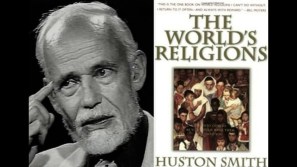 At the workshop, after we had been captivated by stories of Smith’s immersion in the world’s religions, someone asked the question that was on my mind: “Why are you still a Christian?” His answer, which I cannot find in any “Famous Quotes” site, was “Christianity is the string on which I hang my beads.”
That declaration has stayed with me over the years and has informed my ministry as a preacher, teacher, and worship leader.
Bringing It to the Congregation
Back in 2010, my congregation sponsored an event called “InterSpiritual Wisdom:  Sharing the Mystic Heart.” It was a two-day event, on Saturday and Sunday. The Saturday schedule included presenters from Buddhism, Christianity, Hinduism, Islam/Sufism and Judaism, who talked about their own spiritual beliefs and practices. The best part was that they each taught a practice to the rest of us. Each segment was followed by a period of silence when we could practice on our own. On Sunday afternoon, there was a panel discussion and Q&A time, followed by an interspiritual zikr[1] led by our two Sufi presenters. The evaluations we received from attendees overwhelmingly indicated that they wanted more of the same.
It seems like interspirituality might be tapping into a need that our churches have been unwittingly neglecting. It’s a perspective that may appeal to those more attracted to mysticism than to a dogmatic faith. It also removes the difficulties of an interfaith theology and reframes the conversation in terms of an interfaith spirituality. It does not address, nor does it claim to address, the issues of differences within the traditions. That’s a conversation for another time.
For Reflection:
- How have you or how could you incorporate interspiritual wisdom in your own spiritual practice?
- How have you or how could you incorporate interspiritual wisdom in the worship life of your congregation?

[1] Zikr (Arabic for ‘remembrance’) is a form of devotion, in which participants are absorbed in the rhythmic repetition of the Divine name or attributes of the Divine.
Sources:
Bourgeault, Cynthia, The Wisdom Way of Knowing: Reclaiming an Ancient Tradition to Awaken the Heart. San Francisco: Jossey-Bass, 2003, 4.
Teasdale, Wayne. The Mystic Heart: Discovering a Universal Spirituality in the World’s Religions. Novato, CA: New World Library, 1999, 27.
Teasdale, Wayne. “The Interspiritual Age:
Practical Mysticism for the Third Millennium.”
http://www.interreligiousinsight.org/April2006/TeasdaleEssay.html


 The Interfaith Pastor